

When a power plant’s condenser leaks, things get complicated fast. Seawater or cooling water rushes into the condensate system. Chloride levels climb. pH drops. And suddenly everyone starts asking tough questions about every component in the loop—including the water filter elements.
The HFU640UY045J is a common choice for condensate polishing and RO pre-treatment. It’s a high-flow filter with a polypropylene construction. But here’s the concern that keeps plant engineers up at night: could chloride ions from a condenser leak cause this filter to crack, embrittle, or fail outright? And can you track that failure by watching chloride concentrations?
Let’s walk through what this filter is made of, how it behaves under real upset conditions, and what chemical monitoring actually tells you.
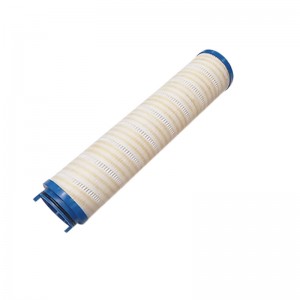
What the HFU640UY045J Brings to the Table
This isn’t just any cartridge. The HFU640UY045J is designed for high-flow applications where downtime is expensive. The filtration media is 100% polypropylene. Absolute efficiency rating of 4.5 microns. That means it catches particles with consistency, not just on a good day.
Flow direction is inside-out. Fluid enters the inner core and moves outward through the media. That configuration keeps dirt where it belongs—inside the filter—without unloading contaminants during flow fluctuations. The U-seal groove on the end cap creates a positive seal. No bypass, no shortcuts.
You’ll find these elements in condensate polishing systems at coal and nuclear plants. Also as RO filters (that’s “security” or cartridge filters just before reverse osmosis membranes). They handle high flow rates without massive pressure drops. That’s the appeal.
When the Condenser Leaks: Chloride Surge and pH Drop
Condenser tubes fail. It happens. Maybe erosion, maybe vibration, maybe just age. When that tube lets go, cooling water—seawater if you’re coastal, freshwater if inland—pours into the steam condensate loop.
Suddenly your condensate has chloride ions. Lots of them. Seawater contains about 19,000 ppm chloride. Even a small leak pushes levels from single digits to hundreds or thousands of ppm. pH often falls because seawater is alkaline? Actually, watch out: condensate pH normally runs slightly basic (8.5-9.5) with ammonia or amines. Chloride alone doesn’t drop pH dramatically, but contamination can bring in other ions that upset the chemistry.
Now the question: that condensate water filter with the all-PP structure—does it start falling apart?
Does Polypropylene Actually Care About Chloride?
Short answer: No. Polypropylene is famously resistant to chloride attack. Unlike stainless steel (which pits and stress-cracks in chloride environments) or some other polymers (which hydrolyze in acidic conditions), PP just sits there. Chloride ions don’t react with polypropylene’s molecular backbone.
Think about it. PP is a non-polar hydrocarbon polymer. No functional groups that chloride wants to bond with. No ester linkages that break apart. No metal atoms to corrode. Even at low pH—say, 4 or 5—polypropylene remains stable. The material’s chemical compatibility charts list chlorine and chloride solutions as “excellent” up to significant temperatures and concentrations.
But here’s where engineers get nervous. Some polymers do embrittle in certain chemical environments. Is polypropylene one of them? Not from chlorides. However, there’s a nuance: strong oxidizing agents like hypochlorite (bleach) or ozone will attack PP over time. But plain chloride ions from seawater? No. The filter won’t become brittle. It won’t crack. It won’t turn into a crumbly mess.
What about the U-seal gasket? That’s usually EPDM or similar elastomer, also chloride-resistant. So the whole assembly stays intact.
One caveat: temperature. If your condensate runs hot (above 80°C continuously), PP softens. But typical condensate polishing operates below 60°C. Within that range, chlorides don’t accelerate degradation.
Can You Use Chloride Monitoring to Gauge Filter Performance?
This is the tricky part. Some people think: as the filter degrades, maybe it releases something, or maybe cracks let particles through, and that might correlate with chloride readings. But no. The filter doesn’t add or remove chloride ions. It’s a physical barrier for suspended solids, not a chemical adsorber.
Chloride concentration in the condensate tells you about the condenser leak’s severity. Nothing about the filter’s health. If chloride spikes, your tube has a hole. The filter might see more particulate load because seawater brings in silt, corrosion products, or biological debris. But the chloride number itself? Irrelevant for filter condition.
Let me be direct: monitoring chloride to assess HFU640UY045J degradation is not feasible. You won’t see a signal. Even if the filter somehow cracked (which it won’t from chloride), that crack doesn’t release chloride or change the concentration. You’d just get downstream particles. But the chloride reading stays flat.
What Actually Works for Filter Monitoring?
Stick with the basics. These tell you when a high-flow filter needs replacement:
- Differential pressure (ΔP): Rising ΔP means media is loading up. When it hits 2.1–2.5 bar (depending on housing design), change the element.
- Effluent turbidity or particle counts: If you see solids downstream, either the filter is damaged or bypassing. That’s when you inspect.
- Service life tracking: Most plants have a schedule based on hours or flow volume. Not perfect, but a good backup.
One more thing. During a condenser leak, your filter might see a sudden jump in ΔP due to particulate breakthrough. That’s not chemical failure. That’s just the filter doing its job—trapping debris from the contaminated water. Replace it as needed.
Practical Takeaways for Power Plant Teams
So where does that leave you? The HFU640UY045J is a robust water filter for condensate polishing, even when chlorides appear. You don’t need to worry about embrittlement or cracking from seawater ingress. That’s not the failure mode.
What you should worry about: mechanical damage from improper handling, excessive ΔP, or thermal overload. Also, if your condensate chemistry uses oxidizing biocides (unlikely in steam cycles), that’s a different conversation.
For chemical monitoring, track chloride for corrosion control of downstream components—piping, heat exchangers, boiler. But don’t confuse that with filter condition. Two separate issues.
If you’re specifying filters for a new system or replacing existing ones, request the manufacturer’s chemical compatibility data sheet. Most reputable suppliers will confirm PP’s chloride resistance in writing. And always validate the seal material against your actual operating chemistry.
Need help selecting the right condensate water filter for your plant’s specific water chemistry? Talk to your filtration supplier about site-specific conditions—especially if you’re in a coastal area with seawater cooling or if your makeup water source changes seasonally.
Bottom Line
The HFU640UY045J won’t crumble from chlorides. Period. Use it confidently in condensate polishing and RO pre-filtration, even when condenser leaks happen. Just watch your differential pressure, change elements on schedule, and let chloride monitoring do its real job—tracking corrosion risk in your system.
One last thought: If you’re still unsure about filter compatibility with your unique condensate chemistry, consider running a small pilot test. Soak a sample element in water with similar chloride concentration and pH to your worst-case leak scenario. After 30 days, inspect for cracks or brittleness. Chances are you’ll find nothing. But that test can give your team peace of mind—and that’s worth something.
For technical datasheets or application-specific advice on the HFU640UY045J and other high-flow filters, reach out to ou filtration representative. They can provide batch-specific material certifications and compatibility documentation.
E-mail: sales@yoyik.com
Tel: +86-838-2226655
Whatsapp: +86-13618105229
Yoyik offers various types of power plants spare parts for steam turbines, generators, boilers as below:
10 micron hydraulic filter HX-400*100P/L
filter pressure hydraulic housing SFX-100X80
5 micron filter element HC9100FKP8Z Diffuser
power plant filter SW-F630*4OFS
hydraulic oil filter housing CR.0030D010
hydraulic tank top return filter HDX-160×20Q2
industrial oil strainer DR405EA03V/W Precision filter
hydraulic filter cross EH30.00.003C EH oil pump outlet filter
25 micron stainless steel wire mesh 0660R005BN4HC
oil filter service SLAF-10HA
element strainer SGF-H110*10FC Oil filter element
hydraulic filter installation FAX-400×20
hydraulic oil filter system 0400DN025BN4HC
filter cross HX-250X20
filter manufacturing companies UE319AN20H
hydraulic tank filters HQ25.300.16Z-3 regeneration resin filter
inlet suction strainer AX1E101-02D10V/-WF Lubrication Oil Station Discharge Filter
hydraulic return filter assembly SVA9-N Filter MOT
filters oil MF1802A03HVP01 system oil-return flushing filter
replacement filter DP309EA10V/-W control valve actuator filter
Post time: Jun-12-2026
-

Oil Transfer Gear Pump 2CY-45/9-1A
-

Electro-hydraulic servo valve G761-3034B
-

Jacking oil pump discharge filter DQ8302GA10H3.5C
-

Cellulose filter element LX-DEA16XR-JL
-

DN80 Sealing oil vacuum tank floating valve
-

CS-V hydraulic system filter Differential press...
-

Linear variable differential transformer DET200A
-

G761-3033B DEH system electro-hydraulic servo v...
-

Dry-type Transformer Cooling Fan GFD590/126-710
-

Actuator Inlet Flushing Oil Filter DP301EA01V/-F
-

Generator stator cooling water filter SGLQ-300A
-

22FDA-F5T-W220R-20LBO cone valve type plug sole...