

You hear the pump start. The motor hums. But the self-priming cycle feels wrong. Maybe the pump struggles to lift water. Or worse, after shutdown, the column drains back. The culprit is often a small but critical part: the DKF-50 solenoid valve.
This valve lives on WFB series self-priming pumps. Its job sounds simple. Open to break the vacuum when the pump stops. Close to seal the intake line when the pump starts. But when the valve core does not close completely, everything falls apart. No vacuum means no prime. No prime means no flow. No flow means a very long shift.
Let us walk through what this electric air control valve actually does. Then we will get into real-world troubleshooting. Knowing why the valve fails to seal is the only way to fix it fast.
What the DKF-50 Does (And Why It Matters)
The DKF-50 is built specifically for WFB series pumps. Those are the self-priming, seal-less pumps you find in tough industrial spots. Coal handling sumps in power plants. Chemical water treatment buildings. Ash slurry pump rooms. Places where you cannot afford a pump that loses its prime.
Threaded connection. 50mm nominal bore. Runs on 380V three-phase power—wired directly to any two lines of the pump motor. That means the valve opens and closes with the pump. No separate control circuit needed.
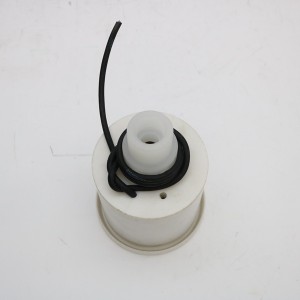
Inside, there is a time delay circuit. That is the clever part. When the pump starts, the valve does not slam shut instantly. It waits just long enough for the pump to build initial suction. Then the valve core moves to seal the intake port. The pump cavity pulls vacuum. Water rises. Self-priming works.
When the pump stops, the valve opens again. The intake line breathes. Any residual water drains back slowly. No siphon effect. No flooded floor. No check valve chatter. Just clean, reliable shutdown.
But that whole sequence depends on one thing: the valve core seating fully when closed.
The Big Failure: Valve Core Will Not Close Completely
An incomplete seal means air keeps leaking into the pump cavity. The vacuum never forms. The pump runs but never primes. Or it primes poorly, delivering half flow with lots of air burping.
You might also notice the pump loses prime between cycles. Come back after an hour, and the pump is dry. That is a classic sign the solenoid valve is not sealing.
So where do you start looking?
1. Electrical Supply and Connections
The valve needs correct voltage to pull the core fully into its seat. Weak voltage means weak magnetic force. The core moves partway but does not seal.
Check the supply at the valve terminals. You should see close to 380V between the two connected phases. Low voltage? Look for loose connections, damaged wires, or an undersized transformer if you are stepping down from higher voltage.
Also verify the wiring matches the pump motor’s phase connections. If the valve is tapped across L1 and L2, but one phase drops under motor load, the valve might see voltage sag. That is more common with older panels or long cable runs.
One more electrical point: the internal time delay relay. If the relay fails, the valve might try to close before the pump has established any suction. That does not stop it from sealing—but if the timing is way off, you might misdiagnose a slow closure as incomplete closure. Use a multimeter to confirm the relay switches at the expected interval (usually 3 to 8 seconds after pump start).
2. Mechanical Obstructions in the Valve Body
This is the most common cause. Debris gets into the valve. Think about where this valve lives. Coal dust. Ash slurry residue. Chemical crystals. Pipe scale. All of it can migrate into the valve seat.
The DKF-50 has a rubber or PTFE sealing face on the core. A single grain of sand on that seat prevents full closure. You will hear a faint hiss of air leaking past the closed valve.
Solution? Remove the valve. Open it carefully. Clean the seat, the core face, and the internal bore. Use a soft cloth and a mild solvent if compatible with the seal material. Do not use abrasives that scratch the sealing surfaces.
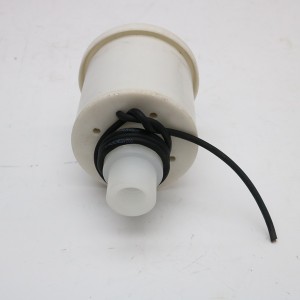
While you are in there, inspect the spring. The return spring pushes the valve open when power is off. If the spring is weak or broken, the core will not seat firmly. Replace the spring if it shows any deformity.
3. Thread Sealant or Pipe Dope Issues
This one surprises people. The valve threads into the pump intake port. Someone used Teflon tape or pipe dope to seal the threads. Too much sealant, and it squeezes into the valve body during installation. Now you have a blob of sealant blocking the seat.
Same problem with loose thread debris. If the pipe threads were cut poorly, metal shavings can fall inside.
When you reassemble, apply sealant only to the male threads, leaving the first two threads clean. That prevents excess from entering the valve.
4. Valve Core Guide Wear
The core moves inside a guide tube. Over thousands of cycles, the guide can wear or the core can become slightly bent. That causes the core to tilt instead of moving straight. A tilted core cannot seal evenly.
Check for side-to-side play. Grab the core (with power off) and try to wiggle it. Excessive movement means worn guide or core. The fix is a new valve assembly. Not worth rebuilding these—they are modestly priced.
5. Pressure Differential Reversal
This solenoid valve is designed to close against atmospheric pressure on one side and vacuum on the other. But if the pump discharge back-feeds pressure through the intake line (unlikely but possible with certain system configurations), the valve might see reverse pressure that holds it open.
Check if any other valves in the suction line are leaking or if there is a blocked vent. The intake line must be open to atmosphere when the pump stops, and sealed when running. No cross connections.
Practical Troubleshooting Table
Here is a quick reference for your crew when the DKF-50 acts up. Keep a copy near the pump panel.
| Symptom | Most Likely Cause | Check First |
|---|---|---|
| Pump runs but no prime | Valve core not sealing | Debris on seat |
| Slow loss of prime after shutdown | Small air leak past closed valve | Worn seal or spring |
| Valve chatters during pump start | Low voltage or bad time relay | Measure terminal voltage |
| Valve won’t open after pump stops | Stuck core or broken return spring | Mechanical binding |
Preventive Measures That Actually Work
You do not want to pull this valve every month. A few simple practices cut failures dramatically.
Install a strainer or Y-strainer upstream of the valve. The DKF-50 is not a debris-handling valve. Even a 40-mesh screen catches the particles that break the seal. Clean the strainer on your regular pump inspection schedule.
Keep the pump intake line clean. If your sump or pit has heavy solids, consider a larger debris trap before the pump suction. Less grit reaching the valve means longer life.
When you replace the valve, buy genuine DKF-50 units. Knockoffs often use cheaper seals and weaker springs. The time delay circuit might not match the pump’s startup characteristics. Spend the extra money. It is cheap insurance against unplanned downtime.
Also, label the electrical connections. The DKF-50 is not polarity-sensitive on 380V AC, but make sure you are connected to the correct two phases. Some maintenance electricians guess. Mark the terminals L1 and L2 clearly.
When to Call for a Replacement
Cleaning fixes most incomplete closure issues. But if you have cleaned the valve, verified voltage, checked the spring, and still the core will not seal, the valve body may be warped or the solenoid coil may be weak.
Coils degrade over time. They still click, but the magnetic force drops. That means the core moves but does not snap closed with enough force to compress the seal. You can test coil resistance with an ohmmeter—compare to a new unit’s specification sheet.
If the coil reads open or shorted, replace the entire valve. Coils are not field-serviceable on most DKF models.
Need a reliable source for genuine DKF-50 electric air control valve replacements? Check with your WFB pump supplier or a specialized industrial valve distributor. Keep at least one spare on your shelf. When this valve fails, your pump stops moving water. That is not a situation where you want to wait three days for shipping.
Final Check: Is the Valve Really the Problem?
One last caution. Sometimes people blame the solenoid valve when the issue is elsewhere. A clogged pump impeller can also cause priming failure. A cracked intake pipe lets air in regardless of the valve. A worn mechanical seal on the pump itself can break vacuum.
Do a simple isolation test. Remove the valve and cap the port manually. Start the pump. If it primes perfectly, the valve is your culprit. If it still fails, look at the pump and piping.
That test takes ten minutes. It saves hours of chasing the wrong part.
For power plant engineers and maintenance teams in coal handling, chemical water treatment, or ash pumping—the DKF-50 is a workhorse. But it needs clean media, stable voltage, and occasional inspection. Give it those, and your self-priming pump will start every time, even after a long weekend shutdown.
Questions about sizing, spare parts, or application specifics for the DKF-50 solenoid valve? Reach out to your pump OEM or a qualified industrial valve distributor. They can confirm compatibility with your WFB pump model and operating conditions.
E-mail: sales@yoyik.com
Tel: +86-838-2226655
Whatsapp: +86-13618105229
Yoyik offers various types of power plants spare parts for steam turbines, generators, boilers as below:
24 volt dc solenoid valve GS021600V
2 way solenoid valve 24vdc CCP115M
Reheat system electric drain valve WJ65F1.6P
Mechanical seal of seal oil pump HSNH-280-43NZ
Skin NXQ-A25/31.5-L-EH
nitrogen accumulator cylinder NXQ-A-40/31.5-L
Accumulator Bladders for GV (high pressure side) with seals 10L
check valve types 216C65
Recycling pump repair kit HSN280-43NZ
trip overspeed cover plate F3CG2V6FW10
EH main pump F3-V10-1S6S-1C20
Safety relief valve YF-B10H2-S
servo valve controller J761-004
Oil cooler tube GLC3-7/1.6
globe style check valve KHWJ25F1.6P
globe valve wrench KHWJ40F1.6P
POMPA LUBE OIL MSM HSNH210-46ZA
bladder accumulator charging kit NXQA-10/31.5-L-EH
accumulator cylinder NXQ 10/10-L-E
servo valve 22FDA-F5T-W110R-20/LP
Post time: Jun-15-2026
-

Vibration speed Sensor HD-ST-A3-B3
-

Gas turbine actuator filter DP302EA10V/-W
-

Regeneration device anion filter AZ3E303-05D01V/-W
-

Needle Type Globe Valve SHV6.4
-

Hydraulic oil system filter element FAX 250*10
-

Hydraulic Oil Cycle Pump Suction Filter WU-63&#...
-

Actuator inlet oil filter AP6E602-01D10V/-W
-

Platinum thermal resistance temperature sensor ...
-

High Temperature cylinder sealing grease MFZ-3
-

Stator Cooling Water Pump YCZ50-250C
-

Steam Turbine Rotation Speed Sensor CS-2
-

Hydraulic Pressure Control Valve PCV-03/0560