

Most people working on a steam turbine EH oil system pay close attention to the pump outlet filter — that’s the one protecting the servo valves and actuators directly, so it makes sense. The oil return filter gets less attention, but letting it go too long between replacements causes problems that aren’t always easy to trace back to a clogged return line filter element.
The DR1A401EA03V is a glass fiber return filter element used in the return circuit of EH oil stations on steam turbines. This article covers what it’s designed to capture, how it fits alongside the other filters in the system, and what actually happens to overall oil cleanliness if the return filter blocks while the pump outlet filter is still reading normal.
What the DR1A401EA03V Return Filter Element Is Built For
EH oil systems use phosphate ester fire-resistant fluid rather than conventional mineral oil. This fluid does its job well in terms of fire resistance, but it’s more chemically reactive than mineral oil and more sensitive to contamination — particularly metallic particles and colloidal deposits that accumulate as system components wear over time.
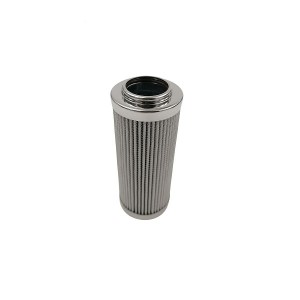
The DR1A401EA03V is installed in the return oil circuit of the EH oil station, positioned to catch what’s coming back from the actuators, servo valves, and other system components before that fluid goes back into the reservoir. Its glass fiber media is selected specifically for capturing fine metallic wear particles and gelatinous or colloidal contaminants — the kind of debris that builds up in phosphate ester systems during normal service.
Glass fiber media handles this application better than paper or mesh alternatives because it offers consistent particle retention at fine micron ratings, holds up chemically against phosphate ester fluid, and maintains its structural integrity under the differential pressures these systems generate. It doesn’t break down and shed fibers the way some other media types can under sustained flow.
How Multi-Stage Filtration Works in an EH Oil System
A well-designed EH oil system doesn’t rely on a single filter to keep the fluid clean. There are typically three filtration stages, each with a different role and a different location in the circuit. Understanding how they divide the work makes it a lot clearer why the return filter matters even when the pump outlet filter looks fine.
Pump Outlet Filter
This is the high-pressure filter positioned downstream of the pump, before the fluid reaches the servo valves and control actuators. Its job is to protect the most sensitive components in the system from anything that might have gotten past the reservoir or been generated inside the pump itself. It sees clean-ish fluid going in one direction — toward the actuators — and it’s the last line of defense before that fluid enters precision control components.
Because it’s on the high-pressure side, it typically runs a fine micron rating and is sized to handle system pressure without bypass. It’s the filter that gets the most attention because a failure here has immediate consequences for servo valve performance.
Oil Return Filter
The oil return filter — where the DR1A401EA03V sits — handles fluid coming back from the actuators and valves after it’s done its work. This fluid carries whatever was picked up during that cycle: metallic particles from valve spool wear, degradation products from the fluid itself, colloidal deposits from aged phosphate ester fluid. It’s dirtier than what the pump outlet filter sees.
The return filter’s job is to clean that fluid before it goes back into the reservoir. If it does its job properly, the reservoir stays clean, and the pump draws clean fluid on the next cycle. If it doesn’t — either because it’s blocked and bypassing, or because it’s been left in service too long — contaminated fluid accumulates in the reservoir and recirculates through the entire system.
Reservoir Fine Filter
Some EH oil systems include a tank-side or offline fine filter that works on the reservoir fluid directly, either through a kidney loop or a dedicated circulation pump. This filter handles polishing duties — targeting very fine particles and fluid degradation products that the return filter may not fully capture. Not every installation has this stage, but in systems that do, it acts as a backup for overall fluid cleanliness.
If the Return Filter Blocks but the Pump Outlet Filter Reads Normal
This is the question that catches some maintenance teams off guard. Differential pressure across the pump outlet filter is fine. The system seems to be running normally. But the oil return filter has been in service for too long and is starting to bypass. Does overall cleanliness actually get affected?
Yes — and it can take a while to show up, which is part of what makes it tricky.
When the oil return filter element blocks and the bypass valve opens, return fluid goes straight back to the reservoir without filtration. Metallic particles, colloidal deposits, and wear debris that should have been captured are instead accumulating in the reservoir. The pump draws from that reservoir, so progressively dirtier fluid is now feeding into the high-pressure circuit.
The pump outlet filter will eventually start catching more contamination than it normally would. Its differential pressure rises faster than expected, its service life shortens, and if it’s not caught in time, it too starts bypassing. At that point, unfiltered fluid is reaching the servo valves — which is exactly what the multi-stage system was designed to prevent.
So while a blocked return filter doesn’t cause an immediate and obvious system fault, it undermines the cleanliness baseline that everything else in the system depends on. Fluid analysis results — particularly particle counts and acid number — will usually show the deterioration before it becomes a component failure, which is one reason routine oil sampling is worth doing on EH systems.
Signs the Return Filter Element Needs Attention
The most direct indicator is differential pressure across the return filter housing. Most systems have either a gauge or a visual indicator showing when differential pressure has reached the service limit. But a few other signs are also worth watching:
- Fluid cleanliness results trending worse over successive samples despite normal pump outlet filter readings
- Increased acid number in the phosphate ester fluid, which can indicate that contamination is recirculating and accelerating fluid degradation
- Pump outlet filter differential pressure rising faster than the established baseline between replacements
- Visible change in fluid color or clarity when sampling from the reservoir
None of these individually points directly at the return filter, but taken together they suggest the return circuit filtration isn’t keeping up — and the DR1A401EA03V element is the first thing to check.
Filtration Stage Comparison at a Glance
| Filter Stage | Location in Circuit | Primary Function | Effect of Bypass |
|---|---|---|---|
| Pump outlet filter | High-pressure side, after pump | Protect servo valves and actuators | Immediate risk to precision components |
| Oil return filter (DR1A401EA03V) | Return circuit, before reservoir | Remove wear debris before fluid re-enters reservoir | Gradual reservoir contamination, shortened pump outlet filter life |
| Reservoir fine filter (where fitted) | Offline / kidney loop on reservoir | Polish reservoir fluid, remove fine particles | Loss of backup cleanliness maintenance |
Replacing the DR1A401EA03V: A Few Things Worth Getting Right
Return filter replacement is generally more straightforward than high-pressure filter work, since the return circuit runs at lower pressure. That said, the return line isn’t zero pressure — fluid returning from actuators still has residual pressure, and the housing can hold a significant volume of contaminated fluid.
Drain the housing before pulling the element. The fluid sitting in the return filter housing has the highest concentration of captured contamination anywhere in the system — that’s the whole point of the filter being there. Pulling the element without draining first sends that fluid straight down and potentially into the surrounding area or back into the system.
Check the housing interior and sealing surfaces before installing the new element. Colloidal deposits from phosphate ester fluid can build up on housing walls and seal grooves over time. Wiping the housing clean and replacing seals if there’s any deformation keeps the new DR1A401EA03V working as it should from day one.
After installation, monitor differential pressure for the first few operating hours. A new element that shows rising differential pressure faster than expected could indicate that the system’s overall contamination level has climbed during the period the old element was bypassing — which may mean an offline flushing cycle or more frequent interim checks are warranted.
A Note on Sourcing the Correct Replacement
The DR1A401EA03V is a defined specification — filtration rating, media type, dimensions, and end cap configuration all need to match the housing it goes into. Cross-referenced or substitute elements that don’t match on all parameters can fit mechanically but perform differently, which is a problem that doesn’t always show up until the next oil analysis.
If you’re evaluating replacement elements or working from an older parts list, confirming the full specification against your EH oil station documentation before ordering is worth the extra step. A supplier with experience in steam turbine EH oil system components can usually verify compatibility quickly if you provide the housing model and system details.
The return filter doesn’t get the same attention as the pump outlet filter, but in a system where fluid cleanliness directly affects how long servo valves and actuators last, keeping the DR1A401EA03V element in good condition is one of the more straightforward things you can do to protect the rest of the system.
Post time: Jul-02-2026
-

Hydraulic Pressure Control Valve PCV-03/0560
-

EH oil pump discharge filter AP1E101-01D03V/-WF
-

Boiler Air Preheater Infrared array probe HSDS-...
-

Hydraulic Oil Cycle Pump Suction Filter WU-63&#...
-

Recycle pump working filter DP1A401EA03V/-W
-

HTD series LVDT displacement actuator position ...
-

Electrical Insulation Alkali-free FiberglassTap...
-

Accumulator air inlet valve QXF-5
-

Coal Feeder Load Cell AC19387-1
-

Oil pump discharge flushing oil filter DP602EA0...
-

Double gear Pump GPA2-16-16-E-20-R6.3
-

LVDT Transmitter LTM-6A