

Generator stator cooling is one of those systems that doesn’t get much attention until something goes wrong — and by then, the consequences are usually significant. The stator windings in a large power plant generator carry enormous current, and the water flowing through them is what keeps temperatures in a safe range during continuous operation. Any blockage, even partial, in those cooling channels is a serious problem.
The SZ3-1-20/5 is a high-flow cooling water filter element designed for stator cooling water circuits in power plant generators. This article covers what the filter actually does, why flow capacity matters as much as filtration in this application, and what maintenance teams need to know about keeping this part of the system running reliably.
What Stator Cooling Water Filtration Is Actually Protecting
Large generators — the kind found in coal, gas, and nuclear power plants — use hollow copper conductor bars in the stator windings. Deionized water flows through these hollow conductors directly, removing the heat generated by resistive losses during operation. The cooling channels inside those conductors are narrow, and the copper surfaces are in continuous contact with the cooling water.
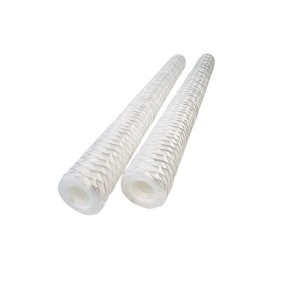
This creates a filtration challenge that’s different from most other water filtration applications. The concern isn’t just particle contamination in the conventional sense — it’s a combination of particulate matter, copper corrosion products, and any debris that could partially or fully block the small internal passages of the stator bars. A blocked cooling channel means a local hot spot in the winding, and localized overheating in a generator stator is the kind of fault that leads to forced outages and expensive rewind work.
The cooling water filter in this circuit is the primary mechanical barrier against all of that. It handles high flow rates — stator cooling systems circulate water continuously at substantial volumes — while maintaining enough filtration efficiency to protect passages that have very little tolerance for debris accumulation.
Understanding the SZ3-1-20/5 Specification
The designation SZ3-1-20/5 carries the key performance parameters for this filter element. The “20″ refers to the flow capacity rating — this is a high-flow element built for the circulation volumes typical of large generator stator cooling systems. The “5″ indicates a 5-micron filtration rating, which targets the particle size range that poses the greatest risk to the narrow internal passages of stator conductors.
The element construction is designed around the demands of continuous high-flow service. Stator cooling water systems don’t have scheduled downtime between filter changes the way some other systems do — they run whenever the generator is running. The filter element needs to hold up under that sustained flow without collapsing, channeling, or shedding media fibers into the water it’s supposed to be cleaning.
Water chemistry compatibility is another factor specific to this application. Stator cooling water is typically highly deionized — conductivity is kept extremely low to prevent electrical leakage through the cooling water path. Filter media and element construction materials need to be compatible with high-purity deionized water without leaching ions or contributing to conductivity drift. This rules out some media types and binders that work fine in conventional water filtration but aren’t appropriate here.
Why Flow Capacity Matters as Much as Filtration Rating
In most filtration applications, you optimize for filtration efficiency first and accept whatever pressure drop comes with it. Stator cooling water systems add a constraint that changes that calculus: the flow rate through the stator cooling channels has to stay within a defined range to maintain adequate heat removal from the windings.
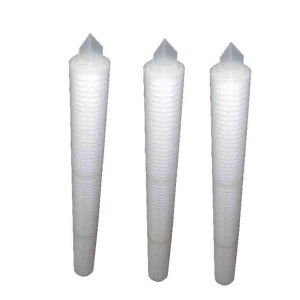
A filter element that’s too restrictive — whether because it was specified with too fine a rating, or because it’s loaded with contamination and approaching bypass — increases the pressure drop across the filter housing. If the cooling water pump can’t compensate, flow through the stator bars drops. Reduced flow means reduced heat removal. In a generator running at full load, even a modest reduction in stator cooling flow pushes winding temperatures upward.
This is why the “high-flow” designation in the SZ3-1-20/5 matters in practice. The element is sized to handle the required flow volume with a pressure drop that stays within the system’s design envelope, even as it accumulates normal service contamination. Replacing it before differential pressure climbs too high isn’t just good filtration practice — it’s part of maintaining safe generator operating temperatures.
Typical Contaminants in Stator Cooling Water
The contamination that the SZ3-1-20/5 cooling water filter is capturing comes from a fairly predictable set of sources in a stator cooling circuit:
- Copper corrosion products — fine copper oxide particles released from the conductor bar surfaces over time, particularly during chemistry upsets or when dissolved oxygen levels aren’t properly controlled
- Suspended particulate matter introduced during maintenance work or system disturbances
- Resin fines from the ion exchange units used to maintain water conductivity — small resin beads or fragments that migrate downstream if a resin trap fails
- Biofilm fragments if microbial control has lapsed, though this is less common in well-managed systems
Copper particle accumulation is the one that causes the most concern over time. Copper oxide deposits don’t just block passages — they can also affect the water chemistry balance and create localized electrochemical conditions that accelerate further corrosion. Keeping particle counts low through consistent filtration is one of the more effective controls for managing copper corrosion in these systems.
Monitoring Filter Condition and Knowing When to Replace
Differential pressure across the cooling water filter housing is the standard condition indicator. Most stator cooling systems include differential pressure gauges or transmitters on the filter housing, with alarm setpoints configured to alert operators when the element is approaching its service limit.
What’s worth knowing is that differential pressure in a stator cooling water system can shift for reasons unrelated to filter loading. Changes in pump speed, cooling water temperature, or system valve positions all affect the reading. A spike in differential pressure that coincides with a system change is worth investigating before attributing it to a loaded filter element.
Trending the differential pressure reading over time is more informative than any single reading. A gradual upward trend over weeks of operation is normal element loading behavior. A sharp rise over a short period, particularly if it doesn’t correlate with any operational change, warrants closer attention — it could indicate a chemistry upset that’s generating higher-than-normal copper particle loads, or a resin trap issue pushing fines into the circuit.
Filter Element Specification Summary
| Parameter | Detail |
|---|---|
| Part number | SZ3-1-20/5 |
| Filtration rating | 5 microns |
| Application | Generator stator cooling water circuit |
| Flow classification | High-flow |
| Fluid compatibility | Deionized / high-purity water |
| Primary contaminants targeted | Copper particles, fine particulate, resin fines |
Replacement Procedure: What to Get Right
Replacing the SZ3-1-20/5 filter element in an operating generator cooling system requires some coordination with operations, since the cooling circuit needs to continue functioning while the work is done — or the generator load needs to be reduced or the unit taken offline, depending on plant procedures and whether a bypass path is available.
Most stator cooling filter housings are installed with an isolation and bypass arrangement that allows element replacement without fully interrupting cooling water flow. If that’s available, use it — but confirm that the bypass flow path is actually open and flowing before isolating the filter housing. Relying on a bypass valve that hasn’t been operated in months and may not be fully functional is a common source of problems during filter changes.
When the housing is open, take the opportunity to inspect the old element before disposal. Heavy copper-colored deposits on the upstream face of the element indicate elevated copper corrosion rates in the system — worth flagging to the chemistry team. Unusual debris, resin beads, or visible biological growth are similarly worth noting.
Flush the housing before installing the new element, and confirm that all sealing surfaces are clean and undamaged. Deionized water systems are particularly sensitive to seal material compatibility — verify that any replacement O-rings or gaskets are appropriate for the water chemistry in your specific system before installing them.
Getting the Right Replacement Element
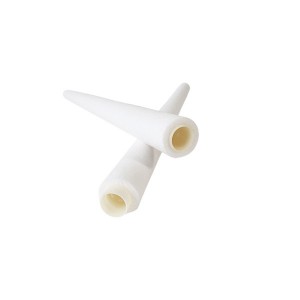
Stator cooling water filter elements are a case where using the correct specified part matters more than in many other filtration applications. The combination of high-purity water compatibility, specific flow capacity, and dimensional fit to the housing all need to match. A substitute element that fits mechanically but uses incompatible binder materials or different media construction can affect water conductivity or fail prematurely under sustained flow.
If you’re sourcing replacement SZ3-1-20/5 elements and working from an older procurement record or trying to cross-reference an equivalent, a supplier with direct experience in power plant generator cooling systems can usually confirm compatibility quickly. It’s a straightforward check that avoids the kind of issue that only shows up after the housing is closed and the system is back in service.
Stator cooling water filtration doesn’t get reviewed as often as some other generator auxiliary systems, but the consequences of letting it slip — blocked cooling channels, winding hot spots, forced outages — make it worth the attention. Keeping the SZ3-1-20/5 in good condition and replacing it on the right schedule is one of the simpler ways to protect a very expensive piece of equipment.
Post time: Jul-02-2026
-

Linear variable displacement transducer LVDT se...
-

OWK Series Oil-Water Alarm
-

977HP sealing oil differential pressure valve
-

SZ-6 Series Integrated Vibration Sensor
-

Circulating pump return oil filter AD3E301-02D0...
-

CQJ type accumulator Gas charging tool
-

ZJ series steam turbine bolt heating rod
-

YCZ65-250C generator stator cooling water pump
-

EH oil pump discharge filter AP1E101-01D03V/-WF
-

EH main oil pump inlet filter element OF3-20-3R...
-

Platinum Resistor Temperature Sensor WZPM-201
-

Magnetic Liquid Level Indicator UHZ-519C