

In a hydrogen-cooled generator, people usually pay attention to the seal oil pumps, differential pressure regulators and hydrogen purity instruments. The Vacuum pump is often overlooked. It sits beside the vacuum oil tank and just keeps running day after day.
But anyone who has dealt with hydrogen purity problems knows that the WS30 Vacuum pump is far more important than it appears.
Its job is simple. It keeps a certain vacuum inside the vacuum oil tank and continuously removes air and moisture dissolved in the generator sealing oil. Those gases and water have to go somewhere. If they are allowed to remain in the oil, sooner or later they may enter the generator together with the oil and contaminate the hydrogen.
Hydrogen purity doesn’t suddenly become bad overnight. Usually the change is slow. And many times, the first thing that starts losing performance is the Vacuum pump itself.
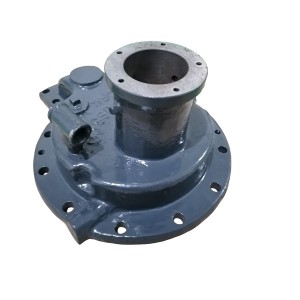
Why Does the WS30 Vacuum Pump Matter So Much?
The SEAL OIL SYSTEM on a hydrogen-cooled generator has one basic purpose. It prevents hydrogen from escaping and prevents outside air from entering the generator.
The generator sealing oil is constantly circulating. During this process, small amounts of air and moisture become mixed with the oil. That’s normal.
The vacuum oil tank and the WS30 Vacuum pump work together to remove those unwanted substances.
Without enough vacuum, dissolved gases remain in the oil. Moisture content gradually rises. Hydrogen purity may start to drop. In severe cases, the generator operating conditions can be affected.
Because of that, many plants consider the Vacuum pump as a continuously operating piece of equipment that deserves regular attention rather than something to be repaired only after a fault appears.
What Happens Inside the Pump During Long-Term Operation?
A lot of people focus on bearings and seals. Those parts are important, of course. But the pump oil itself deserves just as much attention.
The WS30 Vacuum pump removes air and moisture from the system. The problem is that some of that moisture eventually enters the pump oil.
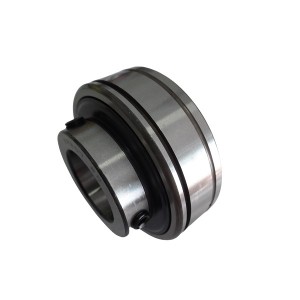
Over time, contaminants and water accumulate inside the oil. The oil begins to lose its original characteristics.
At first nothing looks unusual. Vacuum may still be acceptable. The pump sounds normal. Operators don’t notice anything.
Then little by little, the oil becomes cloudy. Some people describe it as milky or grayish.
That’s usually a warning sign.
Once emulsification becomes serious, vacuum performance starts dropping. Internal wear increases and the service life of the pump may shorten considerably.
Why Regular Oil Replacement Should Not Be Ignored
It’s easy to postpone oil changes because the pump is still running. Unfortunately, running and running properly are two different things.
Old oil affects almost every aspect of pump performance.
- Vacuum level becomes lower.
- The pump needs more time to reach the required vacuum.
- Operating temperature rises.
- Noise becomes more noticeable.
- Internal components wear faster.
- Power consumption may increase.
In some cases, operators only discover the problem after hydrogen purity starts fluctuating.
By then, the oil has often deteriorated for quite a while.
Compared with replacing vanes, bearings or rotor components, changing oil is inexpensive. Delaying oil replacement rarely saves money in the long run.
Building a Practical Preventive Maintenance Plan
Every plant has its own maintenance philosophy. Some prefer fixed intervals, while others rely more on condition monitoring.
Still, most stations follow a schedule similar to this.
| Maintenance Item | Recommended Interval |
|---|---|
| Visual inspection | Weekly |
| Vacuum level check | Weekly |
| Oil appearance inspection | Monthly |
| Inlet filter cleaning | Every 3-6 months |
| Pump oil replacement | About every 6 months |
| Major overhaul | Every 2-3 years |
Of course, these numbers are only references.
Some power plants operating in humid areas shorten the oil replacement interval. Others may extend it if oil analysis results remain satisfactory.
A fixed schedule is useful, but actual operating conditions should always be considered.
Signs That Tell You the Oil Should Be Changed Earlier
You don’t necessarily have to wait six months.
Experienced maintenance engineers usually watch for several warning signs.
- The oil becomes cloudy or milky.
- Vacuum degree gradually decreases.
- The pump runs longer than before.
- Abnormal noise appears.
- Oil color becomes darker.
- Visible particles are found in the oil.
If two or three of these symptoms appear together, changing the oil is often the simplest and safest solution.
Many pumps recover their original performance immediately after fresh oil is added.
The Inlet Filter Is Often the Real Reason for Low Pump Capacity
When the output of a Vacuum pump drops, people tend to suspect worn vanes or internal leakage.
Actually, a blocked inlet filter is much more common.
Tiny particles carried by the generator sealing oil gradually collect on the screen. Dirt accumulation increases flow resistance and less gas reaches the pump.
The pump itself may still be perfectly healthy.
We’ve seen situations where maintenance teams prepared overhaul kits, only to find that cleaning the inlet screen solved the problem in less than an hour.
How Often Should the Inlet Filter Be Cleaned?
There is no universal answer.
Some plants inspect the filter every three months. Others combine the work with scheduled outages.
As a practical rule, cleaning should be considered when:
- Vacuum degree starts decreasing.
- The evacuation time becomes longer.
- Pump current rises.
- The pump runs continuously for extended periods.
- Differential pressure becomes higher than normal.
If contamination is light, cleaning is usually sufficient.
Compressed air or suitable cleaning fluid is commonly used. Care should be taken to avoid damaging the mesh.
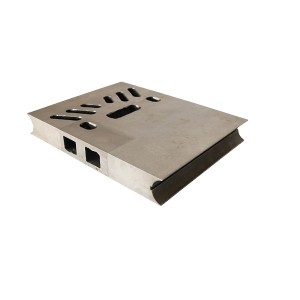
When Cleaning Is No Longer Enough
Filters do not last forever.
Eventually, replacement becomes necessary.
Most plants replace the filter when they observe any of the following:
- Torn mesh.
- Severe corrosion.
- Permanent deformation.
- Repeated blockage after cleaning.
- Reduced mechanical strength.
Trying to continue using a damaged filter may introduce larger particles into the pump, and that can become expensive very quickly.
Daily Parameters Worth Monitoring
Experienced operators seldom rely on a single reading.
Instead, they look at trends.
Typical parameters include:
- Vacuum degree of the vacuum oil tank.
- Hydrogen purity.
- Pump motor current.
- Oil condition.
- Noise and vibration.
- Bearing temperature.
- Pump operating time.
Most problems don’t happen suddenly. The data usually starts changing weeks before a serious fault develops.
That’s why historical trends are so useful. A slight decrease today may become a major outage several months later.
Keeping Some Spare Parts on Site Makes Sense
Because the WS30 Vacuum pump runs continuously, many power stations keep several spare parts in stock.
Common items include:
- Inlet filter screens.
- Mechanical seals.
- Bearings.
- Gaskets.
- Repair kits.
- Vacuum pump oil.
These are not expensive items, but having them available can save valuable time during an outage.
Procurement teams often prepare these consumables before scheduled maintenance seasons begin.
Final Thoughts
The WS30 Vacuum pump may not be the biggest machine inside the SEAL OIL SYSTEM, but its influence on hydrogen purity and generator reliability is larger than many people realize.
In everyday operation, deteriorated oil and blocked inlet filters are far more common than major mechanical failures. Regular oil changes and routine cleaning are simple jobs, but they prevent many headaches later on.
A reasonable preventive maintenance program doesn’t have to be complicated. Paying attention to oil condition, vacuum level and filter cleanliness is often enough to keep the pump working reliably for many years.
For plants planning overhauls or preparing spare parts inventories, confirming the exact WS30 Vacuum pump model and dimensions beforehand can help avoid unnecessary delays. If technical information or replacement components are required, matching them with the existing equipment configuration will make maintenance work much easier.
E-mail: sales@yoyik.com
Tel: +86-838-2226655
Whatsapp: +86-13618105229
Yoyik offers various types of power plants spare parts for steam turbines, generators, boilers as below:
axial piston pump price PVH098R01AD30A250000002001AB010A
cast iron globe valve J61Y-320
Stop valve J41H-10C
Solenoid coil AM-501-1-0149
valve SM4-40(40)151-80/40-10-S205
Pressure relief valve YSF16-70/130KKJ
BFP low pressure accumulator skin NXQA-10/31.5
ACCUMULATOR BOTTLE NXO2-F40/31.5-H
Solenoid valve 22FDA-F5T-W220R-20/LBO
220v solenoid valve pneumatron 4WE6D-L6X/EG220NZ5L
Hydraulic directional valve MG00.11.19.01
Shutdown electromagnet DF22025
clear high pressure hose 16G2AT-HMP(DN25)-DK025-1400
Shaft end seal HSNH440-40
Manual valve; EH oil inlet K151.33.01.01G01
Lye Circulating pump BA34H-112HBM-40-25-125
Cooler APH GLL3-3/0.63
Hand-wheel globe valve KHWJ50F1.6P
bladder with seal kit NXQ-AB-63/31.5-L-Y
3 stage vacuum pump 30-WS-32
110v solenoid valve 300AA00309A
centrifugal water pump YCZ50-25
Post time: Jun-18-2026
-

Stainless Steel Bellows Globe Valve WJ40F-1.6P
-

Steam turbine Servo Valve J761-003A
-

Turbine generator carbon brush 25.4*38.1*102mm
-

NXQ series EH oil system accumulator Rubber bla...
-

Low resistance anti-corona tape
-

LX-FF14020041XR Compressor air filter element
-

LVDT Displacement Sensor DET100A
-

Epoxy-ester air-drying red insulating varnish 9130
-

Dual color water level gauge Tempered glass acc...
-

Hydraulic oil system filter element FAX 250*10
-

SL-1250 Generator stator cooling water filter e...
-

Generator end cap Sealant 53351JG