

Oil temperature tells you a lot about how a transformer is doing, maybe more than any other single number on the panel. The BWY-804AJ(TH) thermometer is built for that job — reading oil temperature on large power transformers and feeding that data into control and alarm systems. It’s rated for outdoor use, which matters since most of these units end up mounted right on the transformer tank, exposed to weather all year.
But there’s a wrinkle that doesn’t get talked about enough, and it’s the reason a lot of engineers end up questioning their own readings: the thermowell depth. Get that wrong and the thermometer can be working perfectly fine while still telling you something that isn’t quite true.
What This Thermometer Is Actually Measuring
A transformer oil-surface thermometer like the BWY-804AJ(TH) doesn’t sit directly in open oil. It sits inside a sealed pocket — usually called a thermowell or a blind tube — that’s welded into the transformer tank near the top oil layer. The temperature bulb, or temp packet as some call it, sits at the bottom of that pocket and picks up heat through the metal wall.
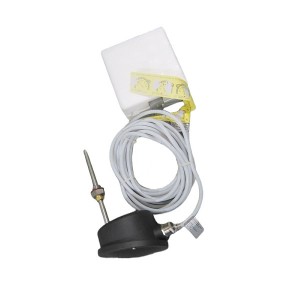
This setup keeps the oil sealed off from the thermometer itself, which is good for safety and maintenance. But it also means the reading depends entirely on how well that bulb is making contact with the actual hot zone of the oil.
The Depth Problem: Why It Matters More Than People Think
Here’s the thing nobody mentions on the spec sheet. Thermowells aren’t always installed to the exact depth the manufacturer designed for. Sometimes it’s a tolerance issue during welding, sometimes it’s a design change somewhere down the supply chain, and sometimes the tube just wasn’t cut to the right length in the first place.
When the insertion depth comes up short, the temperature bulb ends up sitting higher than it should, closer to the tank wall or further from the actual top oil layer. That’s a real problem, because top oil temperature is what protection and cooling control logic is built around.
So Does a Shallow Insertion Still Give You the Real Top Oil Temperature?
Short answer: not reliably. If the bulb sits too shallow, it tends to read lower than actual top oil temperature, especially under heavy load when the oil at the very top gets hottest fastest. The gap between what the thermometer shows and what the oil is actually doing can be small under light load, then grow noticeably once the transformer is pushed harder.
This isn’t really a flaw in the thermometer itself. The BWY-804AJ(TH) reads what’s in contact with the bulb accurately enough. The problem is upstream of the instrument — in how the thermowell was fabricated and installed.
A few things worth checking if you suspect this is happening at your site:
- Compare thermowell depth against the transformer manufacturer’s drawing, not just a generic standard value.
- Look for a noticeable lag or offset between the local thermometer reading and any independent fiber-optic or RTD sensor if one is installed.
- Check whether readings seem unusually stable during load swings — a shallow bulb sometimes reacts more slowly than it should.
Why Accurate Oil Temperature Actually Matters
Top oil temperature feeds directly into cooling fan and pump control, and it’s a key input for loading guides that tell operators how far they can push a transformer safely. If the number coming off the thermometer is running low because of a shallow thermowell, cooling systems might kick in later than they should.
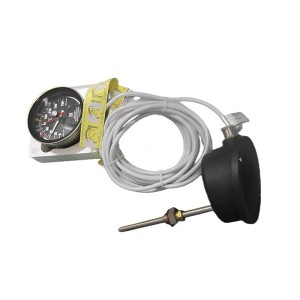
Over months and years, that kind of gap can accelerate insulation aging without anyone noticing right away, since the paperwork still shows temperatures within normal range. It’s a quiet problem, and that’s what makes it worth checking early rather than after something fails.
Key Features of the BWY-804AJ(TH)
| Feature | Detail |
|---|---|
| Application | Oil temperature measurement on large power transformers |
| Protection rating | High, suitable for outdoor installation |
| Sensing method | Bulb-type temperature packet inside thermowell |
| Output | Local display, contact signals for alarm/control (model dependent) |
| Typical mounting | Threaded thermowell on transformer tank, near top oil level |
Beyond the basic spec, what makes this thermometer suited for transformer duty is the housing — sealed against dust and moisture, built to hold up under sun, rain, and temperature swings without the internal mechanism drifting.
Installation Notes Worth Passing to Your Field Team
A few practical points that tend to get skipped during installation, but shouldn’t be:
- Always verify thermowell depth against the actual transformer drawing before mounting the thermometer, not after.
- Use thermally conductive compound inside the thermowell if specified — an air gap between bulb and tube wall slows response time and skews readings low.
- Check the capillary tube routing (if remote-mounted) for kinks or tight bends, since that can affect response as well.
None of this is complicated, but skipping it is exactly how a plant ends up with a thermometer that looks fine on paper and reads wrong in practice.
Choosing the Right Thermometer for the Job
Procurement teams sometimes treat oil-surface thermometers as interchangeable parts, but the thermowell compatibility and depth spec need to match the actual transformer design, not just a general catalog number. Before ordering a BWY-804AJ(TH) or any similar unit, it helps to confirm the thermowell dimensions with the transformer manufacturer’s documentation rather than assuming a standard length applies.
If your team is planning a transformer refurbishment or a new installation, it’s worth requesting the thermowell drawing alongside the thermometer datasheet — that way the depth and fit get checked before anything is welded or mounted.
Final Thoughts
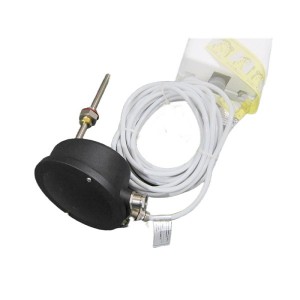
The BWY-804AJ(TH) transformer oil-surface thermometer does its job well when the installation around it is done correctly. The instrument itself isn’t usually where the error comes from — it’s the thermowell depth, and whether the bulb is actually sitting where the hottest oil is.
If there’s any doubt about insertion depth on an existing installation, it’s worth having it checked rather than assuming the reading on the panel tells the full story. A quick verification now is a lot cheaper than dealing with undetected overheating later.
Post time: Aug-07-2026
-
RTV Silicon steel sheets adhesive J0705
-

25CCY14-190B Jacking oil axial piston pump
-

LVDT position sensor HL-6-50-15
-

Generator end cap Sealant 53351JG
-

SH006 EH oil regeneration cellulose precision f...
-

A108-45 Mechanical seal of stator cooling water...
-

Coal Feeder Load Cell AC19387-1
-

Oil purification filter element QF1D350CG03HC
-

HSN series three-screw pump
-

lubricating oil filter element 2-5685-0154-99
-

Jacking oil pump discharge filter DQ8302GA10H3.5C
-

Hydraulic oil Pump Filter Element SDGLQ-25T-32