

Turbine bearing temperature is one of those measurements where you really can’t afford ambiguity. If the number is wrong, or worse, if it’s late reaching the protection system, the consequences can escalate fast. The HM-TC2560 temperature controller handles this by taking a PT100 resistance signal and converting it into two separate 4-20mA outputs, each one going somewhere different — usually one to the DCS for protection logic, and the other to a local panel or backup system.
That sounds simple enough on paper. But engineers evaluating this kind of temperature transmitter tend to ask harder questions once it’s time to actually spec the loop, and those questions deserve real answers, not just marketing language.
What the HM-TC2560 Does
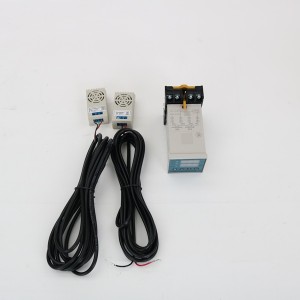
This device is a signal distribution temperature transmitter. It reads a PT100 resistance thermometer input, covering a range from -200°C up to +600°C, and turns that into standard 4-20mA analog signals. The two-output design means the same physical measurement point can feed two separate systems without needing two separate sensors.
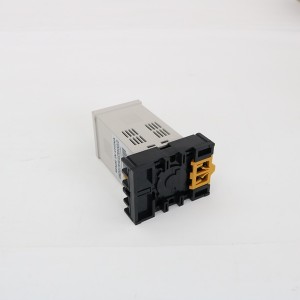
For something like turbine bearing temperature, that matters a lot. You don’t want to be running two RTDs into the same bearing housing just to get redundancy — one PT100 with a dual-output temperature module does the job more cleanly.
Are the Two Outputs Actually Isolated From Each Other?
This is probably the question engineers care about most, and rightly so. On the HM-TC2560, the two output channels are electrically isolated from each other internally. That’s not just a nice-to-have feature — it’s the whole point of using a dual-output temperature controller in a protection-critical application.
Isolation here means the two output loops don’t share a common return path or ground reference that could let a fault on one side bleed into the other. Each channel operates as its own independent current loop.
What Happens If One Output Loop Gets Shorted?
This is where the isolation design actually gets tested in real conditions. If the load on one output channel — say, the local panel loop — develops a short circuit, that fault should stay contained within that channel. The other output, the one feeding DCS protection logic, keeps operating normally.
This is exactly why plants use dedicated dual-channel transmitters instead of trying to split one 4-20mA signal with a resistor network or some other passive method. A split signal doesn’t give you real isolation — a fault anywhere in that arrangement can drag both readings down together, which defeats the purpose of having two outputs in the first place.
Signal Accuracy Under Electromagnetic Interference
Power plants aren’t quiet electrical environments. Large motors, switchgear, and high-voltage equipment all generate electromagnetic noise, and any temperature transmitter installed nearby has to deal with that reality.
The HM-TC2560 is built with shielding and filtering intended to keep measurement accuracy stable even with this kind of interference present. That said, a few installation practices matter just as much as the transmitter’s internal design:
- Use shielded twisted-pair cable for the PT100 input wiring, and ground the shield at one end only.
- Keep signal cables physically separated from high-current power cables where possible, especially near motor starters or breakers.
- Verify the transmitter’s ground reference matches plant grounding standards rather than floating it arbitrarily.
Skip these steps and even a well-designed temperature transmitter can start showing noise on the output, regardless of how good its internal filtering is.
Does Crosstalk Happen Between the Two Channels?
Short answer: not under normal operating conditions, assuming the transmitter is functioning as designed. Because the two output channels are isolated at the circuit level, a signal change or disturbance on one channel shouldn’t show up as a corresponding change on the other.
Crosstalk in these kinds of systems usually points to a wiring problem rather than a flaw in the transmitter itself — shared ground loops, cable runs bundled too closely together over long distances, or a damaged isolation barrier from age or a previous fault event. If crosstalk is suspected on an installed unit, checking wiring separation and grounding is the first step before assuming the module itself has failed.
Typical Applications Beyond Turbine Bearings
While turbine bearing temperature monitoring is probably the most common use case in power plants, the HM-TC2560 shows up in other spots too:
- Generator winding and core temperature measurement points
- Feedwater and steam line temperature monitoring where redundant readings are required
- Transformer oil temperature backup channels alongside dedicated oil thermometers
Anywhere a single PT100 measurement needs to feed two independent systems, this kind of dual-output temperature controller tends to be a practical fit.
Key Specifications
| Parameter | Detail |
|---|---|
| Input type | PT100 resistance temperature detector |
| Measurement range | -200°C to +600°C |
| Output | Two independent 4-20mA channels, electrically isolated |
| Typical application | Turbine bearing temperature, generator temperature, redundant DCS/local signal distribution |
| Environment | Designed for power plant electromagnetic interference conditions |
What to Check Before Ordering
A few practical things worth confirming with your supplier or engineering team before specifying the HM-TC2560 for a project:
- Confirm isolation voltage rating meets your plant’s electrical safety standards, particularly if one output feeds protection-critical DCS logic.
- Ask for EMC test documentation if the installation site has known high interference levels nearby.
- Verify the PT100 wiring configuration (2-wire, 3-wire, or 4-wire) matches what your field instrumentation actually uses.
If your team is working through a bearing temperature monitoring upgrade or adding redundant signal paths to an existing loop, it’s worth requesting the full technical datasheet for the HM-TC2560 before finalizing the design — that way isolation ratings and wiring requirements can be checked against your actual DCS input specifications ahead of time.
Final Thoughts
The HM-TC2560 temperature controller earns its place in protection-critical loops because the isolation between its two output channels actually holds up under fault conditions, not just in ideal lab testing. A short on one loop stays on that loop. Interference gets filtered rather than passed straight through to the reading.
For turbine bearing temperature and similar high-stakes measurement points, that kind of reliability isn’t optional — it’s the reason dual-output signal distribution transmitters exist in the first place. Getting the wiring and grounding right during installation is what lets the transmitter actually perform the way its specifications promise.
Post time: Aug-07-2026
-

AST/OPC solenoid valve SV4-10V-C-0-00
-

Sealing Oil Vacuum Oil Tank Float Valve BYF-80
-

Circulating oil pump oil-suction filter WU-100X...
-

Generator Epoxy adhesive DFCJ1306
-

Stainless Steel Hydraulic Oil Filter 0850R020BN3HC
-

Industrial water filter KLS-100I plant Stator c...
-

EH oil main pump suction filter HQ25.200.11Z
-

EH oil circulating pump oil filter element HC89...
-

Steam Turbine Shutoff Valve HGPCV-02-B30
-

Actuator Inlet Flushing Oil Filter DP301EA01V/-F
-

Generator hydrogen cooling system safety valve ...
-

Lube Oil System Filter Element 2-5685-9158-99