

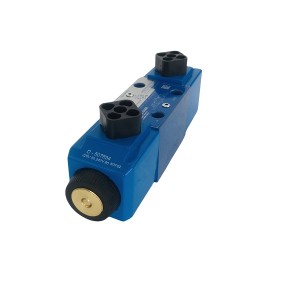
There is a kind of failure in EH oil and jacking oil systems that does not show up as an alarm right away. The valve does not fail closed. It does not fail open. It just does not quite get all the way back to where it should be. A solenoid directional control valve like the DG4V-3-2A-VM-U-SA7-60 uses a spool sliding inside a sleeve with clearance measured in microns. When that spool stops somewhere between positions instead of fully returning, the oil circuit ends up in a state that is neither fully open nor fully closed. This kind of problem is harder to catch than a full failure.
How Tight Is the Clearance
The clearance between the valve core and sleeve is typically under 0.008mm. That is smaller than many of the particles that hydraulic oil filtration is supposed to catch, especially if filtration has degraded. This tight fit is what gives the valve low internal leakage in a given position, and it is what allows precise directional control. But it also means very little tolerance for anything that resists smooth spool motion. A varnish deposit, a slightly bent spool, a solenoid losing some force margin — any of these can be enough.
What the Valve Does
A directional control valve guides oil flow to different parts of a hydraulic circuit, or stops it, depending on the spool position. In an EH system, this usually means directing high-pressure fluid to actuators controlling steam admission valves, such as governor valves or intercept valves, based on the control signal. In a jacking oil system, a similar valve directs oil to lift the turbine shaft off its bearings before slow-roll or barring gear operation. This protects the bearing surfaces during startup.
The solenoid shifts the spool when energized. A spring or similar mechanism returns it when de-energized, or the reverse, depending on configuration. Full travel to a defined end position is what the control system assumes. Energized means one flow path. De-energized means another. Nothing in between should exist during normal operation.
The Problem With Being In Between
If the spool does not fully return — stopped short by debris against the sleeve, or dragged by a solenoid armature that does not release cleanly — the internal flow paths do not line up with either the commanded open or closed position. Depending on the valve’s porting, this can leave a partial path open where it should be shut, or restrict a path that should be fully open. Some spool geometries can show both at once.
A downstream actuator does not react the same way it would to a simple stuck valve. A stuck-closed valve at least gives a clean symptom — no motion, no pressure change downstream. A spool caught between positions gives something less obvious. Reduced flow means the actuator moves slower than expected. A small leak path where the valve should be shut means the actuator can drift when it should hold still. On a jacking oil system, a partial flow condition can mean the oil film pressure lifting the shaft does not reach its intended value. That is a bearing protection issue, not just a control accuracy issue.
None of these symptoms look like a valve fault right away. A slow actuator can look like a pump problem. A drifting actuator can look like a servo calibration issue. The directional valve is often not the first thing anyone suspects.
What Shows Up in the DCS
A partial-reset condition does not always trip a discrete alarm the way a full failure does. A few signs are worth watching in DCS trends, though none of them confirms the diagnosis by itself.
Actuator response time is usually the first thing to shift. If a governor valve normally reaches its commanded position within a known time, and that time starts to stretch, even slightly, with no change in system pressure or oil temperature, a restricted flow path is worth suspecting. But slower response can also come from a weakening servo valve, reduced pump output, or filter loading upstream. Response time on its own does not settle it.
Position feedback that does not quite settle is another sign, where feedback instrumentation exists. An actuator that gets close to its commanded position but hunts slightly, or sits a small percentage off, can point to the directional valve not delivering a clean flow path. This overlaps with servo valve issues and mechanical friction in the actuator, so it is suggestive rather than conclusive.
Solenoid coil current, where it is monitored, can sometimes hint at a mechanical hang-up. A solenoid working against an obstruction may draw a slightly different current profile than one moving freely. This depends on whether the system actually logs coil current with enough resolution, which older installations often do not.
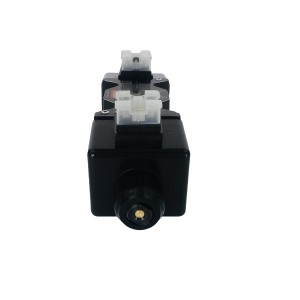
Comparing the solenoid command signal against actuator response afterward is probably the most useful check available from DCS data alone. If the solenoid is commanded to de-energize and the actuator shows a slow bleed-down in position instead of an immediate hold, that points at incomplete spool return, especially if the pattern repeats after the same type of actuation.
Other Things That Look Similar
Before settling on a partial-reset spool as the cause, a few other explanations are worth checking.
A degraded servo valve elsewhere in the actuator loop can cause slow or imprecise response with no connection to this particular directional valve. Comparing behavior across actuators fed by directional valves of the same type can help narrow this down.
Fluid viscosity changes from temperature swings can also slow actuator response. This should track with oil temperature trends. If slow response only shows up during cold starts and clears once the system warms up, that points away from a spool that is mechanically stuck all the time.
Varnish or sludge buildup on the spool and sleeve, from fluid degrading chemically, can produce a partial-stick condition similar to contamination but with a different cause and a different fix. Oil analysis — acid number, varnish potential — helps tell these apart.
Confirming It Physically
DCS data can point to a suspect valve. Confirming the condition usually means pulling the valve, or checking spool travel directly if the installation allows external access. Checking that the spool reaches full mechanical travel in both directions settles the question more directly than trend data alone. If the valve is removed, inspecting the spool and sleeve bore for scoring or deposits gives a physical explanation to match whatever the DCS data suggested.
Maintenance Notes
For valves at this precision level, fluid cleanliness matters most. Filtration performance directly affects how likely contamination-driven sticking becomes, given how little clearance there is. Periodic oil analysis, including particle counting and varnish testing where applicable, can catch degradation before it turns into a stuck spool. Solenoid coil condition and any external return mechanism should be checked during scheduled outages, since the return side is usually where a spool failure originates, more often than the forward stroke.
Before Ordering
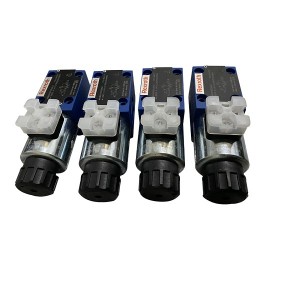
Buyers specifying a solenoid directional control valve at this precision level should confirm the spool-sleeve clearance and the fluid cleanliness class needed to maintain it, the response time rating under actual system pressure and viscosity, solenoid voltage and coil specifications matched to the plant’s control system, and whether position feedback or diagnostic monitoring is offered. Some designs include this option, and it makes a partial-reset condition much easier to catch before it affects downstream performance.
Closing
A valve that fails completely is, in a way, the easier problem. A valve that fails partway is the one that costs time, because the symptoms usually show up somewhere else in the system before anyone traces them back to a spool that never made it home. With clearances this tight, there is almost no room for anything to get in the way. DCS data rarely gives a clear answer by itself. It usually takes response time, position feedback, and command signals together, along with a physical check, to confirm what is actually happening inside the valve.
Post time: Sep-08-2026
-

Jacking Oil Pump Suction Filter QF6803GA20H1.5C
-

SM4-20(15)57-80/40-10-S182 actuator electro-hyd...
-

Hydraulic Accumulator NXQ-A-6.3/31.5-L-Y
-

Duplex oil filter DQ150AW25H1.0S
-

Compressed Air Filter Element LX-FF14020044XR
-

Steam turbine Servo Valve J761-003A
-

Integrated Bearing Vibration Transmitter JM-B-35
-

Platinum thermal resistance temperature sensor ...
-

EH Oil Main Pump Discharge Oil Filter Element D...
-

Gear Oil Pump GPA2-16-E-20-R6.3
-

MM2XP 2-pole 24VDC Digital Power Intermediate R...
-

Solvent-free RTV Epoxy adhesive 53841YR