

A dripping shaft seal on a turbine lube oil pump is one of those problems that looks minor until it isn’t. A few drops per hour turns into a puddle, the puddle becomes a housekeeping issue, and somewhere in the background the question nobody wants to answer is whether the seal is about to fail completely — and what that means for bearing lubrication while the unit is running.
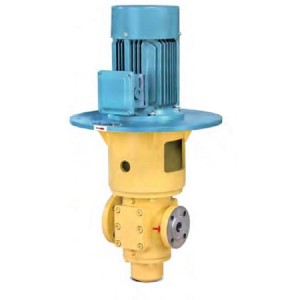
The 125LY-35-4 is a vertical centrifugal lube oil pump used in 300MW steam turbine lubricating oil systems. It mounts on top of the oil tank or at the turbine front bearing pedestal, and its main job is circulating lubricating oil to the turbine and generator bearings during startup and as a backup during normal operation. The pump assembly includes a base frame, bearing housing, connecting pipe, volute casing, shaft, and impeller. It’s a straightforward design — but when the shaft seal starts leaking, the cause isn’t always obvious from the outside.
Why the Shaft Seal Location Matters on a Vertical Pump
In a vertical centrifugal pump like the 125LY-35-4, the shaft runs vertically from the motor above down through the bearing housing and into the volute. The shaft seal sits where the shaft passes out of the wet end — between the impeller cavity and the atmosphere. Its job is to stop lubricating oil from migrating up the shaft and out.
The vertical orientation changes the loading conditions compared to a horizontal pump. Gravity acts along the shaft axis rather than perpendicular to it, which affects how wear distributes across the seal faces. Any shaft misalignment or vibration also has a different character in a vertical installation. These factors matter when you’re trying to figure out why the seal is leaking.
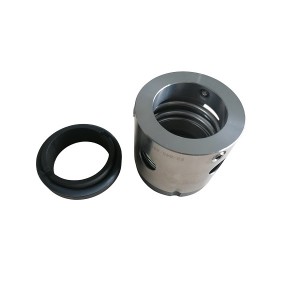
Three Causes of Shaft Seal Leakage — and How to Tell Them Apart
A drip at the shaft seal area on a lube oil pump can come from a few different places. The fix is different for each one, and replacing the mechanical seal when the real problem is vibration or an aged O-ring wastes time and doesn’t solve anything.
Mechanical Seal Face Wear
Mechanical seals in this type of pump use a rotating face (attached to the shaft) running against a stationary face (held in the seal housing). A thin film of fluid between the faces provides lubrication. Over time, the lapping surfaces wear, the film becomes inconsistent, and leakage increases gradually.
The characteristic pattern of mechanical seal face wear is a leak that starts small and gets slowly worse over weeks or months. It’s not a sudden drip — it’s a drip that used to be one drop every few minutes and is now one drop every minute. The leakage also tends to be consistent rather than intermittent. If you clean the area and come back an hour later, the pattern is the same.
Visual evidence when the seal is pulled: scoring, uneven wear tracks, or chipping on either sealing face. Carbon face wear is normal over long service periods. What’s not normal is a face that shows scratching from particle contamination in the oil, which suggests the oil cleanliness in the system is contributing to the seal’s degradation.
O-Ring Aging and Chemical Degradation
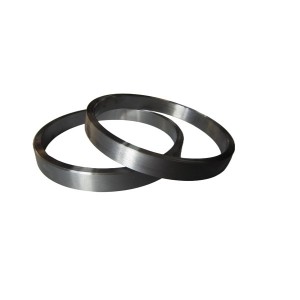
Mechanical seals use O-rings to seal the stationary face into the housing and the rotating face onto the shaft sleeve. These O-rings sit in a warm, oil-wetted environment for years at a time. Nitrile rubber — the most common O-ring material in lube oil pump applications — hardens and loses elasticity as it ages. A hardened O-ring that can no longer conform to its groove surface allows oil to seep past it.
O-ring failure tends to produce leakage that appears at specific locations around the seal housing circumference rather than uniformly from the seal face area. The drip often comes from the outer housing joint rather than from the center of the shaft. If you can get close enough during operation to see where exactly the oil is coming from, this distinction is useful.
When the seal is disassembled, aged O-rings show visible hardening, cracking, or flattening from compression set. A new O-ring springs back when released from compression; an aged one stays flattened. In some cases the O-ring material shows swelling rather than hardening — this indicates chemical incompatibility between the O-ring compound and the lubricating oil formulation, which is worth checking if the plant has recently changed oil brands or type.
Shaft Vibration Causing Seal Instability
This one is different from the other two because the seal itself may be in acceptable condition when it’s examined — but it’s being asked to handle movement it wasn’t designed for. Shaft vibration causes the rotating seal face to run eccentrically relative to the stationary face. The faces that should maintain consistent light contact instead make intermittent heavy contact in one area and lose contact in another, and the leakage path opens and closes with each rotation.
The leak pattern from vibration-related seal failure is typically intermittent and varies with pump speed or load. It may be worse during startup when the pump is accelerating through certain speed ranges. The leakage might reduce or stop at steady-state operating speed, then reappear during coastdown. This on-off character is the distinguishing feature.
Vibration sources in a 125LY-35-4 vertical centrifugal pump include impeller imbalance, worn shaft bearings, coupling misalignment between pump and motor, or resonance in the pump’s support structure. Before replacing the seal on a pump with vibration-induced leakage, the vibration source needs to be addressed — otherwise the new seal fails on the same timeline as the old one.
Measuring shaft vibration at the bearing housing with a portable vibration meter during operation gives a direct answer. Vibration levels above the pump manufacturer’s alarm threshold in the radial direction point toward a mechanical issue that needs to be corrected alongside the seal work.
Quick Reference: Leak Patterns and Likely Causes
| Leak Pattern | Most Likely Cause | Confirming Check |
|---|---|---|
| Slow, steady drip that worsens over months | Mechanical seal face wear | Worn or scored faces on disassembly |
| Drip located at housing joint, not shaft center | O-ring aging or compression set | Hardened, cracked, or flattened O-rings on removal |
| Intermittent drip, varies with speed | Shaft vibration / bearing wear | Elevated radial vibration at bearing housing |
Recommended Mechanical Seal Replacement Interval
For a steam turbine lubricating oil pump in continuous-duty service, mechanical seal life depends on oil cleanliness, operating temperature, shaft vibration levels, and how consistently the pump runs at or near its design point. That said, most maintenance programs for this class of pump use a 3-year preventive replacement interval as a starting baseline.
Some plants extend this to 4 years if vibration monitoring shows consistently low levels and oil analysis confirms acceptable cleanliness. Running beyond 5 years without inspection is generally not recommended for a pump in this application — the consequences of a seal failure on a turbine lube oil pump during operation are significant enough that the cost of a planned seal change is well justified.
A few conditions that warrant earlier replacement regardless of calendar interval:
- Oil cleanliness has been out of specification for an extended period — particles accelerate seal face wear faster than age alone
- The pump has experienced a known vibration event such as impeller damage, bearing replacement, or coupling work
- Any visible weeping at the seal area that has increased in rate over a monitoring period
- The pump has been pulled for other maintenance — if it’s already disassembled and the seal has more than 2 years of service, replacing it at the same time avoids a second outage
When ordering replacement seals for the 125LY-35-4, confirm the shaft diameter, seal face material, and O-ring compound against your current installation before procurement. Seal configurations can vary between pump production batches, and an incorrect face material selection for the oil type in service will shorten the replacement seal’s life.
What to Check Before the Seal Goes Back In
Replacing the mechanical seal without checking the surrounding conditions first is the most common reason a new seal leaks sooner than expected. A few checks that are worth doing while the pump is apart:
Shaft sleeve condition. The O-ring on the rotating assembly seals against the shaft sleeve. Any grooves, roughness, or corrosion pitting on the sleeve surface at the O-ring contact zone will cause the new O-ring to leak from the first hour of operation. If the sleeve shows wear, replacing it alongside the seal is the right call.
Seal housing bore. The stationary seal face fits into the housing bore. If the bore has been damaged or is out of round, the stationary face won’t seat correctly and the seal won’t function as designed. Check for any fretting damage or corrosion at the bore surface.
Shaft bearing clearance. Excessive bearing clearance allows shaft radial movement that the seal faces weren’t designed to accommodate. Measure bearing clearance and compare against the manufacturer’s wear limit before reassembly. If clearance is near or beyond the limit, replacing the bearings at the same time avoids coming back to the pump again shortly after.
If you’re planning a seal replacement on the 125LY-35-4 and want to verify part compatibility or current lead times on seal kits, reaching out to your equipment supplier with the pump nameplate data is the most reliable way to confirm you’re getting the right configuration.
Operating Checks That Help Catch Problems Early
Between maintenance intervals, a few simple checks during routine rounds help catch seal deterioration before it becomes a leak that requires an unplanned outage.
Look at the area around the shaft seal housing at every inspection round. A clean, dry housing is the baseline. Any oil film or residue that appears between rounds is worth noting — even if it’s small — because the trend over weeks tells you more than any single observation.
Monitor pump vibration at the bearing housing during regular condition monitoring rounds. The 125LY-35-4 is a vertical centrifugal pump, and changes in radial vibration levels between measurements are more meaningful than absolute numbers alone. A reading that was steady for a year and then starts climbing is a signal worth investigating, not just documenting.
Oil cleanliness data from the lube oil system’s routine sampling program also feeds into seal life assessment. If particle counts are trending upward, seal face wear rate is likely increasing alongside it — the same particles that show up in the oil analysis are passing through the seal contact zone.
Closing Note
Shaft seal leakage on a lube oil pump is manageable when you know what’s causing it. The three failure modes — face wear, O-ring degradation, and vibration-induced instability — each have a pattern that shows up in how and when the leak behaves, and in what the seal looks like when it comes out. Getting the diagnosis right the first time avoids the frustration of a new seal that leaks for the same reason the old one did.
For a 300MW turbine lube oil system where this pump is part of the bearing protection chain, a 3-year preventive seal replacement interval combined with routine visual and vibration monitoring between outages keeps the risk manageable without excessive maintenance burden.
Post time: Jul-10-2026
-

BFP lube filter QF9732W50HPTC-DQ
-

DN80 Sealing oil vacuum tank floating valve
-

Stainless steel globe throttle check valve LJC ...
-

Steam turbine EH oil Filter element QTL-63
-

Boiler Tube sliding block
-

30-150-207 regeneration device diatomite oil fi...
-

LVDT Sensor TDZ-1E-32
-

CQJ type accumulator Gas charging tool
-

Hydraulic system air filter element QUQ2-20×1
-

AST/OPC solenoid valve SV4-10V-C-0-00
-

MG00.11.19.01 coal mill Hydraulic reversing valve
-

LX-FF14020041XR Compressor air filter element