

Nobody thinks much about the condensate trap valve on a hydrogen dryer until the dewpoint starts climbing or a hydrogen detector goes off. It’s one of those parts that just quietly does its job — or quietly stops doing it — and you don’t always know which until something downstream goes wrong.
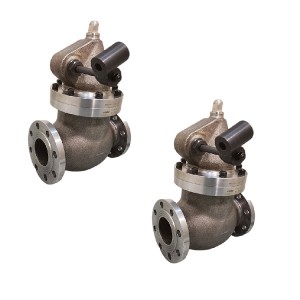
The 1F05407 sits at the bottom of an adsorption-type hydrogen dryer. Its whole purpose is to drain condensate water that builds up during regeneration, while keeping hydrogen gas from escaping through the drain line. Water out, hydrogen stays in. Simple in theory. When the valve fails, it fails in one of two ways, and they cause completely different problems.
Quick Background on What This Valve Does
During the regeneration cycle, the desiccant bed gets heated to drive off the moisture it collected. That moisture turns into condensate water and drops to the bottom of the dryer. The trap valve opens, drains the water, then closes again before any significant amount of hydrogen can follow it out.
The mechanism — usually float-actuated — responds to liquid level rather than a timer or manual signal. When liquid is present, the float rises and opens the valve. When the water is gone, the float drops and the valve closes. It’s supposed to be automatic and self-regulating. The problem is anything that stops that float from moving freely, or anything that holds the valve seat open or shut when it shouldn’t be.
Stuck Closed: The Slow Problem That Creeps Up on You
When the trap valve is locked in the closed position, condensate has nowhere to go. The regeneration cycle keeps producing water, the water keeps accumulating, and eventually you’ve got a standing pool at the bottom of the dryer that wasn’t supposed to be there.
What the Water Does Inside the Dryer
If the level gets high enough, it starts wetting the bottom of the desiccant bed. Wet desiccant doesn’t adsorb much. The bed that was just regenerated is now partially saturated again before it even goes back into service. You’ll see the hydrogen dewpoint at the dryer outlet start drifting upward — slowly at first, which is exactly why this failure mode is easy to miss for a while.
It’s the kind of thing where engineers start blaming desiccant aging or regeneration temperature issues before anyone thinks to check whether the condensate is actually draining.
Heat Exchanger Ice Plugging
A lot of hydrogen dryer setups have a cooling stage — the hot, wet gas passes through a heat exchanger before condensate collection. If water backs up into that heat exchanger and the local temperatures are cold enough, it can freeze. Ice in the heat exchanger passages restricts flow. Pressure drop across the dryer goes up. Sometimes you get an alarm, sometimes the first obvious sign is just the dewpoint getting worse and the dryer seeming sluggish.
Getting ice out of a heat exchanger while the dryer is in service isn’t easy. Usually the unit has to come offline, which for a generator hydrogen dryer means you’re managing hydrogen purity with one less tool until it’s back up.
The Dewpoint Keeps Climbing
Wetted desiccant, blocked cooling, incomplete condensate separation — all of it pushes the outlet dewpoint higher. For hydrogen-cooled generators this matters. Moisture in the hydrogen atmosphere corrodes internal components over time. It also reduces the thermal conductivity of hydrogen, which is the whole reason hydrogen is used as a coolant in the first place.
Running with a consistently elevated dewpoint isn’t an immediate crisis, but it shortens maintenance intervals and quietly works against the equipment.
Stuck Open: The Problem That’s More Urgent
A trap valve locked open doesn’t hurt dryer performance. The condensate drains fine. But now you’ve got a continuous open path from the hydrogen system to wherever the drain line terminates — and hydrogen will find that path.
Hydrogen Leaking Through the Drain
When there’s no condensate water present to act as a liquid seal, hydrogen flows straight through the open valve and out the drain. How much leaks depends on the system pressure and the drain piping geometry, but it doesn’t stop. Generator hydrogen systems typically run at 0.2 to 0.5 MPa. That’s enough pressure to push a meaningful amount of gas through an open drain path continuously.
The leak isn’t intermittent — it’s steady. Every minute the valve stays stuck open, hydrogen is leaving the system.
Why This Is a Safety Issue
Hydrogen’s flammable range in air is around 4% to 75% by volume. That’s a wide window. In a partially enclosed equipment room or a drain collection area that isn’t well ventilated, concentration can build up faster than people expect. Fixed hydrogen detectors are the last line of defense here, not the primary safeguard.
Beyond fire risk, if the leak rate is high enough, generator casing pressure starts dropping. Once it drops below the minimum threshold, low-pressure protection systems may trigger a shutdown sequence. At that point you’re not just dealing with a small drain valve — you’ve got a forced outage.
Side-by-Side: Two Failures, Two Very Different Problems
| Failure Mode | What Goes Wrong First | What Follows | How to Catch It |
|---|---|---|---|
| Stuck Closed | Condensate pools inside dryer, desiccant gets wet | Dewpoint rises, possible heat exchanger ice plug | Dewpoint trend, rising dryer pressure drop |
| Stuck Open | Continuous hydrogen leak through drain line | Casing pressure loss, flammable concentration risk | H₂ detectors, casing pressure trend, drain inspection |
Why Does the Trap Valve Get Stuck in the First Place
The 1F05407 cycles a lot over its service life. Every regeneration cycle triggers the valve. That’s a lot of open-close cycles over a few years, in conditions that aren’t particularly gentle.
- Mineral scale and deposits: Condensate water isn’t pure. Dissolved minerals from desiccant breakdown or pipe corrosion deposit on the seat and float over time until the mechanism can’t move freely.
- Debris in the drain path: Fine particles — desiccant dust, pipe scale — can lodge between the valve seat and disc. Even a small piece of scale can hold a valve open or prevent closure.
- Float failure: Float-actuated designs depend on the float staying buoyant. If the float develops a leak and fills with water, it sinks regardless of the condensate level and the valve stops responding correctly.
- Corrosion of internal parts: The environment inside a hydrogen dryer drain — intermittent water, elevated temperature, some chemical exposure — is hard on components that weren’t specified for it. Corroded seats or mechanism parts stick.
What to Actually Check and When
Trap valve inspection doesn’t always make it onto the maintenance schedule with the same priority as desiccant replacement or regeneration heater checks. It should.
During any planned dryer outage, pull the 1F05407 and check it. Manually work the mechanism through its full range. Look at the seat surface for deposits or pitting. Check that the float is intact and still buoyant. If anything looks questionable, replace it — the cost of a new trap valve is small compared to the cost of dealing with either failure mode after the dryer goes back into service.
For sites where the dryer serves a single large generator and unplanned outages are expensive, keeping a spare 1F05407 condensate trap valve on the shelf is worth it. A confirmed stuck valve can be swapped immediately instead of waiting on procurement.
If you’re planning a dryer overhaul or need to verify compatibility, confirm the 1F05407 spec against your drain port configuration and system pressure before ordering — drain valve fittings and pressure ratings vary across dryer models.
Operating Parameters Worth Watching Between Maintenance
The trap valve itself doesn’t have instrumentation on it. But what happens downstream when it fails does show up in plant data if you know what to look for.
Hydrogen dewpoint at the dryer outlet is the most useful indicator for a stuck-closed valve. A dewpoint that’s been stable and then starts drifting — even slowly — is worth investigating at the condensate drain before assuming the desiccant is the problem.
For a stuck-open condition, casing pressure trend is what to watch. If the generator needs more frequent hydrogen makeup than usual and there’s no obvious reason for it, the entire hydrogen boundary deserves a look — including the dryer drain and the trap valve.
Fixed hydrogen detectors near the drain termination point are the most direct indicator of a stuck-open valve. If the drain routes to an enclosed collection area, make sure hydrogen detection coverage actually includes that space. It’s not always the case.
Bottom Line
The 1F05407 condensate trap valve is a small part with two very specific ways to fail. One causes a slow performance problem that’s easy to misdiagnose. The other creates a safety exposure that needs to be caught quickly.
Neither failure is dramatic at the moment it starts. Both are manageable with routine inspection and some awareness of what the surrounding parameters are telling you. A trap valve that gets checked regularly and replaced when it shows wear doesn’t turn into either of those problems — which is a much better situation than dealing with them after they’ve developed.
Post time: Jul-10-2026
-

High Temperature Steam Electric Butt Welding Gl...
-

Turbine Rotation Speed Impactor Monitor HZQW-03A
-

Cellulose filter element LX-DEA16XR-JL
-

Sealing Ring of Generator Hydrogen Cooling System
-

Platinum thermal resistance temperature sensor ...
-

EH oil system globe valve SHV20
-

Oil pump discharge flushing oil filter DP602EA0...
-

Dual color water level gauge Tempered glass acc...
-

Generator end cap Sealant 53351JG
-

Steam Turbine Rotation Speed Monitor HZQS-02H
-

LVDT Transmitter LTM-6A
-

Steam turbine Servo Valve J761-003A