Featured High-Precision Sensor & Industrial Products
Industry-leading components trusted by power plants and industrial facilities across Vietnam and Southeast Asia
High Temperature Eddy Current Sensors in Vietnam's Industrial Landscape
Understanding local demand, growth drivers, and the expanding role of precision sensing technology
Vietnam's Industrial Boom Creates Strong Demand
Vietnam has emerged as one of Southeast Asia's fastest-growing industrial economies. With a GDP growth rate consistently above 6% and a rapidly expanding manufacturing base, the country's demand for high-precision industrial sensing equipment — particularly high temperature eddy current sensors — has surged significantly over the past decade.
The country hosts more than 30 operational coal-fired and gas-fired thermal power plants, numerous hydroelectric stations, and a rapidly growing network of industrial manufacturing facilities. All of these facilities require continuous, reliable monitoring of rotating machinery, rotor displacement, shaft vibration, and thermal expansion — applications where high temperature eddy current sensors are essential and irreplaceable.
Major industrial zones such as Binh Duong, Dong Nai, Ha Noi, Hai Phong, and Ho Chi Minh City are home to thousands of factories ranging from textile mills and electronics assembly plants to steel production and chemical processing facilities. As automation and predictive maintenance become industry standards, the adoption of eddy current sensor technology in Vietnam continues to accelerate.
⚡ Key Market Insight
Vietnam's power generation capacity is projected to double by 2030, driving unprecedented demand for high-temperature industrial sensors capable of withstanding extreme operating conditions in turbine and boiler environments.
What Is a High Temperature Eddy Current Sensor?
A high temperature eddy current sensor is a non-contact displacement measurement device that operates on the principle of electromagnetic induction. When an alternating magnetic field generated by the sensor probe approaches a conductive target — such as a steel shaft or metallic surface — eddy currents are induced in the target. Changes in the target's distance from the probe alter the eddy current density, which the sensor converts into a precise electrical signal representing displacement or position.
Unlike standard eddy current sensors, high temperature variants are specifically engineered to operate reliably in environments where temperatures can reach 180°C to 260°C or higher. They are built with thermally stable materials, special insulation coatings, and robust construction to withstand thermal cycling, oil contamination, and mechanical vibration — conditions common in Vietnam's power generation and heavy manufacturing sectors.
These sensors are indispensable for monitoring rotor eccentricity, shaft vibration, axial position, and gap measurement in steam turbines, gas turbines, compressors, and large industrial motors — systems at the core of Vietnam's energy and production infrastructure.
Vietnam Industrial Sensor Market at a Glance
Local Application Scenarios in Vietnam
High temperature eddy current sensors serve critical roles across Vietnam's key industrial sectors
Thermal Power Generation
Vietnam's coal and gas-fired power plants rely on eddy current sensors to monitor steam turbine shaft vibration, axial displacement, and rotor eccentricity in real time. Plants such as Vinh Tan, Duyen Hai, and Mong Duong use these sensors for continuous condition monitoring to prevent costly unplanned outages.
Steel & Metal Manufacturing
Facilities in the Hoa Phat and Formosa Ha Tinh steel complexes use high temperature eddy current sensors on rolling mill drives, compressors, and large induction motors. The sensors withstand the extreme heat and vibration endemic to steelmaking environments.
Oil, Gas & Petrochemical
Vietnam's offshore oil platforms and onshore refinery operations — including PetroVietnam facilities in Vung Tau — employ eddy current sensors on centrifugal compressors and turbine-driven pumps, where non-contact measurement under high temperature and pressure conditions is a safety imperative.
Cement & Building Materials
Vietnam is one of Asia's top cement producers. Rotary kilns and large industrial fans in cement plants across Thanh Hoa, Nghe An, and Ha Nam provinces require reliable shaft monitoring at temperatures exceeding 200°C — a core use case for high temperature eddy current sensors.
Electronics & Semiconductor
As Samsung, LG, Intel, and other major technology manufacturers expand their Vietnamese operations, precision displacement sensing in automated production equipment and cleanroom HVAC systems is becoming a growing application area for eddy current technology.
Industry Development Trends in Vietnam & Southeast Asia
The eddy current sensor market is evolving rapidly — here are the key forces shaping its future
Predictive Maintenance & Industry 4.0
Vietnamese manufacturers are increasingly adopting Industry 4.0 frameworks. Eddy current sensors feed real-time vibration and displacement data into AI-powered predictive maintenance platforms, reducing downtime by up to 40% in power plants and large industrial facilities.
Wireless & Smart Sensor Integration
Next-generation eddy current sensors increasingly feature integrated signal conditioning, digital output protocols (Modbus, PROFIBUS, IO-Link), and wireless transmission capabilities — enabling seamless integration with SCADA and DCS systems prevalent in Vietnam's newer power plants.
Localization & Supply Chain Development
Vietnam's government is actively encouraging technology transfer and local manufacturing. As a result, international sensor suppliers are establishing local distribution networks and technical service centers in Ho Chi Minh City, Hanoi, and Da Nang to better serve domestic industrial customers.
Renewable Energy Expansion
Vietnam has set ambitious targets for wind and solar energy. Wind turbine generators require precision shaft monitoring using eddy current technology, opening a rapidly growing new application segment as offshore wind projects near Binh Thuan and Ba Ria-Vung Tau come online.
Stricter Safety & Quality Standards
Vietnam's Ministry of Industry and Trade and international clients are pushing for ISO-certified, IEC-compliant sensing solutions. This is driving demand for premium, traceable high temperature sensors over lower-quality alternatives, benefiting established global suppliers.
Rising Replacement & Upgrade Demand
Many of Vietnam's thermal power plants installed in the late 1990s and 2000s are now entering major overhaul cycles. Aging sensor systems are being upgraded with modern high-temperature eddy current solutions capable of integration with current digital control architectures.
Technical Excellence: Working Principles & Specifications
⚙ Working Principle of Eddy Current Sensors
High temperature eddy current sensors operate through electromagnetic induction. The sensor's probe coil generates a high-frequency alternating magnetic field (typically 1kHz–1.5kHz). When this field encounters a conductive metallic target, eddy currents are induced. The impedance of the coil changes in proportion to the gap between probe and target, enabling non-contact, wear-free displacement measurement.
This non-contact operating principle makes eddy current sensors ideal for applications where physical contact would cause wear or contamination — such as measuring the displacement of a rotating turbine shaft at operating temperatures.
📈 Key Technical Parameters
- Measurement Range: 0–200mm (model dependent)
- Linearity: ±0.05%–0.5% full scale
- Sensitivity: 2.8–230mV/V/mm
- Excitation: 5–20Vrms AC, 400Hz–10kHz
- Operating Temperature: -55°C to +260°C (high-temp models)
- Output: 4–20mA, 0–10V, RS485, Modbus
- Protection: IP67 / IP68 fully sealed construction
🌟 Product Features & Advantages
High Precision & Reliability: Metal film construction and anti-interference shielding ensure repeatability up to 0.1%, with zero drift during long-term continuous operation in thermal environments.
Wide Dynamic Response: Small time constant and dynamic frequency response up to 200Hz makes these sensors suitable for fast-changing displacement events such as rotor vibration during transient load changes.
Environmental Adaptability: Fully sealed, armored construction withstands high temperature, humidity, vibration, oil contamination, and chemical exposure — standard conditions in Vietnam's power and steel sectors.
Easy Integration: M6/M8 thread mounting, aviation-grade socket connectors, and standard analog/digital output protocols simplify installation in both legacy and new control systems.
🔧 Primary Applications
- Steam turbine shaft vibration monitoring
- Axial displacement measurement of turbine rotors
- Gas turbine and compressor eccentricity monitoring
- Hydraulic cylinder and actuator positioning
- Industrial robot arm displacement feedback
- Rolling mill roll gap measurement
- Wind turbine main shaft monitoring
- High-speed spindle runout detection in CNC equipment
Precision Sensor Product Range
Speed sensors, LVDT displacement sensors, and pressure sensors engineered for extreme industrial environments
Vibration Speed Sensor HD-ST-A3-B3
High-precision speed and vibration sensor for measuring rotational speed, displacement, and vibration of industrial rotating machinery.

Magnetoresistive Speed Sensor SZCB-01
High-precision magnetoresistive sensor for accurate rotational speed detection in turbines and industrial drives.

Magnetic Rotation Speed Sensor ZS-01
Robust magnetic speed sensor designed for continuous speed monitoring in power plant and manufacturing environments.

LVDT Sensor TDZ-1E-32
Linear variable differential transformer for precise displacement measurement in steam turbine control systems.

LVDT Position Sensor HL-6-50-15
High-linearity position sensor supporting closed-loop control in hydraulic actuators and industrial automation systems.

Turbine LVDT Displacement Sensor DET200A
Premium differential transformer sensor with ±0.05% linearity for turbine valve position and cylinder expansion monitoring.

Hydraulic Differential Pressure Transmitter CS-V
Filter differential pressure transmitter for hydraulic systems, providing real-time filter status monitoring in EH control circuits.

Differential Pressure Switch CMS
Precision pressure differential switch for industrial hydraulic and lubrication systems, with reliable switching action under high operating pressures.
Why Choose Dongfang Yoyik for Your Vietnam Sensor Needs
Dongfang Yoyik (Deyang) Engineering Co., Ltd., founded in 2004, is located in Deyang, Sichuan — China's heavy industry base. YOYIK is a manufacturer and trader of industrial products, integrating design, R&D, production, sales, and service. The team has more than 20 professional technicians and experienced sales staff ready to provide professional, reliable, and considerate services. View More About Us
Rich Experience
Spare parts expert in the power industry since 2004 — over 20 years of proven performance in demanding environments.
Powerful Enterprise
One-stop service for industrial traders and end users — from specification to delivery.
Wide Product Range
Over 3,000 types of spare parts available — sensors, filters, valves, transmitters, and more for power and industrial applications.
Professional Service
Experienced and skilled engineers with intellectual property patents — technical support from application selection to commissioning.
Advanced Equipment
High-tech production facilities and professional testing laboratories ensure every product meets international quality standards.
Our Supply Chain Capabilities
We have a rich, transparent supply chain that can be fully customized to meet your specific procurement needs

Precise Supply
With nearly 20 years of industry experience, we have the capabilities and resources to help you source exactly the products you need at the lowest cost, eliminating procurement uncertainty.

Factory Inspection
We provide factory inspection services to fairly evaluate manufacturer capabilities and remove any doubts about production quality before orders are placed.
Product Control
Full-process production quality control ensures that final products fully comply with or exceed required standards, giving you complete confidence in what you deliver to your customers.

Logistics Integration
Partnerships with DHL, FEDEX, TNT, and international sea/air freight agencies ensure reliable, cost-effective delivery of industrial components to Vietnam and across Southeast Asia.
Technical Reference: LVDT Displacement Sensor DET200A
Detailed working principle, specifications, and application guidance for Vietnam's industrial engineers
Working Principle of Linear Variable Differential Transformer DET200A
The core technology of the linear variable differential transformer DET200A is based on the differential transformer principle:
1. Structural Composition: The sensor consists of a primary coil, two symmetrically distributed secondary coils, and a movable iron core. High-frequency alternating current (usually 1kHz–1.5kHz) is passed into the primary coil to generate an alternating magnetic field.
2. Displacement Detection: When the iron core moves axially with the object being measured (such as an actuator piston), the magnetic flux distribution of the secondary coils changes accordingly, resulting in a difference in induced electromotive force between the two coils. When the core approaches one secondary coil, its output voltage increases while the opposing coil's output decreases, forming a differential voltage signal.
3. Signal Output: The differential voltage is linearly related to core displacement. After signal conditioning (filtering and amplification), a standard analog signal (4–20mA, 0–10V) or digital signal (RS485) is output for real-time monitoring by the control system.
DET200A Technical Parameters
- Measurement Range: 0–200mm
- Linearity: ±0.05%–0.5% (full range), achieved through optimized coil turns and core length design
- Sensitivity: 2.8–230mV/V/mm to meet diverse working condition requirements
- Excitation Voltage/Frequency: 5–20Vrms AC, frequency range 400Hz–10kHz (typical 1kHz or 1.5kHz)
- Operating Temperature: -55°C to +180°C, suitable for extreme industrial environments
- Output Signal: Three-wire analog output, compatible with PLC, DCS, and other control systems
WZPM2-001 Thermal Resistance Sheath — Application Note
The sheath of thermal resistance WZPM2-001 can fill deep installation holes when mounting the thermal resistance probe. The sheath length is determined by the hole depth. Using a sheath rather than extending the thermal resistance probe itself reduces cost while maintaining accurate temperature measurement performance — a practical solution for Vietnam's power plant maintenance teams.
TD Series Displacement Sensors — Overview
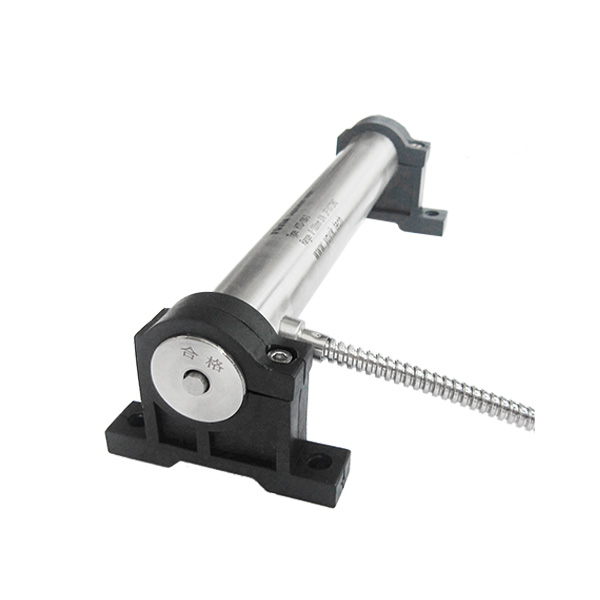
TD series displacement sensors convert mechanical linear movement measurements into electrical signals. Through this fundamental principle, the sensors measure and control displacement automatically, providing continuous feedback to turbine control and industrial automation systems. The armored cable design offers superior protection in the high-vibration, high-temperature environments typical of Vietnam's thermal power plants and heavy manufacturing facilities.
Latest Technical News & Updates

760N1194B Servo Valve: Why EH System Cleanliness Decides Its Lifespan
A servo valve is one of the least forgiving components in a turbine's EH control system. This guide explains why flushing protocol directly determines valve service life.

J-110V-DN6-D/20B/2A Directional Solenoid Valve: Getting the Cartridge Installation Right
Turbine oil systems don't forgive sloppy installation work. This technical article covers correct cartridge installation procedures for the J-110V-DN6-D/20B/2A directional solenoid valve.

Yoyik TD Series Displacement Sensors
TD series displacement sensors convert mechanical measurement of linear movement into electrical power. This principle enables automatic displacement measurement and control in turbine and industrial automation applications.
📞 Get a Quote for High Temperature Eddy Current Sensors in Vietnam
Contact YOYIK today for competitive pricing, technical specifications, and fast delivery of industrial sensors and spare parts to Vietnam and across Southeast Asia.
Request a Quote NowMore Industrial Spare Parts & Components
Complete range of power plant and industrial spare parts available for Vietnam and global markets