

Cold morning start, EH oil hasn’t warmed up yet, and the differential pressure reading across the DP602EA01V/-W suction filter is higher than anyone likes. Is the filter actually dirty, or is this just what cold, thick oil does to a pressure reading during a normal startup? Getting this wrong in either direction causes problems — changing a perfectly good filter wastes time and money, but ignoring a genuinely clogged filter risks pump cavitation on a component that’s expensive and slow to replace.
Where This Filter Sits and Why That Matters
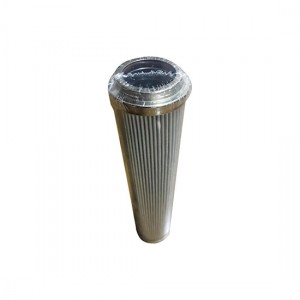
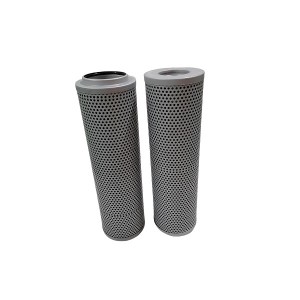
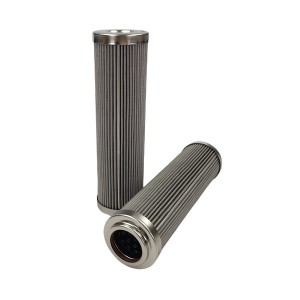
The DP602EA01V/-W is mounted ahead of the main EH oil pump‘s suction inlet, on the low-pressure side of the system rather than downstream where the outlet filters typically sit. Its job is narrower but critical — stop large particles before they reach the pump’s internal components, which are far more vulnerable to coarse debris damage than to the fine particulate that downstream filters worry about.
Being on the suction side changes the physics involved compared to a discharge filter. Suction-side filtration operates under vacuum or low positive pressure rather than high system pressure, and that makes it considerably more sensitive to fluid viscosity than a high-pressure discharge filter would be.
The Core Problem: Cold Oil Behaves Like a Clogged Filter
Phosphate ester EH fluid, like most hydraulic oils, gets noticeably more viscous as temperature drops. During a cold start, before the system has had time to warm through normal circulation and any trim heating, oil moving through the DP602EA01V/-W simply resists flow more than it would at normal operating temperature — not because the filter media is loaded with debris, but because the fluid itself is thicker and harder to pull through.
This shows up on the differential pressure gauge exactly the way a partially clogged filter would. Higher resistance to flow means higher pressure drop across the filter, regardless of whether that resistance comes from trapped particles or from cold, syrupy oil. The gauge doesn’t know the difference, and neither does an operator looking at a single number in isolation.
Why This Isn’t Just an Inconvenience
Beyond the diagnostic confusion, genuinely high suction-side resistance during cold starts creates a real mechanical risk. If flow resistance gets high enough, the pump can start struggling to draw adequate oil volume, and in more severe cases this leads toward cavitation — vapor bubbles forming in the low-pressure suction line and collapsing violently once they reach higher pressure inside the pump, causing real physical damage to pump internals over repeated exposure.
This is exactly why the question of “real clog or just cold oil” isn’t academic. Getting it wrong by assuming it’s always just temperature and ignoring a real developing clog risks pump damage. Getting it wrong the other way, replacing filters unnecessarily every cold start, wastes resources without solving anything.
Can Differential Pressure Alone Answer This?
No, and this is worth stating plainly. A single differential pressure reading taken during a cold start cannot, by itself, reliably distinguish between viscosity-driven resistance and genuine filter loading. Both produce an elevated number, and the reading alone doesn’t carry information about which cause is behind it.
This doesn’t mean the gauge is useless — it means it needs to be interpreted alongside other information rather than read in isolation.
Building a Real Diagnosis: What Else to Check
Compare Against Oil Temperature
The most direct cross-check is simply looking at oil temperature alongside the pressure reading. Most systems have documented or empirically known viscosity-temperature relationships for their specific EH fluid, and from that, a rough expected differential pressure range at a given cold temperature can be estimated or referenced from commissioning data.
If the differential pressure reading falls within the range expected for the current oil temperature, viscosity is the more likely explanation. If the reading is significantly higher than what temperature alone would predict, that gap points toward genuine filter loading contributing to the resistance.
Watch How Pressure Changes as the System Warms
This is probably the single most reliable field check available without special equipment. As the EH system warms up through normal operation — whether through trim heaters, ambient warming, or heat generated by pump operation itself — oil viscosity drops steadily, and a viscosity-driven high differential pressure reading should drop right along with it.
Track the differential pressure reading over the course of the warm-up period, alongside oil temperature. A pressure reading that declines in step with rising temperature, eventually settling into a normal range once the system reaches operating temperature, strongly supports viscosity as the cause. A reading that stays stubbornly elevated even after the oil has clearly warmed to normal operating temperature is a much stronger indicator of actual filter loading.
Listen and Watch for Cavitation Signs
Beyond the pressure number itself, physical symptoms at the pump can help confirm whether suction restriction has become severe enough to matter, regardless of its underlying cause. Unusual noise from the pump — a rattling or crackling sound often described as similar to gravel passing through the pump — is a classic audible sign of cavitation beginning to occur.
- Listen for unusual pump noise during startup, particularly any rattling or crackling that wasn’t present during previous cold starts.
- Check for unusual vibration readings on the pump if monitoring equipment is available, since cavitation often produces a distinct vibration signature.
- Watch for erratic or fluctuating discharge pressure, which can indicate the pump isn’t receiving a steady, adequate oil supply regardless of what’s causing the suction restriction.
Review the Filter’s Loading History
A DP602EA01V/-W that’s been in service for a while and has a documented differential pressure history gives you a baseline to compare against. If previous cold starts on this same filter, at similar oil temperatures, showed meaningfully lower differential pressure than what you’re seeing now, that trend — rather than any single reading — is a strong indicator that real filter loading has developed over time, on top of whatever normal viscosity effect is also present.
| Check | Points Toward Viscosity | Points Toward Real Clogging |
|---|---|---|
| Pressure vs. expected value at current temperature | Reading matches expected range | Reading significantly exceeds expected range |
| Pressure trend as system warms | Drops steadily with rising temperature | Stays elevated even at normal operating temperature |
| Pump noise or vibration | Normal or mild, improves as oil warms | Persistent or worsening regardless of temperature |
| Historical comparison at similar temperature | Consistent with past cold starts | Notably higher than previous cold starts at similar temperature |
A Practical Field Sequence
Record the differential pressure and oil temperature at the same time when the high reading is observed. Do not look at the pressure reading by itself.
Check the reading against the expected viscosity-temperature behavior of the oil. If commissioning data or previous test records are available, use those as a reference.
Keep monitoring pressure and temperature during warm-up. A reading taken during a cold start should not be used on its own to decide whether the filter needs attention.
At the same time, listen for unusual pump noise and check for abnormal vibration. Cavitation symptoms can indicate that the pressure drop is significant, regardless of the underlying cause.
It is also useful to compare the reading with previous records from the same filter at similar oil temperatures. This can help distinguish a normal cold-start condition from a developing restriction.
If the differential pressure falls as the oil warms up and there are no signs of cavitation, the condition can normally be regarded as a cold-start effect and the filter does not need to be replaced.
If the pressure stays high after the system reaches normal temperature, or cavitation symptoms are present, inspect the filter and replace it if necessary.
Reducing the Problem at the Source
Beyond diagnosing individual cold starts, some plants address this more fundamentally by using trim heaters to bring EH oil temperature up before a cold start actually begins, reducing viscosity-driven suction restriction before it becomes a diagnostic question at all. Where this equipment exists, using it consistently ahead of startup reduces both the false-alarm confusion and any genuine cavitation risk during the coldest conditions.
For plants without pre-warming capability, building a documented expected pressure-versus-temperature reference specifically for the DP602EA01V/-W installation, based on commissioning data or early operational history, gives operations staff something concrete to check cold-start readings against rather than relying on judgment calls each time.
Why Getting This Right Actually Matters
Misreading a viscosity effect as a clogged filter leads to unnecessary filter changes, adding cost and outage time without addressing anything real. Misreading a genuinely clogged filter as a normal cold-start characteristic risks actual pump cavitation, which is a considerably more expensive and disruptive problem than a filter element ever will be. Both mistakes are avoidable with a bit of cross-checking rather than relying on a single pressure number in isolation.
If your plant regularly experiences elevated differential pressure readings on the DP602EA01V/-W during cold starts, it’s worth building a documented temperature-versus-expected-pressure reference for your specific system now, so that future cold starts come with a clear comparison point rather than a judgment call made under time pressure.
Final Thoughts
A high differential pressure reading on the DP602EA01V/-W during a cold start isn’t, by itself, enough information to decide whether the filter needs changing. Oil temperature, the way pressure trends as the system warms, physical signs of cavitation at the pump, and comparison against historical readings at similar temperatures — together, these tell a much clearer story than the pressure gauge alone ever could.
A few extra minutes of cross-checking during a cold start is a small cost against either outcome of getting this wrong — an unnecessary filter change on one side, or a damaged pump on the other.
Post time: Sep-04-2026
-

Jacking oil pump discharge filter DQ8302GA10H3.5C
-

SL-1250 Generator stator cooling water filter e...
-

Servo Manifold Spray HP Bypass Oil Filter C6004...
-

lubricating oil filter element 2-5685-0154-99
-

Generator stator cooling water filter SGLQB-1000
-

Generator end cap Sealant 53351JG
-

Gas turbine actuator filter CB13300-001V
-

Actuator EH oil filter with O-ring AP1E102-01D0...
-

Motor slip ring carbon brush J204 series
-

BFP lube filter QF9732W25HPTC-DQ
-

BFPT LUBE oil filter element RLFDW/HC1300CAS50V02
-

Generator Surface flat sealant 750-2