

A dome valve that used to snap open and closed now takes its time. Maybe it pauses partway through the stroke. Someone checks the air pressure gauge. Normal. So what now? The A2201 seal kit rebuilds the actuator cylinder on a DN100 pneumatic conveying dome valve. Worn internal seals are one usual suspect. Not the only one. Sorting this out from outside the cylinder is the actual job here.
What the Kit Does
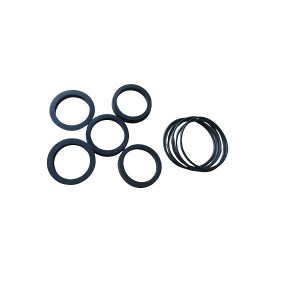
The A2201 seal kit contains the seals inside the pneumatic actuator cylinder. Piston seals. This is the shaft seal located where the piston rod extends from the cylinder body. The piston seal serves to isolate the pressure on either side of the piston; the pressure difference drives the piston and moves the valve, while the shaft seal prevents air from leaking along the piston rod.
Worn seals let air pass where it should not. A worn piston seal leaks air internally, from the high-pressure side to the low side. Effective force drops. A worn shaft seal leaks externally at the rod. Same result, different path.

Where This Sits
Dome valves in ash conveying systems open and close under real load. Dust or ash pressing against the dome, sometimes at awkward angles depending on hopper shape. The actuator needs enough thrust to move against that, every cycle. A valve moving slower has already lost some of that margin, before it fails outright.
Pressure Looks Fine. That’s the Confusing Part.
Low supply pressure is the first thing anyone checks. Easiest thing to check. But the gauge often reads normal. That does not clear the air side entirely — it just clears the supply-side pressure problem. Internal leakage past a worn seal wastes air after it passes the gauge. Gauge shows a healthy number. Actuator does not get the force that number implies.
Three Candidates
Worn seals inside the A2201 kit. Internal leakage past the piston seal, or external leakage at the shaft seal. Either way, less thrust, less margin against friction or load resistance.
Insufficient air supply pressure. Straightforward case. The gauge should catch it — if the gauge sits close to the actuator, and reads during actual motion, not just at rest. A reading taken while idle can look fine even if pressure drops under flow, especially with a restriction somewhere upstream.
Solenoid valve failure or partial failure. Not fully opening, or switching slowly. Restricts airflow no matter how good the supply pressure is. Can look almost identical to low pressure or internal leakage, since the actuator just is not getting air fast enough.
Why the Sound Test Fails Here
Minor shaft seal leakage is supposed to hiss. Maybe a bit of oil mist, if the system is lubricated. Easy clue, in theory. Dome valves under ash hoppers sit in tight, loud spaces. Ambient noise from conveying air, ash movement, nearby equipment. A quiet leak gets buried completely. A technician standing right next to a failing seal might hear nothing at all. Waiting for an obvious hiss means waiting for the leak to get much worse first.

Field Checks Without Opening Anything
Tracking stroke timing over time. One of the most useful, least invasive methods around. If open and close times are logged, even roughly, a gradual increase is a real trend worth watching. A sudden jump points more toward something discrete — solenoid failure, a supply restriction developing fast. A slow increase over weeks points more toward seal wear.
Feeling or sensing airflow at the cylinder exhaust port during a stroke. Rough check, but useful. As the piston moves, the opposite side exhausts air out through the solenoid or a dedicated port. Weaker exhaust flow than expected, or weaker than a known-good baseline, fits with internal leakage bypassing the piston seal. Not precise without instrumentation. A simple flow sensor, or even a hand near the port, checked consistently, picks up a real trend.
Comparing supply pressure at the actuator, during an actual stroke, against pressure at the main supply line. This catches what a resting gauge misses. A noticeable drop at the actuator during motion, with the supply line reading fine, means something between the two is eating pressure — a restriction, a partially failing solenoid, excess leakage downstream of the gauge.
Checking solenoid response time, where it can be logged or tested. Separates a solenoid problem from the other two on its own. Noticeably slower than rated response time, that’s a likely contributor regardless of seal condition or supply pressure.
Putting the Checks Together
None of these alone gives a certain answer. Together, they narrow things down before disassembly.
Gradual stroke time increase, reduced exhaust flow, supply pressure fine at rest but dropping slightly during the stroke. Points toward seal wear.
Sudden stroke time change, normal exhaust flow, confirmed slow solenoid response. Points toward the solenoid.
Consistent pressure drop at the actuator during motion, main line reading normal. Points toward a restriction or a solenoid not fully opening, not the seal kit.
The Bigger Risk of Waiting
Worth taking seriously. Shaft seal leakage left unaddressed, because it never got loud or visible enough — the escaping air is not the only consequence. Pneumatic cylinders often rely on a thin lubrication film, sometimes carried by the air itself, to keep the piston moving smoothly against the wall. Persistent leakage disturbs that balance over time. Prolonged operation with a degraded seal can allow enough friction or contamination to score the inner wall of the cylinder.
If that happens, a new seal kit alone will not fix it. A scored wall damages any new seal riding against it, often quickly. Sluggish behavior comes back, even with fresh seals installed. The job has grown from a seal kit swap to a cylinder rebuild — a considerably bigger repair than the one that was avoidable earlier.
That’s the practical case for catching seal wear through trend-based checks, rather than waiting for a leak loud or visible enough to notice on its own.
Maintenance Notes
Log stroke times as routine operating data, even without a suspected problem. Builds the baseline needed to catch gradual wear early. Periodic exhaust flow checks, compared consistently against a known-good baseline, catch internal leakage before it gets severe. Schedule seal kit replacement based on cycle count or elapsed time, not just a functional complaint. Avoids the scenario where cylinder wall damage happens before anyone notices the seal was the real issue.
Before Ordering a Replacement Kit
Confirm the A2201 kit matches the exact actuator model and bore size in service. Seal kits are not always interchangeable across similar-looking actuators from different production runs. Confirm seal material compatibility with actual operating temperature and any lubrication, or lack of it, used in the system. Where cylinder wear is suspected, confirm with the manufacturer or a qualified technician whether the bore should be inspected before a seal-only replacement — don’t assume new seals alone will fix sluggish behavior.
Closing Thought
A sluggish dome valve with a normal pressure gauge reading is not solved by staring at the gauge longer. Stroke timing trends and exhaust airflow checks show what’s actually happening inside the cylinder, without opening it. Catching seal wear early through these methods is what keeps a simple seal kit replacement from turning into a full cylinder rebuild down the line.
Post time: Sep-11-2026
-

Sealing Oil Differential Pressure Valve KC50P-97
-

SHV4 EH oil system needle globe valve
-

Online Hydrogen Leak Detector KQL1500
-

Dry-type Transformer Cooling Fan GFD590/126-710
-

Needle Valve DN40 PN35
-

Industrial filtration Lube oil system Lube filt...
-

DF9032 MaxA Dual Channel Thermal Expansion Monitor
-

Hydraulic Adjustable Pressure switch ST307-350-B
-

Electrode Water Level Gauge DQS-76
-

Epoxy-ester insulating varnish H31-3
-

EH Oil Actuator Filter QTL-6021A
-

Hydraulic Accumulator NXQ-A-6.3/31.5-L-Y