

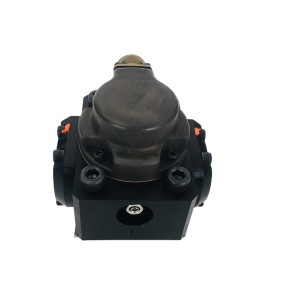
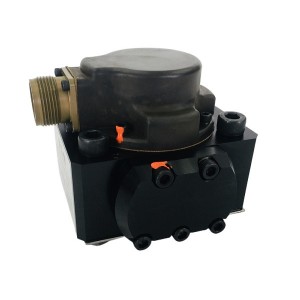
A servo valve like the D633-460B sits at the center of DEH position control. It moves the main steam valve and the governing valve to exact positions, based on an electrical command. Feedback tells the system where the valve actually sits. When that feedback starts jittering, or the zero point drifts, the control loop is not doing its job cleanly anymore. The valve has three separate systems packed into one housing — electronics, an LVDT, and a hydraulic spool section. Any one of them can cause this. Telling them apart without opening the valve is the real challenge.
What’s Inside
The electronic module runs a PI control loop. It compares the commanded position against the feedback signal and adjusts current to the torque motor until the two match. The LVDT — linear variable differential transformer — measures the actual spool position and sends that measurement back to the electronics as the feedback signal. The hydraulic section is the spool and sleeve assembly, where oil flow actually gets converted into valve motion.
All three sit in one compact housing. That is normal for this class of valve, and it is also why field diagnosis matters so much — you cannot easily look at one part without disturbing the others.
Job of This Valve
In a DEH system, precise position control of the main steam valve and governing valve directly affects unit response, load control, and how the turbine reacts during transients. A valve with drifting or jittery feedback does not fail outright. It just gets less accurate. Over time, this shows up as control instability, slower load response, or position readings that do not match where the valve physically sits.
Three Possible Causes, One Symptom
Jitter and zero-point offset can come from any of the three systems inside this valve. The symptoms alone often look the same from the control room. Some patterns, though, point more toward one cause than another.
PI control circuit drift. Electronic components age. Values drift with temperature and time. If the drift is happening in the control circuit itself, the jitter or offset tends to correlate with ambient temperature changes around the electronics module, and it often affects gain and stability in a way that shows up as a slow oscillation pattern in the feedback trend, not sharp erratic spikes.
LVDT excitation signal anomaly. The LVDT needs a clean, stable excitation signal to produce an accurate position reading. If that excitation signal degrades — from a failing driver circuit, a loose connection, or electrical noise — the feedback signal becomes unreliable even though the spool itself may be moving correctly. This tends to produce feedback readings that look inconsistent with actual valve behavior. The valve moves smoothly, according to other indicators like flow or pressure response, but the position signal reported does not match.
Spool stiction in the hydraulic section. A spool that sticks slightly, rather than moving freely, produces jerky or stepped motion instead of smooth positioning. This tends to correlate with actual physical valve behavior — pressure or flow response shows the same rough motion the position feedback shows. Unlike the two electrical causes, stiction usually shows up consistently across repeated position commands rather than varying with temperature or time of day.
Distinguishing Them Without Opening the Valve
A few checks, done from the control system side, narrow this down before anyone touches the hardware.
Correlating jitter timing with ambient temperature is a useful first step. If jitter gets worse as cabinet or ambient temperature rises, and settles down when temperature drops, that points toward the electronic module — either the PI circuit or the LVDT excitation driver, both of which are temperature-sensitive.
Comparing feedback signal behavior against an independent indicator of actual valve motion helps separate LVDT problems from spool problems. If flow or downstream pressure response looks smooth and consistent, but the position feedback signal is jumping around, the problem is likely in the LVDT or its excitation signal rather than the spool itself. If the flow or pressure response also looks rough, matching the feedback jitter, the spool is more likely at fault.
Checking whether the fault is consistent across the full stroke range or only appears near certain positions also helps. Stiction often shows up more at specific points in the travel range, sometimes near the null position, rather than uniformly. Electronic drift tends to affect the whole range fairly evenly.
Reviewing recent maintenance history matters too. A servo valve that was recently disturbed — for cleaning, seal work, or nearby electrical work — with symptoms starting shortly after, points toward something introduced during that work rather than a slow-developing fault.
None of these checks by themselves confirms the cause with full certainty. They narrow the list. A final confirmation, in most cases, still needs bench testing or partial disassembly, done carefully.
The Repair Risk: Making It Worse
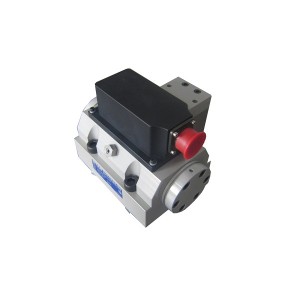
This is where things get delicate. Electronics and hydraulics share one housing. Procedures meant to fix a hydraulic issue can damage the electronics, and procedures aimed at the electronics can disturb the hydraulic seals.
Ultrasonic cleaning of the spool or valve body carries a real risk of cleaning fluid finding its way into the electronics compartment, especially if seals between the two sections are old, slightly degraded, or not fully understood by whoever is performing the cleaning. Fluid ingress into an electronics compartment does not always cause an immediate failure. Sometimes it causes a slow, intermittent fault that shows up weeks later, which then gets misdiagnosed as a new, unrelated problem.
Seal replacement carries its own risk. An improperly seated seal, or the wrong seal material, or a torque sequence that does not match the manufacturer’s procedure, can create a leak path that did not exist before the repair. In some cases, this leak path lets oil or moisture reach the electronics side rather than causing an obvious external leak, and the resulting fault may not appear until the valve has been back in service for some time.
The core problem is that a single housing means a repair intended for one system can silently compromise the other. Something as ordinary as removing a cover to inspect the hydraulic section can expose sensitive electronics to contamination if the work is not sequenced and sealed correctly.
Reducing the Risk During Field Work
Following the manufacturer’s disassembly sequence exactly, rather than a generalized servo valve procedure, reduces the chance of exposing sensitive components unnecessarily. Not every servo valve of this class is built the same way internally, and assuming familiarity from a different model can lead to skipped precautions.
Isolating or physically protecting the electronics compartment before any cleaning or fluid-based work on the hydraulic section is a reasonable precaution, even if the manufacturer’s procedure does not explicitly call it out as a separate step. A simple barrier or cover, correctly placed, reduces the chance of fluid ingress considerably.
Replacing seals with the exact specified material and size, rather than a close equivalent, matters more here than in many other components, given how much depends on that seal doing its job correctly in a housing with electronics on the other side.
Testing the valve on a bench, where possible, before returning it to service after any repair involving both sections, gives a chance to catch a fault introduced during the work itself, rather than discovering it after reinstallation.
Maintenance Considerations
Routine functional testing that separates position feedback accuracy from actual valve motion — using an independent flow or pressure reference alongside the feedback signal — helps catch developing feedback problems before they become disruptive to DEH control. Environmental monitoring near the electronics compartment, where practical, helps confirm or rule out temperature-driven drift over time rather than relying on isolated incident reports.
Post time: Sep-10-2026
-

Magnetic reed switch (sensor) CS1-F
-

GDZ421 room temperature vulcanizing silicon rub...
-

EH oil regeneration Alumina Filter 30-150-219
-

Rotation Speed Sensor probe CS-3
-

Jacking oil pump discharge filter DQ8302GAFH3.5C
-

Circulating pump return oil filter AD3E301-02D0...
-

Oil Water Alarm Level Switch OWK-1G
-

LVDT Position Sensor HTD-100-3
-

CQJ type accumulator Gas charging tool
-

Generator stator cooling water filter SGLQ-1000A
-

Steam Turbine Shutoff valve F3RG03D330
-

Circulating oil pump oil-suction filter WU-100X...