

When a burner trips unexpectedly — or worse, when a real flame goes undetected — the consequences extend well beyond a single process interruption. In thermal power plant boiler environments, flame signal reliability isn’t a technical nicety. It’s a core safety requirement.
The ZFDZ-VIII is a flame detecting processor module built specifically for power station boilers. It handles the signal processing side of combustion monitoring: receiving raw signals from flame detectors, analyzing those signals using embedded algorithms, and triggering protection shutdowns when combustion conditions fall outside acceptable parameters.
This article covers how the module works, what sets it apart in demanding boiler environments, and how to systematically isolate faults when the DCS and the real-world flame state don’t agree with each other.
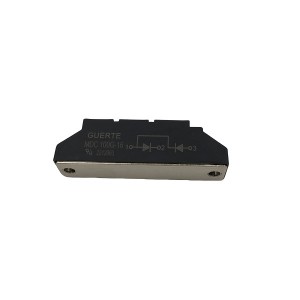
How the ZFDZ-VIII Processor Module Processes Flame Signals
The ZFDZ-VIII operates on a full-chain logic: acquire, analyze, respond. It receives signals from flame detectors that capture either UV/infrared spectral data or ionization current, depending on the probe type in use. The module then processes those inputs to determine whether combustion is stable, degraded, or absent.
Response time is measured in milliseconds. That’s not marketing language — it reflects the hardware architecture of the processor module, which is designed to avoid the latency gaps that older relay-logic or slow-polling systems can introduce. In a boiler environment, a delayed response to flame loss can allow unburned fuel to accumulate, with serious consequences.
What makes the ZFDZ-VIII different from simpler detection interfaces is the intelligence layer built into the signal processing. Rather than treating any signal above a threshold as “flame present,” the module analyzes flame-specific characteristics:
- Flicker frequency patterns unique to active combustion
- Spectral signature matching across UV and infrared bands
- Signal stability over time, not just instantaneous amplitude
This matters because power station boilers produce a range of optical interference — furnace wall thermal radiation, reflected light from hot surfaces, residual glow during transition states. A processor module without discrimination capability will produce false positives. The ZFDZ-VIII’s embedded recognition algorithms are designed to separate those artifacts from genuine flame signals.
Reducing False Alarms Without Missing Real Flame Loss
False flame signals cut both ways. A module that reports “flame present” when combustion has actually failed creates a dangerous situation. One that trips on furnace reflection or hot-wall radiation causes unnecessary shutdowns and lost generation.
The ZFDZ-VIII addresses this through a deep learning-based recognition model that matches incoming signal patterns against defined flame characteristics. The system doesn’t just look at signal strength — it examines how the signal behaves over a short time window. Real flame flickers. Reflected radiation from a static surface doesn’t produce the same pattern.
In practice, this approach significantly reduces both false trip events and missed detection. For engineers who’ve dealt with nuisance trips on older flame detecting systems, the difference in operational stability is noticeable over time.
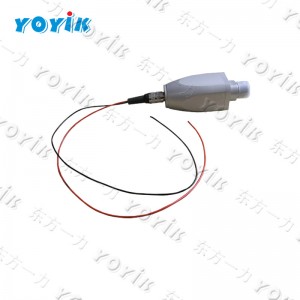
Fault Isolation When DCS Says “No Flame” But the Burner Is Running
This is the scenario that comes up regularly in plant maintenance: the DCS display shows a “flame lost” signal for a specific burner, but the operator at the front of the furnace can see the flame burning normally. The question is where the fault actually sits.
There are three possible locations:
- The flame detector probe itself (contamination, lens fouling, sensor damage)
- The ZFDZ-VIII processor module (internal fault, configuration issue)
- The signal transmission path between the module and the DCS I/O card
Without a structured approach, troubleshooting this can eat hours. Here’s how experienced field engineers typically segment the problem.
Step 1: Check the Probe End First
Start at the flame detector. Measure the raw signal output directly at the probe terminals. If the probe is producing a valid signal at the expected level — UV current, IR voltage, or ionization current depending on the type — then the probe itself is not the source of the fault. If the signal is absent or degraded at this point, you’re looking at probe contamination, a fouled lens, or physical sensor damage.
Probe contamination is common in coal-fired units where particulate buildup on the probe window attenuates the optical signal. This can happen gradually, making it harder to catch before it causes a trip. A simple comparison against baseline signal levels from the commissioning record (if documented) helps confirm this quickly.
Step 2: Compare Input vs. Output at the Processor Module
If the probe signal is healthy, the next step is the ZFDZ-VIII itself. Check the module’s input terminals — is the signal arriving at the module correctly? Then check the module output. Does the output reflect what the input should produce?
A discrepancy here — good input, bad output — points to the processor module. This can be a hardware fault, a configuration parameter that’s drifted out of spec, or in some cases a firmware issue. Most installations allow the module to be tested in isolation, either through built-in diagnostic indicators or via a test signal injection.
Step 3: Test the Signal Transmission Path to the DCS
If both the probe and the ZFDZ-VIII module are operating correctly, the fault is in the channel between the module output and the DCS input card. This section includes the field wiring, terminal blocks, and the DCS I/O channel itself.
Check continuity on the cable run. Look for loose terminals, corrosion, or damaged insulation. Then test the DCS I/O channel independently — substitute a known-good signal source at the DCS card input and confirm whether the DCS reads it correctly. A failed DCS channel will produce the same symptom as a failed module, which is why this step has to be isolated from the others.
Structured Fault Isolation Summary
| Check Point | What to Measure | Fault Indicated If |
|---|---|---|
| Flame detector probe output | Raw signal at probe terminals (UV/IR/ionization) | Signal absent or significantly degraded |
| ZFDZ-VIII module input | Signal level at module input terminals | Signal not arriving despite healthy probe |
| ZFDZ-VIII module output | Module output vs. expected value for given input | Input OK but output incorrect |
| DCS I/O card channel | Known-good source injected at DCS input | DCS still reads fault despite correct input |
This sequence — probe end, module input, module output, DCS channel — avoids the common mistake of replacing expensive hardware based on symptom location rather than actual fault confirmation.
Where the ZFDZ-VIII Fits in a Thermal Power Plant Boiler System
The ZFDZ-VIII processor module sits between the flame detector hardware and the plant’s DCS or burner management system. It’s not a standalone controller — it’s a signal intelligence layer. The flame detectors do the sensing; the ZFDZ-VIII does the interpreting.
This separation of functions matters for maintenance. When troubleshooting, engineers can address the probe, the module, or the communications path as independent subsystems. That modular approach also simplifies module replacement during planned outages without requiring reconfiguration of the entire detection circuit.
For procurement managers evaluating flame detection infrastructure, the processor module specification matters as much as the detector itself. A high-quality probe paired with a slow or non-discriminating processor module will still produce operational problems. The ZFDZ-VIII is designed to match modern boiler management requirements — fast response, low false-alarm rates, and compatibility with standard DCS integration architectures.
Common Questions from Power Plant Operations Teams
Can the ZFDZ-VIII handle multiple burner zones?
The module is designed for integration into multi-burner boiler configurations. Each processor module card handles designated detector inputs, and multiple modules can be deployed across a burner array within the same rack system.
How does the module handle signal noise in a high-EMI environment?
Power station environments are electrically noisy. The ZFDZ-VIII includes signal filtering designed for these conditions. That said, proper grounding and cable routing remain important — the module’s filtering capability doesn’t eliminate the need for good installation practice.
What maintenance intervals apply to the module itself?
The processor module is largely maintenance-free under normal operating conditions. Routine checks focus on the flame detector probes and the wiring runs. During planned outages, functional tests of the module’s input/output behavior and alarm logic are standard practice at most facilities.
Final Notes for Engineers Specifying or Troubleshooting This Module
The ZFDZ-VIII flame detecting processor module addresses a specific and critical function in boiler safety: converting raw optical or ionization signals into reliable combustion status outputs, fast enough to matter and accurate enough to avoid both missed detections and unnecessary trips.
For facilities experiencing repeated nuisance trips or unreliable flame signal behavior on existing equipment, the module’s discrimination algorithms offer a meaningful improvement over basic threshold-based processors. For new installations, it provides a solid foundation for burner management system integration.
If you’re evaluating the ZFDZ-VIII for a specific boiler configuration or need technical documentation to support a procurement decision, reaching out to the supplier’s application engineering team with your detector type and DCS interface requirements will get you to a faster answer than working from general specifications alone.
The structured troubleshooting approach outlined above — probe signal, module input, module output, DCS channel — applies regardless of which processor module is in service. Building it into your facility’s standard maintenance procedures reduces diagnostic time and helps avoid the cost of replacing components that aren’t actually faulty.
Post time: Jun-29-2026
-

Boiler Air Preheater Infrared array probe HSDS-...
-

Magnetoresistive speed sensor SZCB-01-A1-B1-C3
-

Magnetic Liquid Level Indicator UHZ-519C
-

LVDT Position Sensor HL-6-150-15
-

China manufacturer Honeycomb Filter SS-C05S50N
-

Single Channel Speed Monitor D521.02
-

Selector 2-position Option switch ZB2BD2C
-

Generator end cap sealing Sealant SWG-1
-

Steam turbine Shutoff valve HF02-02-01Y
-

Ultrasonic Level Meter Probe CEL-3581F/G
-

Regeneration device diatomite filter DL003001
-

Vacuum pump rocker seal P-1764-1