

If you’ve ever swapped out a dome valve seal, you know the job isn’t really finished once the new one’s sitting in place. The P17460C-01 is an inflatable seal — it wraps around the dome valve closure and pumps up with air once the valve shuts, pressing out against the dome body to make the seal. But that only works right if the gap between the seal and the dome is even the whole way around.
Sounds like a small thing. And honestly, it kind of is, on paper. But get that gap uneven during install and you’re setting yourself up for trouble that might not even show up for weeks — then one day the valve just isn’t sealing like it used to, and nobody’s quite sure why.
How This Inflatable Seal Actually Works
Unlike a regular gasket that just gets squeezed between two surfaces, the P17460C-01 uses air pressure to do the sealing. Once the dome valve closes, air fills the seal and it expands outward until it’s pressing firmly against the inside of the dome. That contact is what stops material or pressure from getting through.
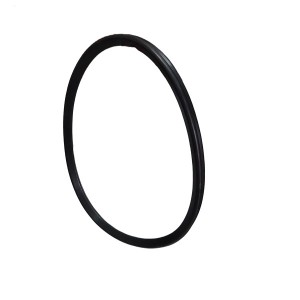
This works well for pneumatic conveyor systems moving bulk material, since the seal only inflates when the valve’s closed and drops back down when it opens again — less wear than a seal under constant pressure. But the whole thing hinges on even expansion, which is why the gap question matters so much.
Why the Gap Being Even Matters So Much
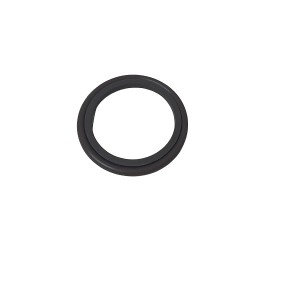
Picture the seal sitting in its groove around the valve closure, with a small space between it and the dome surface it’s supposed to press against. If that space is the same all the way around, the seal expands evenly and makes contact with roughly the same force everywhere.
Now picture that gap being wider on one side than the other — maybe the valve got installed a bit off-center, or the seal didn’t sit evenly in its groove. It still expands, sure, but now it’s got further to travel on the wide side, and it hits full contact way too early on the narrow side.
What Happens Where the Gap Is Too Tight
Where the gap’s too small, the seal makes contact early and just keeps getting pushed against that same spot harder than it should be, every time the valve cycles. That’s extra stress piling up in one area, over and over, and rubber seals really don’t hold up well to that kind of repeated concentrated pressure.
This is pretty much the direct answer to whether uneven gaps cause faster local wear — yes, they do, and it happens right where the gap’s tightest. That section of the seal will start cracking or flattening out way before the rest of it shows any age at all.
What Happens Where the Gap Is Too Wide
On the wide side, you get the opposite problem. The seal might not fully reach across that bigger gap, especially once you’re pushing the limits of how much the seal can actually stretch. If contact pressure is weaker there than everywhere else, that’s usually where leaks start.
Even when the seal does manage to reach the dome surface on that wide side, it’s not pressing as hard as it should, and a weak spot in the seal line is exactly where material or pressure finds a way through — especially once the seal’s a bit older and starting to lose some elasticity.
Does This Gap Thing Really Matter That Much for Sealing?
Yeah, it does, and it’s worth saying plainly because it’s easy to write this off as a minor detail. A gap difference that seems small — a millimeter or two around the circle — can be enough to create a weak point long before the rest of the seal is anywhere near worn out.
Dome valves in pneumatic conveyor setups are often dealing with fine particulate or pressurized air right on the other side of that seal. A small weak spot is exactly where fine material starts sneaking through, or where you start seeing pressure loss on the system readout before anyone’s traced it back to what’s actually causing it.
| Gap Condition | What Usually Happens |
|---|---|
| Even gap all the way around | Even contact, predictable wear, seal performs as expected |
| Gap too tight in one spot | Stress builds up there, wears out fast, fails early at that point |
| Gap too wide in one spot | Weak contact, more likely to leak right there |
| Tight on one side, wide on the other | Both problems at once — seal life drops a lot faster |
How to Actually Get the Gap Even During Installation
None of this is complicated, but it does mean checking rather than just assuming the seal centers itself once it’s in. A few things that help avoid the uneven install that leads to early wear:
- Check the groove and dome surface for leftover debris or old seal bits before putting the new P17460C-01 in — even a little junk in one spot can throw off centering, even if you do everything else right.
- Measure the gap at a few points around the circle after installing, not just wherever’s easiest to reach. An issue on the far side is easy to miss if you only check the near side.
- Make sure the dome valve itself is sitting straight before you even put the seal in — a slightly crooked valve body will mess up your gap no matter how careful you are with the seal.
- Follow whatever centering method the manufacturer specifies for this seal — alignment marks, a particular torque order on the hardware, whatever it is.
A Quick Field Check Worth Doing Every Single Time
After you’ve got it installed, before putting the valve back in service, take gap measurements at four or more points around the circle — kind of like checking at 12, 3, 6, and 9 o’clock, though the exact spots depend on your valve’s shape. Compare those numbers to each other, not just to one spec number on a sheet.
If one measurement is noticeably off from the rest, that’s telling you the seal or valve body isn’t centered right, and it’s worth fixing before it goes back into regular use. Catching it now is a lot easier than figuring out an odd wear pattern six months down the road.
Why This Isn’t Just About the Seal
A dome valve that isn’t sealing properly doesn’t just risk losing material or letting contamination in — depending on where it sits in the system, it can mess with process pressure control too. Replacing the same seal over and over because of the same installation mistake ends up costing way more in downtime and parts than the extra ten minutes of careful measuring would’ve cost the first time.
That’s really the argument for treating gap checks as a normal part of every seal swap, not something you only do once a valve starts acting up. A seal that’s centered right from day one usually makes it through its full expected life, instead of needing an early replacement because one side wore out faster than the rest.
If your team’s got a seal replacement coming up on a dome valve using the P17460C-01, it’s worth asking the manufacturer for their gap tolerance spec and centering procedure ahead of time — gives your field measurements something solid to check against instead of just eyeballing it.
Final Thoughts
The P17460C-01 inflatable seal depends on something that sounds almost too simple to matter — an even gap between itself and the dome body it presses against. Get that even, and the seal wears evenly and lasts as long as it’s supposed to. Let it sit off-center, even a little, and you end up with two problems at once: fast wear on the tight side, weak sealing on the wide side, both working against how long the seal lasts and how well the dome valve actually seals.
A few extra minutes checking gap uniformity during installation is a small thing that pays off way more than it costs, especially on dome valves cycling often in a pneumatic conveyor system where seal failures mean real downtime.
Post time: Aug-18-2026
-

DP201EA01V-F actuator inlet flushing oil filter...
-

Oil filter coarse filter DR913EA10V/-W
-

Jacking oil pump discharge filter DQ8302GAFH3.5C
-

YCZ65-250C generator stator cooling water pump
-

RTV Room Temperature Cured Epoxy Adhesive 53841YQ
-

Hydraulic oil return filter element MF1802A03HVP01
-

DF6101 Steam turbine magnetic rotation speed se...
-

Steam turbine Shutoff valve HF02-02-01Y
-

Reset solenoid valve MFZ3-90YC
-

Boiler Tube sliding block
-

Flow Control Servo Valve 072-1202-10
-

Fire-resistant oil filter DP401EA01V/-F