
Silicon steel sheets adhesive - China Manufacturer
As a China-based Manufacturer, I offer Silicon steel sheets adhesive for bonding laminated silicon steel cores used in transformers and motors. This adhesive keeps magnetic performance intact while delivering reliable adherence between silicon steel sheets. It’s low-viscosity, fast-setting, and cures cleanly with minimal odor. It withstands high temperatures and mechanical stress, reducing delamination and lamination gaps during operation. Suitable for high-volume production lines, our formula is solvent-free and low VOC, safe for workers and compliant with industry standards. I provide technical data, field testing, and compatibility guidance with insulation systems used in silicon steel stacks. For OEMs and manufacturers seeking a dependable partner in China or abroad, this product offers consistent quality, repeatable bond lines, and on-time delivery. We can customize packaging and curing profiles to fit your line, with full after-sales support and documentation. Choose Silicon steel sheets adhesive for durable performance and lean manufacturing.
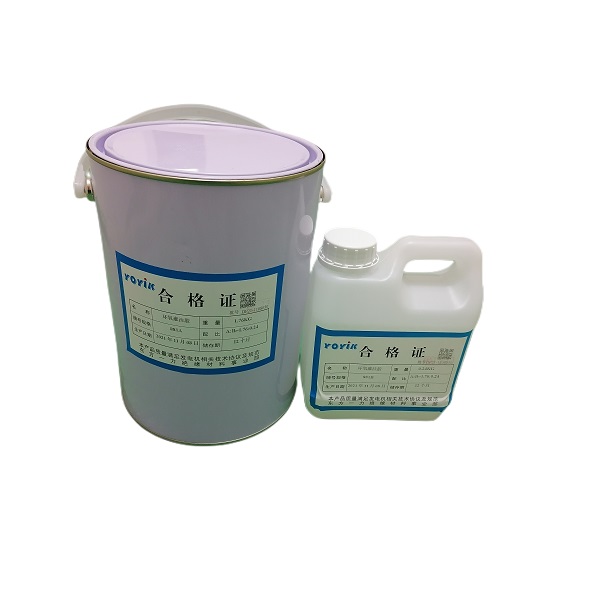


Silicon steel sheets adhesive For the Current Year Delivers Unmatched Quality
Silicon steel sheet adhesives play a critical role in modern electrical laminations. This year’s formulations balance strong bonding with preserved magnetic performance, while delivering low shrinkage and high thermal resistance. They resist moisture, withstand winding and punching stresses, and maintain dielectric integrity for quiet, efficient operation. For global buyers, this means reliable lamination quality, stable process windows, and predictable performance across batches. Partnering with a trusted supplier adds value beyond the adhesive itself. Look for precise viscosity control, uniform film thickness, and repeatable peel and dielectric tests. Compliance and traceability—RoHS/REACH, batch numbers, and documented test data—enable safe, scalable production across markets. With technical support and efficient logistics, manufacturers can shorten lead times and ensure consistent quality from pilot runs to full-scale manufacturing.
| Grade / Type | Thickness (mm) | Si content (wt%) | Core loss (W/kg @1.5T,50Hz) | Max relative permeability (µr) | Electrical resistivity (µΩ·m) | Yield strength (MPa) | Coating / Typical application |
|---|---|---|---|---|---|---|---|
| Grain-Oriented (GO) - 3.0% Si | 0.27 | 3.0 | 0.65 | 9500 | 0.54 | 260 | Inorganic phosphate / Power transformers |
| Grain-Oriented (GO) - 2.7% Si | 0.35 | 2.7 | 0.85 | 8200 | 0.52 | 240 | Organic polyester / Distribution transformers |
| Non-Oriented (NO) - 1.5% Si | 0.50 | 1.5 | 10.2 | 2600 | 0.48 | 300 | None / General-purpose motors |
| Non-Oriented (NO) - 2.3% Si | 0.35 | 2.3 | 6.8 | 3200 | 0.50 | 280 | Polyester / Traction & industrial motors |
| High-Silicon NO - 3.5% Si | 0.23 | 3.5 | 4.2 | 4200 | 0.61 | 220 | Inorganic / High-efficiency motors & generators |
| Domain-Refined NO - 3.2% Si | 0.27 | 3.2 | 3.9 | 4800 | 0.60 | 230 | Varnishable / Precision & servo motors |
Related Products


Silicon steel sheets adhesive Global Reach Outperforms the Competition
Top Selling Products


- Related Blog
- Reviews
