

The jacking oil pump runs at startup, at shutdown, and during turning gear operation. It sends high-pressure oil under the journals and lifts the rotor off the bearing surface. Without that oil film the shaft rests on the babbitt at low speed, and the damage from repeated dry starts builds up slowly and costs a lot to repair.
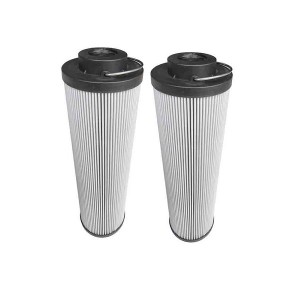
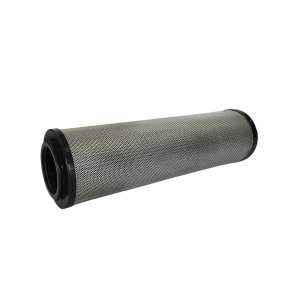
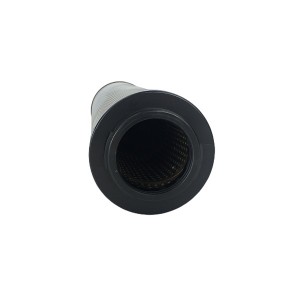
The pump has a filter on each side. The inlet filter protects the pump itself, while the outlet filter protects the lines, valves and bearing lift pockets downstream. The DQ8302GA10H3.5S jacking oil filter element is the fine filtration element on the outlet side.
Sooner or later someone has to write a replacement schedule for both filters, and a few questions come up right away. Should the two be changed together or separately? Can the outlet element be changed more often than the inlet? If only the outlet gets a new element and the inlet stays in place, will the outlet clog again within weeks? Before looking for an answer, it helps to understand how the system actually runs.
Low Running Hours, Long Idle Periods
Compared with the main lube oil pump, the jacking oil pump collects very few running hours. It starts, runs through the turning period and stops, and while the unit is online it may sit idle for months.
Filters age differently under that pattern. An element can look clean after a year because very little oil has passed through it, yet age still leaves its mark. Oil standing in the housing oxidizes, seals harden, and moisture works its way into the media. Sediment settles and cakes during the idle months, then breaks loose at the next start. Running hours give one picture of the element and calendar time gives another, and neither is complete without the other.
The Inlet Side
The inlet filter sits on the suction line, where pressure is low. Its rating is usually coarser than that of the outlet element, and its job is to keep larger particles out of the pump. In many systems the jacking oil pump is a high-pressure unit with tight internal clearances, although the exact type depends on the plant.
Tank sediment, assembly debris and wear material from the rest of the lubrication system all reach the inlet filter first. As the element loads up, the suction vacuum at the pump rises. High vacuum brings aeration and cavitation, cavitation wears the pump parts, and a worn pump then sends metal into its own discharge.
The Outlet Side
The outlet filter works at full pump pressure. Downstream of it are flow dividers, check valves, orifices, supply piping and the lift pockets in the bearings. A blocked pocket or a sticking valve on the jacking line gives uneven lift, which operators may notice as odd bearing temperatures or shaft position readings during turning.
Three sources of dirt end up on this element: whatever the inlet filter did not stop, whatever the pump itself generated, and whatever got in during maintenance. A fine element also loads sooner than a coarse one, so quicker loading on the outlet side is normal and does not point to a fault.
A Belief Common in Plants
Many maintenance teams work from an unwritten rule. If the outlet is changed and the inlet is left alone, the old inlet filter will push dirt into the new outlet element, so the two should always go in together. The rule has some logic behind it. Inlet filters differ a great deal in condition, though, and two quite different conditions tend to get treated as one.
Loaded and Failed
A loaded inlet element is full of the dirt it caught. Flow through it is restricted, but the dirt stays in the media, and a caked element often filters slightly finer than a new one.
A failed inlet element has a torn media pack, a collapsed core, a missing or pinched seal, or an open bypass. Oil passes around or through it unfiltered, so large particles reach the pump and fine particles reach the outlet.
Age says little about which condition applies. An old but intact element protects the pump and the outlet reasonably well, while a year-old element with a pinched seal does not.
The Indirect Route
An unchanged inlet filter can still harm the outlet element by way of the pump. A badly loaded inlet raises suction vacuum, cavitation erodes the pump, and the eroded metal ends up on the outlet element. The outlet then clogs faster, even though the cause sits upstream.
Warning signs usually appear well before the outlet shows anything. The pump noise changes, discharge pressure becomes unsteady, foam shows up in the oil, and a suction gauge, where one is fitted, reads higher than last time.
Why Outlet Elements Clog Early
After a quick outlet clog it is easy to blame the inlet, but several other causes are just as likely.
Dirty oil. The jacking system usually draws from a tank or header shared with the lube system, and dirty oil loads every filter in the circuit. A particle count from the tank answers this quickly.
Pump wear. Bright metallic particles and bronze flakes on the removed element come from the pump.
Varnish and sludge. Soft deposits load fine media very quickly. Dark oil, a sticky film in the housing and brown or black deposits on the element all fit this cause.
Maintenance debris. Opening the cover and changing the element brings in dirt unless the housing is cleaned first. A new element that loads fast right after the job may simply be catching debris stirred up by the work, and the next element shows whether the problem continues.
Rating mismatch. A very fine element in marginal oil loads fast. The rating should match the cleanliness target of the system.
Cold oil. Higher viscosity raises differential pressure, which can read as clogging.
Evidence on the Bench
The removed elements and the plant records hold most of the answer.
Inspect the outlet element first. Metal points to the pump, fibers and grit point to the tank or assembly work, and soft dark deposits point to varnish. Pull the inlet element during the same outage even if it was not scheduled, and check the media for tears, the seal for pinching and the end caps for cracks. A damaged inlet element settles the argument on the spot.
Where sampling points exist, take particle counts upstream and downstream of each filter. A clear drop across the inlet filter shows it is working, while a small drop across an element that looks heavily loaded deserves a second look. Pump behavior over time adds more: discharge pressure stability, noise, and case drain flow where it is measured. Finally, compare the loading rate of the new outlet element with the previous one. If the second lasts much longer than the first, the early clog was a flushing effect.
Building the Schedule
Differential pressure and condition should lead, with calendar time and running hours following. If either housing lacks a differential pressure indicator, fit one, because filters without indication end up being changed on guesswork.
Changing both elements in the same outage is sensible where access allows. The system is already open, a single flush and venting cycle covers both elements, and dirt gets one chance to enter instead of two. Separate intervals are still acceptable when the data support them. A fine outlet element may need changing more often than a coarse inlet element, and no rule requires the two to move together.
Whenever the outlet is changed, take a few minutes to look over the inlet element’s media, seal and end caps. If it shows damage, evidence of bypass, or loading beyond the manufacturer’s limit, replace it at once. After any change, vent the housing, run the pump, and check for leaks and abnormal noise before the system goes back to standby.
Post time: Oct-15-2026
-

Double barrel oil filter disc SPL-32
-

Hydraulic Pressure Control Valve PCV-03/0560
-

Turbine Rotation Speed Impactor Monitor HZQW-03A
-

DC Vertical lubricating oil pump 125LY-23-4
-

DET Series Displacement Sensors
-

Magnetoresistive speed sensor SZCB-01-A1-B1-C3
-

Generator Cover Mannual Sealant Injector KH-32
-

APH Gap Control System Gap Sensor Probe GJCT-15-E
-

CWY-DO Steam Turbine Eddy Current Sensor
-

LVDT displacement Sensor 2000TD
-

Stainless steel globe throttle check valve LJC ...
-

LVDT Position Sensor ZDET-200B