

The oil report says acid value is fine. The gauge on the regeneration skid says the differential pressure across the filter is climbing. One number says leave it alone. The other says something is loading up. Operators run into this on fire-resistant oil systems more often than the manuals suggest, and the answer is not a coin toss. It comes from understanding what each indicator actually measures.
Two Readings, Two Different Questions
Acid value is a property of the oil. It reports how much acidic degradation product is present in the fluid at the moment the sample was drawn. It says nothing direct about the condition of the diatomite filter.
Differential pressure is a property of the filter. It reports how hard the oil has to be pushed through the element at the current flow and temperature. It says nothing direct about the acid content of the oil.
So the two readings are not in conflict. They answer different questions. An acceptable acid value tells you the regeneration unit has been doing its job, or that the fluid is not producing much acid right now. A high differential pressure tells you the element is resisting flow more than it should. Both can be true at the same time.
Where This Filter Sits
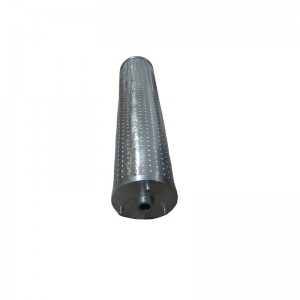
The HQ25.600.18Z diatomite filter is used in power plant fire-resistant oil regeneration units. Phosphate ester EH fluid slowly degrades through hydrolysis and oxidation. Acidic products build up, and left alone they attack seals, raise corrosion risk, and shorten fluid life. A regeneration unit circulates a side stream of the system oil through adsorbent media, and diatomite-based media removes acidic compounds along with some moisture and fine particles.
Because the unit processes a side stream, flow through the filter is usually moderate and steady. That matters when reading differential pressure, since flow rate is one of the main variables behind the number on the gauge.
Why Differential Pressure Climbs
Loading is the usual reason. Fine particles, varnish precursors, and sludge from the fluid collect in the media and in the pores of the element. Flow resistance goes up. This is normal aging of the element, and it happens faster in a system with contamination problems.
Saturation of the adsorbent is a different thing. Media can run out of acid-removing capacity without being clogged, and clogged media can still have adsorption capacity left. The two do not move together. That is why acid value and differential pressure can disagree.
Several causes have nothing to do with the media at all, and these are worth ruling out before anyone reaches for a spare element.
Cold oil. Phosphate ester fluid gets noticeably thicker at lower temperature. A unit started on a cold morning can show a high differential pressure that falls once the oil warms up. A reading taken at the wrong temperature misleads.
Flow rate. If the circulation pump is delivering more than the design flow, or a bypass valve is set differently than before, the differential pressure rises with no change in the element.
Gauge or transmitter error. Differential pressure instruments drift, and impulse lines can clog or hold trapped air. A reading that jumped suddenly is worth checking against a second gauge.
Pre-filter problems. If an upstream filter has failed or been removed, more particulate reaches the diatomite element and loads it quickly.
Water. Moisture swells some media and changes how it packs. In a fire-resistant fluid system, a rise in water content often shows up alongside the pressure trend.
What Waiting Costs
Running a loaded element is not free. As differential pressure rises, flow through the unit usually falls, so the regeneration side stream treats less oil per hour. Acid removal slows even if the media is not saturated.
Past a certain point, the element or the housing bypass can open. Oil then goes around the media, and regeneration stops without any alarm on the acid value, which lags behind.
High differential pressure also stresses the element structure. A collapsed or ruptured element can release media fines downstream into the system oil. That is a far worse outcome than a spent element.
The acid value is a lagging indicator. By the time it moves out of specification, the regeneration unit may have been underperforming for weeks.
What Early Replacement Costs
Changing an element too early costs the price of the element and the labor of a changeover, plus a short interruption to regeneration. On most units that is modest. It becomes a real expense only when elements are changed routinely and well before their useful life, or when the change itself introduces air or contamination into the loop.
For most plants the asymmetry points one way. Replacing a loaded element a little early costs little. Running one past its limit can cost a lot.
Making the Call on Site
The decision comes from the differential pressure, read correctly, not from the acid value alone. A practical way to structure it:
| Observation | Likely meaning | Reasonable action |
|---|---|---|
| Differential pressure at or above the manufacturer’s change-out limit, at normal operating temperature and design flow | Element is loaded to its limit | Replace, regardless of acid value |
| High reading only on cold start, normal once warm | Viscosity effect | Monitor, record warm-condition reading |
| Reading jumped suddenly with no change in flow or temperature | Possible instrument or pre-filter fault | Verify gauge, check upstream filter before replacing |
| Rising steadily with throughput, still below the limit | Normal loading | Continue with a defined monitoring interval and a planned change date |
| High differential pressure and acid value trending upward | Element loaded and possibly saturated | Replace promptly |
| Acid value in spec, differential pressure high, outlet acid noticeably lower than inlet | Media still working, element restricting flow | Plan replacement soon, short monitoring interval |
| Acid value in spec, differential pressure high, inlet and outlet acid about equal | Media may be spent or bypassed | Replace |
Values for the change-out limit should come from the manufacturer’s specification for this element. Where none is given for a specific installation, the plant should set an internal limit and apply it consistently.
Checks That Help When the Numbers Disagree
Compare differential pressure at the same temperature and flow each time. A trend taken under varying conditions tells you very little.
Sample acid value upstream and downstream of the filter when possible. A clear drop across the unit shows the media is still removing acid. No drop suggests exhausted media or a bypass path.
Plot differential pressure against throughput volume or running hours. A smooth curve is normal loading. A sudden step change points to a different cause.
Check particle count and water content in the oil. A rising particle count explains fast loading. A rising water content may explain a change in packing behavior or a change in the oil’s behavior.
Check the oil’s color and clarity. Darkening and haze often go with varnish and sludge, which load elements quickly.
Look at the removed element when it comes out. Heavy surface caking, channeling, or media fines on the downstream side say more than the gauge ever could.
Records Worth Keeping
Log the differential pressure with oil temperature and flow at each reading. Log acid values with sample date and sampling point. Log each element change with running hours and the final differential pressure at removal. After a few changeouts the plant has its own change-out curve, and the decision stops being a judgment call and becomes a routine one.
Notes for Buyers of the HQ25.600.18Z
Confirm the rated flow, the maximum recommended differential pressure, and the change-out criteria directly with the manufacturer, since these values were not provided here and vary by element. Confirm media compatibility with the specific phosphate ester fluid in service. Confirm dimensions and end connections against the existing housing, and confirm whether the supplier offers matching seals, since a poorly seated seal can let oil bypass the media. Where plants stock spares, store elements sealed and dry. Adsorbent media that has absorbed moisture in storage loses capacity before it is ever installed.
For the Log Book
Acid value and differential pressure measure different things, so one being acceptable does not excuse the other. A high differential pressure, confirmed at proper temperature and flow, is a reason to replace the diatomite filter element. A good acid value means only that the oil is currently acceptable. It does not mean the filter has life left in it.
Post time: Oct-13-2026
-

Duplex oil filter DQ150AW25H1.0S
-

Servo Manifold Spray HP Bypass Oil Filter C6004...
-

LVDT Position Sensor HL-3-100-15
-

Double barrel oil filter disc SPL-32
-

DP201EA01V-F actuator inlet flushing oil filter...
-

Regeneration device diatomite filter DL003001
-

Regeneration oil pump suction filter HQ25.300.12Z
-

Rubber Bladder for ST High Pressure Accumulator...
-

Industrial filtration Lube oil system Lube filt...
-

Rotation Speed Sensor ZS-03
-

SM4-20(15)57-80/40-10-S182 actuator electro-hyd...
-

Generator Oil-resistant Rubber Round Strip