

Someone on the maintenance crew slides the ZJ-20-T1 heating rod into a turbine bolt hole, feels a bit of resistance a little sooner than expected, and calls it good enough. The heater still heats. The bolt still gets hot. Everything looks fine from the outside. And that’s precisely the problem — an insertion depth shortfall on a bolt heater rarely announces itself at the time it happens.
It shows up later, sometimes during the next major inspection, sometimes as an unexplained joint that won’t hold torque the way the calculations say it should. By then, tracing it back to a heater that went in ninety millimeters short during the last outage is not exactly straightforward.
What “90% of Effective Heating Length” Actually Means
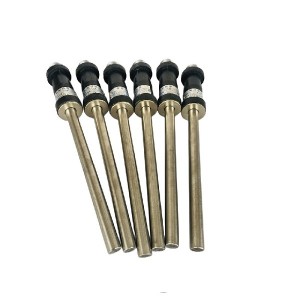
Large steam turbine bolts have a specified effective heating length — the portion of the bolt shank that needs to reach the target temperature for thermal elongation to work as the assembly procedure intends. The ZJ-20-T1 electric heating rod is designed to be inserted deep enough to cover that length, and the general rule of thumb across most bolt heating procedures is that insertion depth should exceed 90% of that effective heating length.
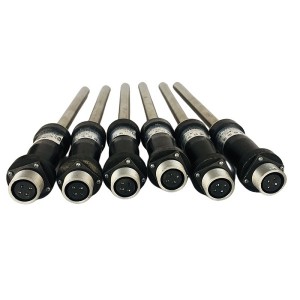
This isn’t an arbitrary number pulled from a general specification. It reflects how heat actually distributes along a heating rod and how much margin is needed before the far end of the intended heating zone reaches adequate temperature. Fall short of that 90% mark, and you’re not getting a slightly weaker version of proper heating — you’re getting a bolt that’s heated unevenly along its length, with a section near the bottom of the hole that simply doesn’t reach target temperature at all.
How a Shallow Insertion Actually Happens
Nobody sets out to under-insert a heating rod. It usually comes down to one of a few practical issues on site, and recognizing them helps explain why this problem persists despite being well understood in theory.
- Debris or scale sitting in the bolt hole, stopping the rod before it reaches full depth, and getting mistaken for the natural bottom of the hole.
- A slightly bent or previously damaged heating rod that doesn’t travel straight down a long, narrow bore the way a new one would.
- Time pressure during an outage, where a technician feels resistance, assumes it’s normal, and doesn’t push further to confirm actual depth against the bolt’s known dimensions.
- Simply not checking insertion depth against documentation for that specific bolt size, and instead going by feel or by habit from a different bolt on a different machine.
Any one of these on its own might seem minor. Combined with a rushed outage schedule, they add up to a heater that’s sitting shorter than it should be, without anyone realizing it until the bolt behaves oddly weeks or months later.
What Happens Inside the Bolt When Heating Falls Short
A steam turbine bolt heated properly with a device like the ZJ-20-T1 expands along its axial length in a fairly predictable, uniform way, assuming the heat source covers the intended zone. That predictable elongation is exactly what the assembly procedure relies on to achieve correct preload once the nut is turned down and the bolt cools back to operating temperature.
Shorten the effectively heated portion of the bolt, and elongation no longer follows that predictable pattern. The upper section, close to where the heater actually reached proper temperature, expands close to expected. The lower section, past the point where the heater’s effective range ran out, expands less — sometimes considerably less, depending on how far short the insertion actually fell.
Uneven Preload From an Uneven Stretch
This is really the direct consequence worth worrying about. When a bolt doesn’t elongate uniformly along its length, the preload achieved once the nut is torqued and the bolt cools isn’t uniform either. Part of the bolt ends up carrying more of the clamping load than it should, while another section carries less than the design intended.
For a single bolt this might sound like a small issue, but turbine joints typically rely on a whole ring of bolts working together to distribute clamping force evenly around a flange or casing joint. If even a handful of bolts in that ring were heated with insufficient insertion depth, the whole joint can end up with an uneven preload pattern circumferentially, not just along each individual bolt.
Additional Thermal Stress During Cooling
There’s a second consequence that’s less obvious but arguably just as important. As a bolt with uneven axial heating cools back down after the nut is set, the different sections of the bolt shrink at different rates, since they started from different temperatures and different amounts of thermal expansion. That mismatch generates internal stress within the bolt itself, separate from and in addition to the intended clamping stress from preload.
This additional thermal stress, layered on top of whatever preload the bolt ends up carrying, can contribute to deformation over time or, in more severe cases, create conditions that make the bolt more susceptible to fatigue or cracking during future thermal cycling in service. A bolt subjected to repeated startup and shutdown cycles is already dealing with meaningful thermal stress as part of normal operation — adding an unintended stress pattern from an improperly heated installation compounds that burden rather than starting from a clean baseline.
| Insertion Depth | Heating Result | Downstream Consequence |
|---|---|---|
| Meets or exceeds 90% of effective heating length | Uniform axial expansion across intended zone | Predictable, even preload once bolt cools |
| Falls short of 90% | Reduced expansion in lower bolt section | Uneven preload, additional thermal stress on cooling |
| Significantly short of target depth | Large temperature gradient along bolt length | Risk of deformation or increased fatigue susceptibility over time |
Why This Is Hard to Catch in the Moment
Part of what makes shallow insertion such a persistent risk is that nothing about the process looks wrong while it’s happening. The ZJ-20-T1 heats up normally regardless of how deep it’s actually seated. Surface temperature readings taken near the top of the bolt, where thermocouples or contact sensors are typically placed, can look completely normal even while the lower portion of the bolt is significantly cooler than intended.
This is exactly why insertion depth needs to be physically verified and documented at the time of installation, rather than inferred from surface temperature readings alone. A temperature reading near the top of the bolt tells you about that specific location — it doesn’t tell you what’s happening twenty or thirty centimeters further down the hole.
Practical Steps for Getting Insertion Depth Right
A few habits, consistently applied, go a long way toward avoiding this problem on future outages:
- Measure and mark the target insertion depth on the ZJ-20-T1 heating rod itself before inserting it, based on the specific bolt’s documented effective heating length, rather than relying on feel or memory from a previous job.
- Insert the heater slowly and steadily, and if resistance is felt before reaching the marked depth, stop and investigate rather than assuming the resistance means the hole bottom has been reached.
- Inspect and clean bolt holes before heater insertion whenever possible, removing scale or debris that could create false resistance and lead to a premature stop.
- Record actual achieved insertion depth for each bolt during the heating operation, creating a simple checklist that ties specific bolts to confirmed depth measurements rather than a generic sign-off for the whole joint.
None of this adds significant time to a bolt heating operation that’s already being done carefully. It mostly just requires treating insertion depth as something to verify and record, not something to assume.
What This Means for Procurement and Planning
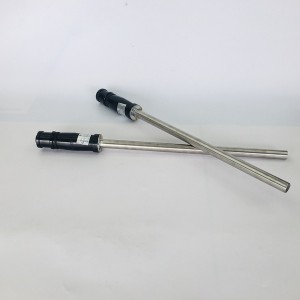
When specifying a bolt heater for a particular turbine bolt size, procurement teams and engineers should confirm the ZJ-20-T1′s physical length and heating zone actually match the bolt’s documented effective heating length with appropriate margin, rather than assuming a general-purpose heating rod will suit every bolt on the machine. Different bolt sizes across a turbine casing may call for different heater lengths, and using the wrong one is functionally the same problem as under-inserting the right one.
If your outage planning includes major bolt heating and tensioning work, it’s worth requesting the manufacturer’s insertion depth specification for the ZJ-20-T1 alongside the bolt manufacturer’s effective heating length documentation for each specific bolt size involved — comparing those two figures ahead of the outage removes any guesswork from the field crew’s hands during the actual work.
Closing Thoughts
An electric heating rod like the ZJ-20-T1 does exactly what it’s supposed to do when it’s inserted to proper depth — even, predictable heating that leads to reliable preload once the bolt cools. The trouble starts when insertion falls short of that 90% threshold, quietly, without any obvious sign at the time. What follows is an unevenly stretched bolt, an uneven preload across the joint, and additional thermal stress working against the bolt during cooling that wasn’t part of the original design intent.
Verifying and recording actual insertion depth, every time, for every bolt, is a small step against a consequence that’s genuinely difficult to diagnose after the fact. For components carrying the loads that large turbine bolts carry, that verification step is worth the extra few minutes it takes.
Post time: Aug-25-2026
-

AST solenoid valve coil Z6206052
-

EH oil pump discharge filter AP1E101-01D03V/-WF
-

Magnetic reed switch (sensor) CS1-F
-

Epoxy-ester air-drying red insulating varnish 9130
-

Rubber Bladder for ST High Pressure Accumulator...
-

Steam Turbine Excitation System CPU board PCA-6...
-

Double gear Pump GPA2-16-16-E-20-R6.3
-

Circulating oil pump oil-return working filter ...
-

RCV actuator filter HQ25.10Z
-

Actuator EH oil filter with O-ring AP1E102-01D0...
-

Turbine Rotation Speed Impactor Monitor HZQW-03A
-

Electrohydraulic converter oil filter element S...