

Ask a maintenance engineer what kills an OPC solenoid valve and you’ll probably hear about the coil, or maybe the spool, or a bad connector somewhere in the wiring. Those things do fail, sure. But if you actually trace most SV4-10V-C-0-220AG failures back to their root cause, you land somewhere less obvious — the oil itself.
This isn’t a small factor among many. A fair estimate, based on how these failures actually play out in the field, puts oil quality management behind roughly 70% of OPC solenoid valve reliability problems. Not the valve design. Not the coil. The fluid running through it.
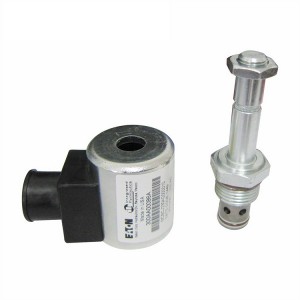
Why This Valve Is Especially Sensitive to Oil Condition
The SV4-10V-C-0-220AG operates in a fire-resistant oil circuit, part of the overspeed protection path on a steam turbine. Fire-resistant fluids — usually phosphate ester based — behave differently from mineral oil in ways that matter a lot for a valve with tight internal clearances and small throttling orifices.
Phosphate ester fluid is more chemically reactive than mineral oil, more prone to breaking down under heat and moisture exposure, and its degradation byproducts tend to be more aggressive toward internal components. A valve like this one, built around fine tolerances for precise flow control, has almost nowhere to hide from oil that’s gone bad.
Acid Number Creep — The Slow Poison
Fire-resistant oil degrades over time, and one of the clearest indicators is a rising acid number. As the fluid ages, oxidation and hydrolysis reactions produce acidic compounds, and that number climbs — slowly at first, then faster once degradation gets past a certain point.
An elevated acid number doesn’t just sit there as a lab report statistic. Acidic byproducts attack internal metal surfaces and seal materials inside the valve, and they also tend to promote sludge and varnish formation as the degradation process continues. That sludge is exactly what ends up lodged in a spool-to-bore clearance that was never designed to tolerate it.
- Test acid number on a regular sampling schedule, not just when a problem is already suspected — waiting for symptoms means you’re already behind the degradation curve.
- Compare acid number trend over time rather than judging a single test result in isolation, since the rate of increase tells you more than the absolute value at any one point.
- Treat a climbing trend as an early warning to schedule fluid reconditioning or replacement, not as something to monitor indefinitely while hoping it levels off.
Resistivity Dropping — A Sign Something’s Already Wrong
Electrical resistivity of the fluid is another property worth tracking, and a falling resistivity value usually means moisture content or ionic contamination is creeping up. Fresh phosphate ester fluid holds a fairly high resistivity value; as it picks up moisture or breaks down chemically, that number drops.
Lower resistivity correlates with a fluid that’s more chemically active and less stable, which circles back to the same sludge and varnish formation problem described above. It’s also sometimes an early indicator of moisture ingress before acid number has climbed enough to show a clear trend on its own, which makes it a useful complementary test rather than a redundant one.
Particle Contamination — The Direct Mechanical Threat
Acid number and resistivity tell you about chemical degradation. Particle contamination is a more direct, mechanical problem, and for a valve with orifices and clearances measured in microns, it doesn’t take much particulate to cause real trouble.
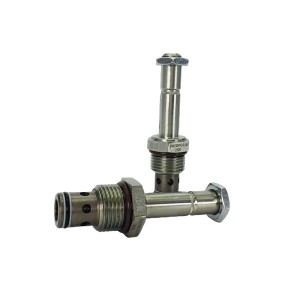
Contamination gets into fire-resistant oil systems from a few common sources — component wear generating metallic fines, incomplete flushing after maintenance work, seal degradation shedding material into the fluid, or simply an aging filtration system that’s no longer catching what it used to.
How Contamination Actually Damages the Valve
Fine particulate lodges in the clearance between the spool and its bore, and depending on particle size and hardness, this can either cause outright sticking or a slower, more gradual increase in friction that degrades response time without stopping the valve completely. Neither outcome is acceptable for a component in an overspeed protection circuit, where response speed is the entire point of the design.
Beyond the spool itself, throttling orifices inside the valve — small, precisely sized passages that control flow rate — are particularly vulnerable to partial blockage. Even a small amount of debris lodging in one of these orifices changes the flow characteristics the valve was designed around, sometimes subtly enough that it’s hard to catch without deliberate testing.
| Oil Quality Issue | Mechanism | Valve-Level Consequence |
|---|---|---|
| Rising acid number | Acidic byproducts attack seals and metal, promote sludge formation | Spool sticking, seal degradation |
| Falling resistivity | Moisture and ionic contamination increasing | Accelerated chemical degradation, early warning sign |
| Particle contamination | Fine debris lodges in tight clearances and orifices | Orifice blockage, spool friction, internal leakage |
Internal Leakage — The Quiet Failure Mode
Not every oil-quality-related failure shows up as a valve that won’t move. Sometimes the result is internal leakage — oil passing through the valve’s internal sealing surfaces when it shouldn’t, even though the spool still shifts when commanded. This happens as sludge and varnish deposits interfere with seal contact, or as particulate causes minor scoring on sealing surfaces over repeated cycles.
Internal leakage in an OPC solenoid valve can degrade the precision of the overspeed control function without producing an obvious alarm or failure indication right away. This is arguably more concerning than a valve that fails completely and triggers an immediate fault, because a slowly leaking valve can keep operating in a degraded state for a long time before anyone notices something’s off.
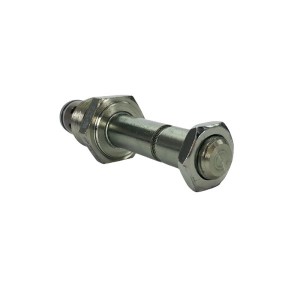
What “Oil Quality Management” Actually Looks Like in Practice
Saying oil quality drives 70% of reliability outcomes is easy. Actually managing it well requires a consistent, disciplined program rather than occasional spot checks when something already seems wrong.
- Establish a routine sampling schedule covering acid number, resistivity, moisture content, and particle count — not just one or two of these in isolation.
- Maintain fluid reconditioning equipment (typically fuller’s earth or ion exchange systems for phosphate ester fluids) and use it proactively based on trend data, not reactively after a failure.
- Track filtration system performance over time, replacing elements based on actual differential pressure readings rather than a purely calendar-based schedule that might miss an unusually fast-loading period.
- Keep detailed records tied to specific valves and systems, so a recurring problem with one particular SV4-10V-C-0-220AG installation can be correlated against the oil quality history for that specific circuit, not just a general plant-wide average.
Recognizing the Symptoms Before a Full Failure
A few field-observable signs tend to show up before an OPC solenoid valve fails outright, and catching them early is a lot better than discovering the problem during an actual overspeed event:
- Response time during routine testing that’s gradually getting slower, even if it’s still technically within acceptable limits for now.
- Inconsistent behavior between test cycles — a valve that responds cleanly sometimes and sluggishly other times, rather than showing steady, predictable performance.
- Any unexplained drift in downstream pressure or flow readings tied to the OPC circuit, particularly if it correlates with a period of declining oil quality metrics on recent sampling.
None of these symptoms are dramatic on their own, which is exactly why they get missed. A valve that’s ten percent slower than it used to be doesn’t trigger an alarm. It just quietly erodes the margin the protection system was designed to have.
Why This Deserves More Attention From Procurement and Reliability Teams
It’s tempting to treat solenoid valve reliability as purely a component quality question — buy a good valve from a reputable source, and reliability follows. That’s part of the picture, certainly, but it’s not the whole story for a component operating in a fire-resistant oil circuit.
A well-built SV4-10V-C-0-220AG installed into a poorly managed oil system will likely underperform a more ordinary valve running in a system with disciplined fluid quality monitoring. That’s not a comfortable thing to admit when the instinct is to solve reliability problems by upgrading hardware, but it’s consistent with how these failures actually happen in the field.
If your plant is reviewing OPC solenoid valve reliability or planning a fire-resistant oil quality audit, it’s worth pulling recent acid number and particle count trends alongside your valve maintenance and test records — laying those two datasets side by side tends to reveal a correlation that’s easy to miss when they’re tracked separately.
Final Thoughts
The SV4-10V-C-0-220AG OPC solenoid valve is a precisely built component doing a critical job, and it deserves to be treated that way. But precision engineering only holds up as long as the fluid around it stays within the chemical and physical bounds the design assumes. Acid number creep, falling resistivity, and particle contamination each chip away at that margin in their own way — spool sticking, orifice blockage, internal leakage, sometimes all three developing quietly at once.
Reliability here isn’t mostly a hardware story. It’s mostly an oil quality story, and treating fluid management as a secondary concern behind valve maintenance gets the priority backwards for a component this sensitive to what’s actually flowing through it.
Post time: Aug-21-2026
-

Polyester sleeve fiberglass Rope
-

EH oil online filter machine fine filter JLX-30...
-

Regeneration device diatomite filter DL003001
-

Duplex Armored Thermocouple WRKK2-221
-

Generator Hydrogen sealing Sealant D20-75
-

Active/Reactive Power (Watt/ Var) Transducer S3...
-

Globe valve SHV25
-

Insulation Alkali-Free Fiberglass tape ET60
-

AST/OPC solenoid valve coil 300AA00086A
-

Hydraulic filter element LH0160D020BN3HC
-

Turbine Rotation Speed Monitor HZQS-02A
-

Gas turbine actuator filter CB13300-001V