

Operators watching a boiler drum during startup or a load swing are, in a very real sense, trusting their eyes to something that has to be right every single time. The B69H-32/2-W bi-color water level gauge is that trusted set of eyes. Red for steam space, green for water — simple enough on a good day. But gauges drift, foul, and occasionally lie a little, and knowing the difference between a real water level problem and a gauge that’s just not telling the truth anymore is a skill worth having before you need it.
This article walks through the ways this water level gauge can mislead you, and more importantly, how to tell what’s actually happening in the drum when the reading doesn’t quite add up.
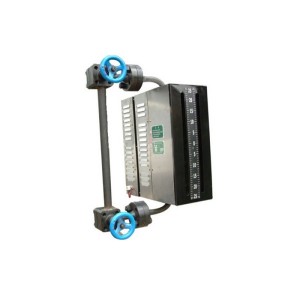
How the Bi-Color Display Actually Works
The B69H-32/2-W level gauge uses a mica-based optical principle to create its red-and-green contrast. Light passes differently through the mica sheet depending on whether steam or water is present at that point along the gauge column, and the result is a visible color boundary marking the actual water level — red above, green below, with the transition line representing the level itself.
This design is popular precisely because it removes the ambiguity of a plain glass gauge, where a thin water column can be hard to see clearly, especially from a distance or under poor lighting in a boiler house. But the reliability of that color boundary depends entirely on the internal components staying clean and the gauge’s connecting piping staying clear.
When Mica Scaling Skews the Reading — Which Way Does It Go?
Over time, mineral deposits can build up on the mica sheet inside the gauge body, particularly if boiler water chemistry isn’t perfectly controlled or if the gauge hasn’t been serviced in a while. This scaling changes how light passes through the mica, and it can distort the color boundary in ways that don’t necessarily match the real water level.
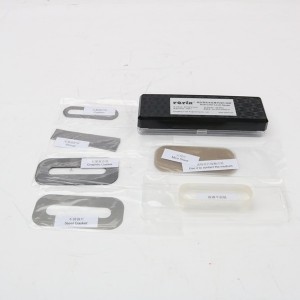
The direction of the error isn’t always the same, and that’s part of what makes this tricky. Scaling that builds up unevenly, thicker in some areas than others, can create a color transition that appears higher or lower than the true level depending on exactly where the deposits are concentrated. Generally speaking, heavier scaling near the lower portion of the gauge tends to make the visible water level look lower than it actually is, since the water-side light transmission gets degraded and looks more like the steam-side reading. Scaling concentrated higher up can have the opposite effect, making the boundary appear to sit higher than the true level.
Because the direction isn’t consistent or predictable from scaling alone, the practical takeaway is this: don’t assume you know which way a scaled gauge is lying. Cross-check against another independent level indication instead of guessing based on which direction seems more likely.
What Happens When the Steam-Side Line Gets Blocked
The gauge connects to the drum through two piping runs — one tapping into the steam space, one into the water space. If the steam-side connecting line becomes partially blocked, whether from scale, debris, or a valve that isn’t fully open, the pressure balance the gauge depends on gets disrupted.
A restricted steam-side line typically causes the gauge to show a falsely high water level. This happens because the pressure differential the gauge relies on to reflect the true drum level shifts when steam-side pressure can’t communicate properly through the blocked path — the water column inside the gauge doesn’t drop the way it should as drum level actually falls, leaving the displayed level higher than reality.
This is a genuinely dangerous failure mode precisely because it errs on the side of appearing safe. An operator glancing at a gauge showing comfortably high water, while the actual drum level is dropping, has no visual cue that anything’s wrong until the discrepancy becomes severe enough to show up elsewhere — in feedwater flow behavior, or worse, in an actual low-water alarm from an independent instrument.
| Fault Condition | Typical Effect on Displayed Level | Risk Level |
|---|---|---|
| Mica scaling, lower section | Tends to read lower than actual | Moderate — may prompt unnecessary action |
| Mica scaling, upper section | Tends to read higher than actual | Higher — may mask a real low-level condition |
| Steam-side line blockage | Reads falsely high | High — masks falling drum level |
| Water-side line blockage | Reads falsely low or fails to update with real fluctuations | Moderate to high — depends on direction of error |
Startup: Real Level Swings vs. a Gauge That’s Misbehaving
Boiler startup is exactly when water level tends to move around the most, thanks to changing steam generation rates, thermal expansion of drum internals, and swelling and shrinking effects as pressure builds. Distinguishing a genuine, expected fluctuation from a gauge that’s actually malfunctioning takes a bit of pattern recognition.
A real level swing during startup tends to move in a way that correlates logically with what’s happening elsewhere — firing rate changes, feedwater flow adjustments, pressure ramp rate. The color boundary shifts smoothly and its movement makes sense given what the rest of the control board is showing at the same moment.
Signs the Gauge Itself Might Be the Problem
- The level shown doesn’t correlate at all with recent changes in firing rate, feedwater flow, or steam demand — it’s moving (or not moving) independent of anything else happening in the process.
- The color boundary is unusually sluggish, taking much longer than expected to respond to a known feedwater flow change compared to how it’s behaved historically on this same unit.
- A second, independent level indication — another gauge, or a transmitter-based reading feeding the DCS — shows a meaningfully different value at the same moment, with no clear reason for the two to disagree.
- The gauge was recently serviced or replaced, and this is the first time it’s being observed under real dynamic conditions since that work was done — worth extra scrutiny until it’s proven trustworthy under load changes.
When any of these signs show up, the safest approach is treating the gauge reading with suspicion and leaning on independent level instrumentation until the discrepancy is resolved, rather than assuming the visual gauge is automatically correct just because it’s the traditional reference point operators are used to trusting.
A Blurred Red-Green Boundary — Gauge Fault or Real Steam-Water Carryover?
This is probably the single most common uncertainty operators run into with a bi-color gauge like the B69H-32/2-W, and it’s worth a dedicated look. A boundary that’s blurred, indistinct, or flickering between red and green rather than showing a clean line can come from two very different sources — one is a gauge problem, the other is a real condition happening inside the drum.
Steam-water carryover, sometimes described as the drum water and steam “boiling together” or foaming, happens under certain conditions — rapid load changes, high dissolved solids concentration in the boiler water, or priming events where water gets carried into the steam space. When this happens for real, the actual interface between steam and water inside the drum becomes turbulent and indistinct, and a properly functioning gauge will genuinely show a blurred, unstable boundary because that’s an accurate reflection of drum conditions.
Quick Checks to Tell the Two Apart
- Check boiler water chemistry data, particularly total dissolved solids or conductivity readings, if available — elevated values support a real carryover event rather than a gauge fault.
- Look at recent load or firing rate changes — a rapid increase shortly before the blurring appeared points toward genuine carryover, since that’s a known trigger for the condition.
- Compare against the second water level gauge or transmitter, if the drum has one — if both instruments show similar blurring or instability at the same time, that’s strong evidence of a real drum condition rather than an isolated gauge fault.
- If only this one gauge shows blurring while a second independent indicator reads clean and stable, the fault is much more likely sitting in this gauge — mica condition, connecting line blockage, or an internal issue specific to this unit.
The core logic here is straightforward: a real drum condition like carryover tends to show up consistently across multiple independent instruments, since they’re all responding to the same physical event inside the drum. A gauge-specific fault, by contrast, usually stays isolated to that one instrument while everything else keeps reading normally.
Practical Maintenance Habits That Reduce Misjudgment Risk
A lot of the ambiguity described above becomes less of a problem when a few maintenance habits are kept up consistently, rather than only being addressed after a confusing reading has already caused hesitation during an actual operating event.
- Schedule periodic inspection and cleaning of the mica elements according to the manufacturer’s recommended interval, rather than waiting until a reading looks obviously wrong.
- Include the steam-side and water-side connecting lines in routine blowdown or flushing procedures, since these lines are just as prone to fouling as the gauge body itself.
- Cross-verify this gauge’s reading against an independent level source during every startup, as a matter of routine, not just when something already seems off.
- Keep a maintenance log tied to specific readings and dates, so a pattern of gradual drift, if one exists, becomes visible over time rather than being noticed only after it’s become a significant discrepancy.
Why This Level of Attention Is Worth It
A boiler drum water level gauge isn’t a convenience instrument — it’s one of the primary tools operators rely on to avoid both dangerously low water conditions and carryover events that can damage downstream equipment. A water level gauge that’s quietly misreading, whether from mica scaling or a partially blocked connecting line, removes a layer of protection without any obvious warning that it’s happened.
Treating gauge cross-verification and routine cleaning as standard operating discipline, rather than optional extras, keeps that layer of protection genuinely reliable rather than just present in name.
If your plant is reviewing water level instrumentation practices or planning maintenance on a B69H-32/2-W installation, it’s worth requesting the manufacturer’s mica inspection interval and connecting line flushing procedure directly, so these checks can be built into the existing maintenance schedule rather than handled on an ad hoc basis.
Final Thoughts
The B69H-32/2-W water level gauge does its job well when it’s kept clean and its connecting lines stay clear, giving operators a genuinely trustworthy visual reference during both routine operation and the more demanding moments like startup. But scaling and blockage don’t always err in the same direction, and a blurred color boundary can mean either a gauge problem or a real condition happening inside the drum.
Knowing how to tell these apart — checking correlation with process changes, comparing against independent level instrumentation, watching whether an anomaly is isolated to one gauge or shared across multiple sources — is what turns a moment of uncertainty into a quick, confident diagnosis instead of a hesitant guess during exactly the kind of situation where hesitation isn’t a good option.
Post time: Aug-25-2026
-

Bolt Electric Heater HY-GYY-1.2-380V/3
-

Generator RTV epoxy adhesive J0792
-

Gas turbine cleaner ZOK-27
-

EH oil pump discharge filter AP1E101-01D03V/-WF
-

KEY PULSES (KEY PHASOR) Rotation Speed Sensor D...
-

Low resistance anti-corona tape
-

DET Series Displacement Sensors
-

188 generator rotor surface red insulating varnish
-

High Pressure Welding Angle Globe Valve J64Y-64
-

Oil filter coarse filter DR913EA10V/-W
-

HL Series Displacement Sensors
-

Gas turbine actuator filter CB13300-001V