

An EH oil system runs clean for months. Then the acid number creeps up. Particle counts start climbing. And somewhere inside the solenoid valve assembly, a tiny damping orifice begins to block.
The DB10A-1-50B/315 is a pilot-operated solenoid relief valve. It protects your turbine’s high-pressure oil supply. But when oil degrades, the pilot stage suffers first. That small orifice in the pilot valve gets plugged by varnish or sludge. Pressure control becomes erratic. Then one day the system trips.
You do not want that trip. Better to catch the warning signs early. This article walks through how a healthy DB10A works, what goes wrong when oil quality slips, and which symptoms tell you to pull the valve for cleaning before losing control.
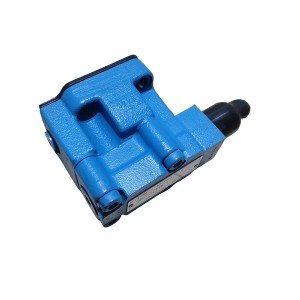
Inside the DB10A-1-50B/315: Two-Stage, Poppet Design
This valve belongs to the DB/DBW family. Two-stage concentric poppet construction. Both main stage and pilot stage use poppet-type seats, not spools. That design handles higher pressures with less leakage.
The assembly has three parts. A pilot valve (the small poppet that senses pressure). A main valve (the larger poppet that dumps flow). And a solenoid valve on top for remote unloading.
In the DBW version, the solenoid gives you electric control. Energize the coil, and the pilot line opens. The main valve lifts. System pressure drops to near zero. That is how you unload the pump remotely, saving energy and reducing heat when the system idles.
Normal operation works like this. System pressure acts on the pilot poppet through a small damping orifice. When pressure hits the setpoint (315 bar in this model), the pilot poppet opens. Flow through the pilot creates a pressure drop across the main poppet. The main poppet lifts. Oil bypasses to tank. Pressure stays controlled.
That small damping orifice is the weak link. Its diameter is usually 0.8 to 1.2 mm. Very easy to block.
What Clogs the Pilot Damping Orifice?
Two common culprits in power plant EH systems. High acid number. And high particle count.
As EH oil ages, the acid number rises. Above 0.2 mg KOH/g, you start seeing varnish precursors. These sticky compounds deposit on tight-clearance surfaces. The pilot orifice is a prime spot for varnish buildup.
Particle contamination does the same thing. Hard particles wedge into the orifice. Soft particles deform and stick. The ISO code might still look acceptable, but a single cluster of debris can block that tiny hole.
Once the orifice plugs, the pilot poppet no longer sees true system pressure. It sees a trapped, stagnant pressure. The valve stops responding correctly. Two failure modes appear.
Orifice Fully Blocked
Pressure builds up behind the pilot poppet but cannot bleed off. The pilot never opens. The main poppet stays shut. System pressure rises above the setpoint. The relief valve does not relieve. Pressure keeps climbing until something else trips or bursts.
Orifice Partially Blocked
This is more common and more deceptive. Flow through the orifice is restricted but not stopped. The pilot poppet opens late or chatters. System pressure oscillates. You see pressure spikes and drops on your control panel. The pump works harder. Oil temperature rises.
Partial blockage is your warning window. Catch it here, and you avoid the trip.
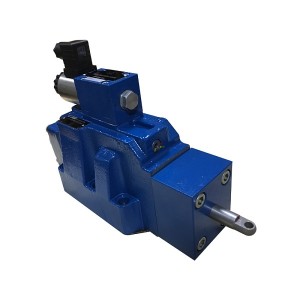
How to Spot the Blockage Before Trip
You need two sensing methods that work from the control room or during rounds.
Pressure fluctuation monitoring. A healthy pilot-operated valve holds pressure steady once the pilot cracks open. Maybe a 1-2 bar ripple under steady flow. A partially blocked orifice produces bigger swings. You might see pressure jump 10-15 bar above setpoint, then drop below, then climb again. The period depends on the orifice size and oil viscosity. Record a baseline pressure trace when the valve is new or freshly cleaned. Compare quarterly. Any new oscillation pattern over 5 bar amplitude is suspicious.
Pilot stage noise. This is subtle but real. Stand next to the valve with a mechanic’s stethoscope or a long screwdriver against your ear. A clean pilot poppet makes almost no sound. Maybe a faint hiss when relieving at high flow. A partially blocked orifice causes the pilot poppet to hunt. You will hear a chattering or buzzing noise from the pilot section. It is not the solenoid hum. It is the poppet vibrating against its seat. Some engineers describe it as a “ticking” sound at irregular intervals.
If you hear that noise during normal operation at steady load, the pilot orifice is dirty. Order the cleaning job for the next outage.
Other Clues in the Hydraulic System
Look at your oil analysis trends. Acid number rising? The varnish potential is real. Check the color of the oil. Dark amber or brown means oxidation. Check for deposits on filters or in sight glasses. Sticky brown film on internal surfaces means the pilot orifice is also collecting that film.
Watch pump discharge temperature. A solenoid relief valve that is hunting or failing to open cleanly forces the pump to work against a fluctuating load. The pump’s case drain temperature will rise 5-10°C above normal. That extra heat accelerates oil degradation. It becomes a death spiral.
One more indicator: cycling frequency of the unload solenoid. On DBW valves, if you use the solenoid to unload the system periodically, listen for unusual delays. When you de-energize the solenoid, system pressure should build back to setpoint within 1-2 seconds. If it takes longer, the pilot orifice may be restricting the refill flow to the pilot stage.
Table: Clogging Symptoms and What They Mean
| Observed Symptom | Likely Condition | Action Required |
|---|---|---|
| Pressure fluctuates ±8 bar at steady load | Partial pilot orifice blockage | Schedule cleaning next outage |
| Chattering or ticking noise from pilot section | Poppet hunting due to restricted pilot flow | Immediate inspection once system offline |
| Pressure slowly climbs above setpoint with no relief | Fully blocked orifice | Trip hazard. Stop system and clean valve |
| No noise, no fluctuation, but acid number >0.25 | Varnish precursors present | Proactive cleaning before symptoms appear |
What to Do During the Next Shutdown
Do not wait for a pressure excursion that triggers a turbine trip. Plan the cleaning.
First, isolate the valve. Relieve system pressure. Remove the pilot section carefully. The DB10A has a pilot housing bolted to the main valve body. Keep track of the spring and the small poppet. The damping orifice is inside the pilot piston or in the seat. Refer to the manufacturer’s cross-section drawing.
Inspect the orifice under good light. Hold it up to a lamp. Can you see through it? A clean orifice shows a perfect circle of light. Any shadow or reduction means debris.
Clean the orifice with a soft wooden toothpick or a brass wire that is smaller than the hole. Do not use steel tools. Do not ream or enlarge the hole. Flush with clean solvent and blow dry with filtered air. Reassemble with new O-rings if supplied.
While you are in there, check the pilot poppet seat. Any deep ring groove? Any pitting? Replace the pilot poppet if the sealing line is damaged.
Test the solenoid valve function separately. Apply rated voltage. The solenoid should click sharply and the internal plunger should move fully. Check the manual override button if present.
After reassembly, bench test the relief valve if possible. A simple test stand with a variable pump and a pressure gauge. Slowly increase flow. The valve should crack open within 5% of setpoint and close cleanly when flow drops.
Preventive Measures That Reduce Clogging Risk
You cannot stop oil degradation entirely. But you can slow it down and protect the pilot stage.
Install a fine filter in the pilot line if your system allows. Some EH systems have a separate pilot oil filter with 3-micron absolute rating. That keeps particles away from the damping orifice.
Use offline filtration or electrostatic oil cleaners to remove varnish precursors. These devices run continuously on the reservoir and keep acid number in check.
p>Schedule regular oil sampling. Monitor acid number and particle count. When acid number hits 0.15, take action. When it hits 0.2, plan an oil change or varnish removal service.
Keep a spare DB10A-1-50B/315 valve on your shelf. When you pull a valve for cleaning, install the spare immediately. Clean the dirty valve at your own pace. That way you never have extended downtime waiting for a rebuild.
When Pressure Spikes Despite Everything
Sometimes you miss the warning signs. Pressure runs away. The relief valve fails to open. What now?
The system has other protection. Pressure switches at higher setpoints. Rupture discs. Pump internal reliefs. But those are last-ditch devices. Relying on them means you already have equipment damage.
If you experience a pressure trip, do not just reset and restart. Pull that DB10A valve immediately. Inspect the pilot orifice. You will almost certainly find it blocked. Clean it. But also check the main poppet for damage. High pressure slamming the main poppet shut can deform the seat. Lap the seat or replace the valve body as needed.
Need a replacement DB10A-1-50B/315 solenoid relief valve or a rebuild kit? Contact your hydraulic distributor or the original manufacturer. Have the full model code ready. That includes the pressure setting (315 bar) and the solenoid voltage (typically 24V DC or 220V AC).
For power plant engineers, the DB10A is a small component with a big responsibility. Learn its voice. Watch its pressure trace. Pull it for cleaning before the oil turns against you. That is how you keep the turbine running and the trips away.
Need technical data or spare parts for the DB10A-1-50B/315 solenoid valve? Reach out to your hydraulic system supplier. They can confirm compatibility and provide cleaning procedures specific to your EH oil type.
E-mail: sales@yoyik.com
Tel: +86-838-2226655
Whatsapp: +86-13618105229
Yoyik offers various types of power plants spare parts for steam turbines, generators, boilers as below:
Accumulator charge adapter NXQ A10/31.5-L-EH
24 volt dc solenoid coil 4420197142
PUMP 100AY67X7
Bonnet gasket Z942H-16C
50mm stop valve WJ40F1.6P
Hydraulic accumulator bladder & Seal kit NXQ-AB-80/31.F
Accumulator NXQ-A-32-31.5L-Y
direct solenoid operated valves 4WE10Y-L3X/CG220NZ4/V
ACCUMULATOR BLADER SEAL KIT EH OIL IN TG NXQ-A-40/31.5-F-Y
solenoid valve coil price HQ16.18Z
mechanical magnet brake coil 3YV
Mechanical seal FK5G32M
pump HSNH 210-36
Mechanical seal DF100-80-230
Electric stop valve J961Y-20 DN50
(8YV)SOV 4WE6D-L6X/EG110NZ5L
recirculating pump oil F3V101S6S1C20
relief valve HGPCV-02-B30
Post time: Jun-15-2026
-

LVDT Position Sensor ZDET-200B
-

Rubber Bladder for ST High Pressure Accumulator...
-

Linear variable displacement transducer LVDT se...
-

DF6101 Steam turbine magnetic rotation speed se...
-

Jacking Oil Pump Suction Filter QF6803GA20H1.5C
-

Actuator Inlet Flushing Oil Filter DP301EA01V/-F
-

Bellows relief valve BXF-40
-

YSF series pressure relief valve for transformer
-

Lubricating oil filter element LY-48/25W
-

Generator Surface flat sealant 750-2
-

Lubricating oil filter element 21FC5128-160X600/25
-

LVDT sensor TD series Armored cable LVDT sensor...