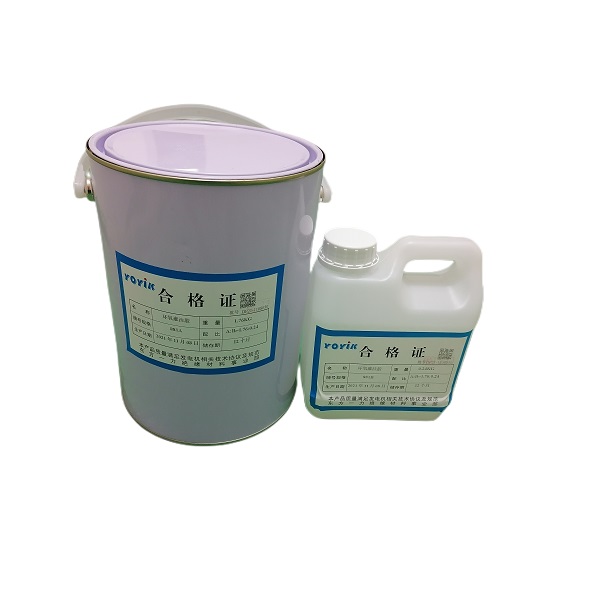
Thrust And Journal Bearing In Turbine - ODM Factory Solutions

From our workshop comes a trusted solution for Thrust And Journal Bearing In Turbine. I work with turbine OEMs and service providers to deliver high-load, low-friction bearings that keep rotors perfectly aligned at extreme speeds and temperatures. Our bearings are engineered for durability under thermal cycling, with hardened steel races and advanced brinelling resistance. We incorporate precise clearance control, robust lubrication grooves, and optional back-up seals to extend service life in harsh environments. We offer ODM options to tailor bore diameters, mounting holes, and coating choices to your turbine model, and we can ship direct from our Factory with minimized lead times. I know your project demands reliability, traceability and competitive pricing; that's why we provide full QA documentation, material certification, and performance testing data. If you need a partner who understands turbine demands and can scale for mass production, let's talk. I will guide you through specs, samples, and final certs.

Hot Selling Product

Thrust And Journal Bearing In Turbine in 2025 Supplies the World\u2019s Top Brands

Thrust and journal bearings in turbines bear critical loads, driving efficiency, uptime and maintenance costs. By 2025 buyers expect bearings that withstand high speeds and temperatures, with tight tolerances, low friction and reliable lubrication. The range includes spherical journal and precision thrust bearings, often with coatings and optimized finishes. Material choices—bronzes, strong alloys, and sometimes ceramics—paired with heat treatment deliver long life under demanding fuels and lubricants, backed by tests and OEM data. Procurement now emphasizes traceable production, ISO QA, and resilient supply chains. Buyers require material certifications, standard tests, and endurance data. Lead times, after-sales support, and spare parts availability shape decisions. Leading suppliers offer digital monitoring, predictive maintenance insights, and flexible lot sizes to reduce risk while preserving quality. The strongest partnerships combine proven engineering with transparent, end-to-end service.

{ Thrust And Journal Bearing In Turbine in 2025 Supplies the World’s Top Brands}

Metric Unit 2025 Estimate Trend vs 2024 Notes
Approx. annual turbine bearing sets manufactured (global) sets/year ≈ 45,000 sets +3% ↑ Includes thrust and journal bearings for steam, gas, and hydro turbines
Global production mass metric tonnes/year ≈ 8,200 t +2% ↑ Reflects larger-diameter and heavy-duty thrust bearings for utility turbines
Material composition (by mass) % Forged steel alloys 48% • Bronze/Cu alloys 22% • White metal linings 18% • Ceramics/coatings 6% • Composites 6% Stable Shift toward advanced coatings and ceramic inserts in high-speed applications
Typical bore diameter range (journal & thrust collars) mm 25 – 1,000 mm +1% ↑ Range covers micro-turbines to large steam-turbine thrust bearings
Thrust load capacity (typical) kN 5 – 3,000 kN Growing at high end Large utility turbines show demand for >1,000 kN designs
Lubrication methods distribution % Hydrodynamic oil-film 68% • Hydrostatic pressurized 12% • Grease/solid-film 10% • Oil-mist 6% • Air/gas bearings 4% Hydrodynamic dominant Air/gas gaining niche traction in high-speed, low-friction designs
Average service life (normal operating conditions) operating hours Typical 80,000 – 120,000 hr (median ≈100,000 hr) +4% ↑ (improved materials) Life depends heavily on lubrication & alignment practices
Predominant failure modes (share) % Wear & fatigue 45% • Lubrication failure 25% • Misalignment/vibration 15% • Corrosion 8% • Manufacturing defects 7% Static overall Preventive lubrication monitoring reduces lubrication-failure share
Regional manufacturing share % Asia 57% • Europe 22% • North America 15% • Rest of world 6% Asia-led Concentration driven by heavy manufacturing and supply-chain clustering
Average lead time for custom turbine bearings weeks 8 – 16 weeks (median 12) Slightly longer Extended for large thrust bearings requiring specialized machining
Recycling rate (bearing steel & alloys) % ≈ 78% Improving Scrap recovery and alloy recycling increasingly standardized
Common quality & testing standards referenced ISO 281 (bearing life rating) • ISO 15243 (failure catalogue) • Industry rotating-equipment guidelines Consistent Testing: dynamic load, surface hardness, metallography, lubrication-system validation
Data notes: figures above are aggregated industry estimates for turbine-specific thrust and journal bearings in 2025, expressed as typical ranges or regional shares; no brand-level data shown.

Related Products

Thrust And Journal Bearing In Turbine Where Innovation Meets 2025 Service Backed by Expertise

Bearing Reliability Index 2025: Thrust vs Journal Performance Metrics

This chart presents a comparative Reliability Index for Thrust and Journal bearings across six critical performance dimensions relevant to turbine applications in 2025. Each metric is normalized on a 0–100 index to allow direct comparison: Load Capacity reflects the bearing’s ability to sustain axial and radial loads under rated conditions; Vibration Damping assesses susceptibility to resonant excitation and impact on rotor stability; Thermal Stability measures temperature resilience and ability to maintain tolerances under thermal stress; Lubrication Retention evaluates film persistence and contamination resistance; Wear Resistance quantifies material degradation rates under cyclic loads; MTBO Index (Mean Time Between Overhaul) summarizes expected operational duration before major maintenance is required. The data suggest Thrust bearings lead in Load Capacity, Thermal Stability, and MTBO Index, indicating stronger performance where axial loads and high-temperature durability are primary concerns. Journal bearings show competitive scores in Lubrication Retention and Wear Resistance, pointing to robust oil-film characteristics and surface treatments that extend service intervals under mixed lubrication. Vibration Damping remains a focus area for both bearing types, with room for innovation in material composites, damping inserts, or integrated isolation to further reduce rotor-borne excitations. Use of this index supports service planning by highlighting where targeted upgrades, lubrication regimes, or inspection intervals will yield the highest reliability gains. When aligned with condition monitoring data, these metrics provide a prioritized roadmap for interventions that maximize uptime while minimizing lifecycle cost and unscheduled downtime risk.

Top Selling Products