

What This Element Does
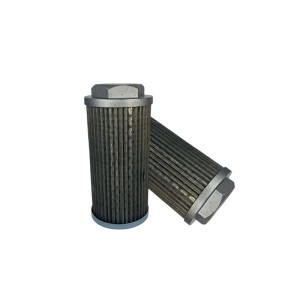
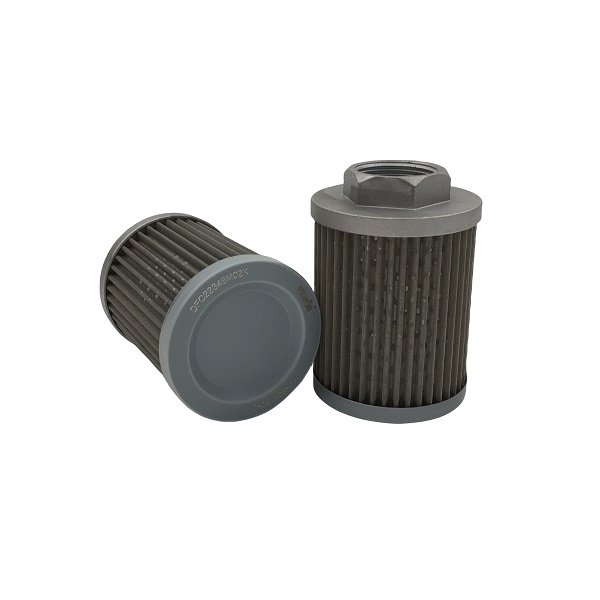
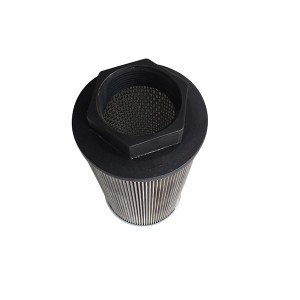
The WU-A250×80FS is an oil suction filter element. It sits at the inlet of a hydraulic pump in a power plant, in the line or tank-mounted housing that feeds the pump. Its job is coarse filtration. It stops the larger particles before they reach the pump. Fine filtration happens elsewhere in the system, on the pressure or return side.
Model designations in this family usually carry flow and filtration information. The exact flow capacity, micron rating, and collapse pressure should be taken from the manufacturer’s datasheet for the specific unit, not assumed from the model code alone.
Coarse does not mean unimportant. A hydraulic pump has tight internal clearances. Gear tips, vane tips, piston bores. Hard particles that get through a suction filter go directly into those surfaces.
Why the Seal Matters More Than It Looks
Oil takes the easiest path. A filter element forces oil through media, and media has resistance. A gap at the end cap or sealing face has almost none. If the seal is missing, the oil goes through the gap. If the seal is pinched or sitting off-center, the gap may be small, but it is still a gap, and it stays open for as long as the pump runs.
On a clean element the flow split may favor the media at first, depending on how big the gap is. As the element loads with dirt and resistance rises, more oil finds the gap. So the bypass often gets worse over time, not better.
None of this makes noise. Oil passing through a small gap on the suction side does not announce itself the way a leak does. The pump keeps running. Pressure looks normal. The oil is simply no longer being filtered.
Where Noise and Pressure Fluctuation Come In
A suction filter works under negative pressure. Anything that breaks the seal on the suction side can also let air in, if the sealing point is exposed to air rather than fully submerged. Whether that happens depends on the installation. A tank-submerged element with a bad seal bypasses oil. A line-mounted housing with a bad seal at an external joint can draw air.
Air in the suction line is a different failure. It shows up as noise, often a rattling or whining sound from the pump, and as unsteady discharge pressure. Foamy oil in the tank is another sign. Air ingress is a real problem and it is easy to notice.
So the noise-and-pressure idea has some basis. It detects aeration. It does not detect particle bypass. A seal fault that lets in oil only, with no air, produces neither.
Other Reasons for a Noisy Pump
Noise and pressure swings have plenty of other causes on a pump suction line, which is why they are poor evidence for anything specific.
A clogged suction filter raises the vacuum at the pump inlet. High vacuum causes cavitation, and cavitation sounds like gravel in the pump. This is the opposite situation to a bypassing seal, where resistance is lower than it should be.
Low oil level or a vortex at the tank outlet pulls air or vapor into the line.
Cold, thick oil during startup raises suction resistance and can give a similar noise until it warms up.
Pump wear on its own, bearings, worn gears or vanes, produces noise and pressure instability. Interestingly, this wear can be a result of long-term particle bypass, which makes the symptom a late consequence rather than an early warning.
Loose fittings or damaged suction hose joints allow air in regardless of what the filter seal is doing.
Any of these can look the same from the control room. A noise trend alone does not identify the cause.
What Actually Detects Bypass
Oil cleanliness data is the most direct evidence. Particle counts taken downstream of the filter, or from the pump discharge side, compared against the expected level, show whether coarse particles are reaching the pump. A sudden rise after an element change points straight at the installation. A rise that begins right after maintenance on the suction filter housing is a strong clue.
Patch tests or membrane analysis of an oil sample show what kind of particles are present. Metallic wear debris, fibers, sand-like grit. Bypass of tank sediment or assembly debris looks different from slow pump wear.
Inspection of the removed element and housing is direct. Look for a missing O-ring or gasket. Look for a seal that is flattened on one side, twisted, or pushed out of its groove. Look for dirt tracks or staining on the downstream side of the sealing face. Oil bypass often leaves a clean line of deposits at the exact leak location.
Differential pressure across the element, where measured, is useful too. An element installed with a bypass path may show a lower than expected differential pressure compared to a properly sealed element of the same age and loading. A new element showing almost no restriction is worth a second look.
How to Sort Out a Noisy Suction Side
When noise or pressure instability appears after a filter change, a few checks help separate air ingress from bypass.
Inspect for aeration. Foam on the oil surface, cloudy oil in a sight glass, and small bubbles at the return all suggest air. Pure bypass does not cause these.
Check the vacuum or suction pressure at the pump inlet, if a gauge exists. High vacuum suggests clogging or restriction. Low or normal vacuum with noise suggests air ingress. Low vacuum with no noise leaves bypass as a possibility that noise cannot rule out.
Compare timing. Symptoms that appear right after an element change, and not before, point to installation. Symptoms that develop slowly over weeks lean toward loading, wear, or oil condition.
Take an oil sample. This costs little compared to what a worn pump costs, and it settles the question that noise cannot.
Installation Habits That Prevent the Problem
Check the seal before fitting the element. Confirm it is present, the right size, and not nicked or hardened. Seat it in the groove by hand and look all the way around.
Avoid twisting the element during installation. A seal that rolls out of its groove looks fine from above and fails in service.
Clean the housing sealing face before closing it. Old gasket remnants and dried sludge keep a new seal from seating evenly.
Tighten covers evenly, following the manufacturer’s sequence and torque where one is given. Uneven closure pinches one side of the seal and leaves the other side loose.
Record the element change, including seal condition at removal. Repeated seal damage at the same location says something about the housing or the procedure.
Procurement Notes
Confirm the filtration rating and flow capacity of the WU-A250×80FS against the actual pump flow and the manufacturer’s datasheet. Confirm the seal material is compatible with the working fluid in use, mineral oil or a fire-resistant fluid, since seal compatibility varies. Confirm whether the seal ships fitted to the element or as a separate part, since a separately supplied seal is easier to lose during storage or handling. Where element replacement is routine, keep spare seals on hand and keep the old-style and new-style parts clearly labeled if more than one version has been used in the plant.
Post time: Oct-12-2026
-

EH oil regeneration Alumina Filter 30-150-219
-

Booster pump oil throw sleeve HZB253-640-01-06
-

Generator end cap Sealant 53351JG
-

AST/OPC solenoid valve SV4-10V-C-0-00
-

Actuator Inlet Flushing Oil Filter DP301EA01V/-F
-

LVDT Position Sensor TD-1 0-100
-

Double barrel oil filter disc SPL-32
-

Generator Oil-resistant Rubber Round Strip
-

High Pressure Welding Angle Globe Valve J64Y-64
-

EH oil pump suction filter DS103EA100V/W
-

Single Channel Speed Monitor D521.02
-

AST solenoid valve coil Z6206052