

Internal leakage in a hydrogen system valve is a different kind of problem from an external leak. There’s no visible drip, no smell, no obvious sign that anything is wrong. What happens instead is that the generator’s hydrogen atmosphere slowly changes — purity drifts downward, makeup gas consumption climbs — and by the time someone connects those changes to a specific valve, the condition has usually been developing for weeks or months.
The 25JC-1.6P is a flanged cast steel globe check valve with bellows sealing, combining stop and check functions in one body. It’s used in generator hydrogen dryer inlet and outlet piping, safety valve bypass lines, and similar positions in the hydrogen cooling system where both flow control and backflow prevention are needed. The bellows design provides an additional sealing layer even if the primary stem seal degrades. But the valve seat itself — the surface the disc contacts when the valve is closed — can develop internal leakage over service time, and that leakage path is much harder to detect.
What Internal Valve Leakage Does to Hydrogen Purity
A generator hydrogen system maintains purity — typically above 98% hydrogen by volume — by continuously circulating the gas through a dryer that removes moisture and any air that enters through the shaft seals. When a globe check valve in the dryer inlet or outlet piping develops a leaking seat, air or moisture can migrate into the hydrogen circuit through that path depending on where the valve sits and what it connects to.
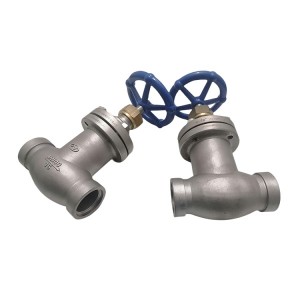
The effect shows up as a gradual decline in measured hydrogen purity. The purity analyzer or sampling point at the generator shows hydrogen concentration slowly dropping over days or weeks. At the same time, the makeup gas system — which adds pure hydrogen to compensate for losses and maintain casing pressure — operates more frequently than normal. The two changes happen together because the contaminated volume needs to be diluted back to specification with fresh hydrogen.
Neither change is dramatic on its own. A purity reading that drops from 99.2% to 98.8% over two weeks doesn’t look alarming at a glance. A makeup valve that cycles slightly more often than usual is easy to attribute to normal system behavior. The pattern only becomes visible when you’re comparing current data against a stable historical baseline for that specific generator.
Using Purity Decline Rate as a Diagnostic Tool
The rate at which hydrogen purity declines — rather than the absolute purity value — is the more useful indicator for suspecting internal valve leakage. A generator system with no unusual leakage has a characteristic baseline purity decline rate that reflects normal shaft seal performance and the dryer’s moisture management. That rate is relatively consistent week to week under similar load and ambient conditions.
When the decline rate accelerates — purity is dropping faster than the established baseline for the same operating conditions — something has changed in the system’s leak or contamination behavior. Internal valve leakage is one of the causes that produces this pattern. Others include deteriorating shaft seals and hydrogen dryer performance issues, which is why the purity trend alone can’t definitively identify the globe check valve as the problem. But it tells you the system needs investigation, and the valve is on the list of suspects.
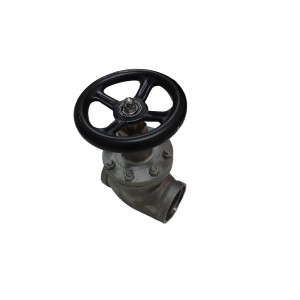
A simple way to track this: pull the daily purity readings at a consistent time each day and plot the seven-day rolling average decline rate. Most DCS historians can produce this with a straightforward query. If the rolling average starts trending steeper — the purity is falling faster than the previous month at comparable conditions — that’s the signal to start looking harder at potential leakage paths.
Makeup Gas Frequency as a Supporting Indicator
Makeup gas consumption is the other half of the picture. Hydrogen makeup systems are designed to compensate for the small, normal losses through shaft seals and system boundaries. Each installation has a characteristic makeup frequency and volume that reflects its baseline leak rate at operating pressure.
Internal valve seat leakage — particularly in a globe check valve on a dryer bypass or safety valve line — may allow hydrogen to migrate out of the main casing circuit, adding to the total loss that the makeup system compensates for. If the makeup valve is cycling noticeably more frequently, or if the cumulative makeup volume per day has increased compared to the baseline, and the change isn’t explained by a change in casing pressure setpoint, load conditions, or ambient temperature, then the system’s total leakage has increased somewhere.
Purity decline and increased makeup frequency appearing together strengthen the case that something specific has changed in the hydrogen circuit — more so than either indicator alone.
Field Methods for Confirming Internal Valve Leakage
Once the operating data points toward a leakage problem, the next step is identifying which valve is responsible. The 25JC-1.6P’s position in the dryer piping or safety valve bypass makes it accessible enough for field checking without major disassembly.
Downstream Pressure Hold Test
For a globe check valve that’s in the closed position during normal operation — such as a safety valve bypass that remains closed unless the safety valve is open — a pressure hold test can confirm seat leakage. With the upstream side at operating pressure and the valve nominally closed, isolate the downstream piping section and monitor the pressure. If the downstream pressure rises over time, gas is crossing the valve seat. The rate of rise gives a rough indication of leak severity.
This test works cleanly when the downstream section can be truly isolated and has pressure instrumentation. In installations where that isn’t practical, other methods apply.
Thermal Detection
When hydrogen flows through a valve seat leak path, the gas movement creates a small temperature differential between the upstream and downstream sides of the valve body. A contact thermometer or infrared temperature gun on the valve body on either side of the seat can sometimes detect this — the downstream side will be slightly cooler than the upstream side if flow is occurring through the seat. This method is more useful for confirming a suspected leak than for detecting a very small one, and it works better on valves with accessible body geometry.
Ultrasonic Leak Detection
Ultrasonic detectors pick up the high-frequency turbulent flow noise generated as gas passes through a small leak path. A probe placed against the valve body downstream of the seat can detect the acoustic signature of internal leakage even when no pressure differential is measurable. This is a non-invasive check that can be performed with the system running and doesn’t require any isolation of the valve.
For hydrogen systems specifically, the combination of the downstream pressure hold test (where feasible) and ultrasonic detection gives a practical field assessment of seat condition without requiring the valve to be taken out of service for inspection.
Summary of Indicators and Field Methods
| Indicator / Method | What It Shows | Practical Notes |
|---|---|---|
| Hydrogen purity decline rate | Accelerating decline suggests increased system contamination or leakage | Compare rolling average against historical baseline at similar conditions |
| Makeup gas frequency / volume | Increased makeup points to higher total system loss | Most meaningful when combined with purity decline — both changing together |
| Downstream pressure hold test | Directly confirms gas crossing the closed valve seat | Requires ability to isolate downstream section with pressure measurement |
| Thermal differential check | Temperature difference across valve body suggests flow through seat | More useful for moderate leaks; small leaks may not produce detectable differential |
| Ultrasonic detection | Acoustic signature of gas passing through seat leak path | Non-invasive; can be done in-service; requires calibrated detector and operator experience |
When the Data Points Toward a Specific Valve
Narrowing the suspicion to a particular globe check valve comes from combining the system-level trend data with the physical location of the valve in the circuit. A valve on the dryer outlet line that’s nominally open during normal dryer operation behaves differently from a valve on a safety valve bypass that’s normally closed. The leakage path and its effect on purity and makeup depend on which side of the system boundary the leak is on.
For dryer piping valves, internal leakage typically allows moist or contaminated gas from upstream of the dryer to bypass the desiccant bed, reducing dryer effectiveness and contributing to both purity decline and increased moisture in the casing gas. For bypass or isolation valves in the normally-closed position, the leakage path may allow hydrogen to migrate out of the high-pressure side to a lower-pressure point, directly contributing to increased makeup consumption.
Mapping the system layout alongside the trend data — which valves are open, which are closed, where each one sits relative to the pressure boundary — helps focus the field investigation on the most likely suspect before any disassembly is needed.
If a 25JC-1.6P bellows globe valve is confirmed as leaking through seat inspection or pressure testing, the decision between seat reconditioning and valve replacement depends on the extent of seat damage and the availability of maintenance resources. For critical hydrogen system positions, having a spare valve available before a planned outage allows a clean swap rather than an extended repair on a hydrogen-bearing component. Sourcing the replacement well ahead of the maintenance window avoids the situation where an identified fault has to be left in service while procurement catches up.
Bottom Line
Internal seat leakage in a generator hydrogen system globe check valve doesn’t produce a sudden obvious fault. It shows up gradually in the data — purity sliding, makeup running more than it used to — and it takes some deliberate tracking to connect those changes to a specific valve. The approach is straightforward: establish a baseline for purity decline rate and makeup frequency, watch for deviations from that baseline, and investigate the likely valve positions when the data changes in a consistent direction.
Field confirmation with a pressure hold test or ultrasonic detection narrows the location without requiring system shutdown. Once confirmed, the valve condition and maintenance schedule determine how quickly the repair needs to happen — but catching it through trend monitoring means the decision is made on your timeline rather than the valve’s.
Post time: Jul-27-2026
-

Magnetic Liquid Level Indicator UHC-DB
-

Servo Manifold Spray HP Bypass Oil Filter C6004...
-

Differential Pressure Switch CMS
-

HP Actuator LVDT Position Sensor 4000TD
-

Reset solenoid valve MFZ3-90YC
-

Platinum thermal resistance temperature sensor ...
-

TDZ-1E series linear displacement transducer LV...
-

Copper Washers FA1D56-03-21
-

Polyester sleeve fiberglass Rope
-

Fire-resistant oil filter DP401EA01V/-F
-

Tongma epoxy glass powder mica tape 5440-1
-

Vacuum pump reducer gearbox M02225.013MVV1D1.5A