Best Check Valve - CE Certification & Pricelist

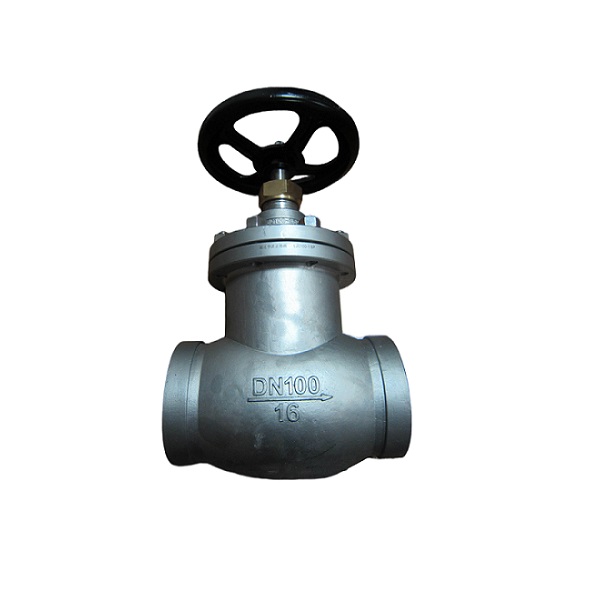
I’m proud to offer the Best Check Valve, a dependable choice for protecting pipelines with unidirectional flow and low maintenance. Built for durability, it handles demanding industrial processes and fits tight installation spaces. When CE Certification matters, I align every batch to CE standards for safety and performance, so you can win European projects with confidence. I can share a transparent Pricelist and flexible quotes tailored to your order size, whether you’re stocking for maintenance or bidding large builds. From compact to heavy-duty models, we provide multiple materials, sizes, and pressure ratings for water, oil, gas, or chemicals. Lead times are competitive and support fast project timelines. I also offer customization options like labeling or OEM packaging. If you need reliable, cost-efficient flow control, the Best Check Valve is the solution. Reach out for technical specs, availability, and a tailored offer today.

Hot Selling Product

Best Check Valve Delivers Unmatched Quality Winning in 2025

Across industries, check valves are a critical line of defense against reverse flow, pressure surges, and system contamination. In 2025, the best check valves are delivering unmatched quality by combining precision casting and forging with state-of-the-art machining, strict component screening, and advanced non-destructive testing. The result is robust seating, reliable sealing, and dramatically reduced leakage across a wide range of temperatures and pressures. From oil and gas to water treatment and chemical processing, the most trusted suppliers deploy metal-to-metal or reinforced elastomer seats, aligned stems, and optimized stub ends to ensure secure installation and minimal maintenance. For global buyers evaluating suppliers, the differentiator is not only the valve itself but the full lifecycle support: certified quality management, traceable materials, and standardized testing, with on-time delivery through a resilient supply chain and customization for sizes, pressure classes, and body materials. In 2025, digital QA, automation, and proactive field service shorten lead times and extend service life, while readily available spare parts and expert after-sales support minimize downtime. Choose a partner that combines engineering excellence with a global service network to ensure reliability wherever your plants operate.

{ Best Check Valve Delivers Unmatched Quality Winning in 2025}
Valve Type Standards / Testing Material (Typical) Nominal Diameter (DN / in) Pressure Rating Flow Coefficient (Cv) Kv (m3/h) Leak Tightness End Connection Typical Application Typical Weight (kg)
Swing Check (vertical hinge) API 594; ASME B16.34; ISO 5208 (testing) Stainless Steel 316L (ASTM A351 CF316L) DN50 / 2" ASME 150 80 69 Metal-to-metal seat; API 598 tested, low leakage Flanged (ASME B16.5) Water treatment, HVAC, general industry ~6
Lift Check (guided piston) API 598; ASME B16.34 Carbon Steel (A216 WCB); soft-seat PTFE option DN100 / 4" ASME 300 320 277 Soft-seat (PTFE) option — tight shut-off (Class IV) Flanged Oil & gas, steam systems, pump discharge ~22
Dual-Plate (wafer) API 594; ISO 5752 (face-to-face) Duplex Stainless Steel (2205) DN150 / 6" PN16 700 606 Metal-seated; low leakage for pump protection Wafer (ANSI/BS) Water distribution, pump protection, HVAC ~10
Tilting Disc API 594; ASME B16.34 Stainless Steel 304 with EPDM/optional metal insert DN200 / 8" ASME 150 1400 1211 Soft-seat insert (EPDM) — low leakage (Class IV) Flanged Power plants, steam and condensate, large pumps ~45
Axial Flow (high-flow) ISO 5208 testing; ASME guidance Carbon Steel (A216 WCB) / weld ends DN250 / 10" PN25 2500 2163 Metal seat; designed for minimal pressure loss and tight closure Butt-weld Bulk liquid pipelines, wastewater, high-capacity lines ~85
Spring-Loaded (silent) API 598; ASME B1.20.1 (threaded dimensions) Stainless Steel 316 DN25 / 1" ASME 150 22 19 Soft-seat (PTFE) — tight for small-line isolation Threaded (NPT) Instrumentation lines, small pumps, compressors ~0.6
High-Temperature Steam (balanced) API 594; ASME B16.34; designed for high-temp service Alloy Steel (A182 F11) with bellows / packing DN80 / 3" ASME 300 180 156 Metal-to-metal seat with bellows/premium packing — low leakage at high T Flanged High-temperature steam, petrochemical processes ~15

Related Products

Best Check Valve Manufacturer Industry Giant

数据维度:材料类型与产量分布 New Data Perspective Title: Global Check Valve Production by Material Type

This dataset represents a simplified distribution of global check valve production volumes across material categories for a reference year, illustrating a data dimension commonly used by market analysts to compare performance, material availability, and cost implications. Stainless steel accounts for the largest share, reflecting a balance of strength, corrosion resistance, and broad applicability in aggressive media and high-pressure environments. Cast iron, while often cheaper, still holds a meaningful portion due to legacy infrastructure demand and cost-sensitive segments in lower-pressure applications or regions with established foundries. Bronze, though smaller in volume, plays a critical role in specific chemical and high-purity water systems thanks to its corrosion resistance and non-sparking properties. The “Other” category captures polymers, composites, and specialty alloys that target niche sectors or regulatory certifications. The relative distribution can shift with evolving standards, commodity price fluctuations, supply chain dynamics, and regional demand. For manufacturers aiming to strengthen leadership in the check valve market, material strategy is essential: secure robust stainless steel supply chains, optimize casting processes for iron-based valves, and monitor advances in alternative materials that might reduce total cost of ownership and extend valve life. This visualization communicates how production emphasis aligns with engineering requirements: stainless steel dominates durability and broad use, iron remains cost-effective for general applications, bronze supports specialized service conditions, and other materials indicate ongoing diversification. Interpreting these figures requires considering end-user sectors (oil & gas, water treatment, power, chemical processing), regional manufacturing capabilities, and regulatory impacts on material approvals. Although simplified, this snapshot highlights material choice as a strategic lever for scaling capacity, pricing, and after-sales service. Tracking these dimensions over time helps stakeholders anticipate shifts, identify opportunities, and optimize inventory and capital allocation accordingly.

Top Selling Products