

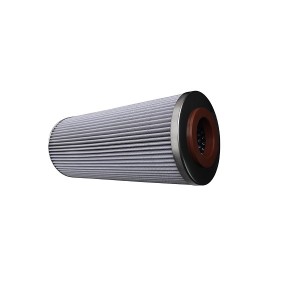
The HC8300FRP16Z oil return filter is used for fine filtration of turbine oil and control oil. It is commonly installed in return circuits where clean oil is required before it reaches sensitive components.
In many systems, especially steam turbines and wind turbine gearboxes, the filter element is one of the last barriers between wear debris and expensive bearings. Its task sounds simple. Keep particles out of the oil and maintain stable lubrication conditions. Yet the condition of the filter itself often contains valuable information. Sometimes the element is not just a consumable part. It can also become an indirect indicator of what is happening inside the machine.
Frequent Filter Blockage Is Not Always a Filter Problem
An oil return filter is normally treated as a replacement part. Once differential pressure reaches the limit, the old element comes out and a new one goes in.
That works in most cases. But sometimes the filter is trying to tell you something.
If an HC8300FRP16Z element starts plugging much faster than before, simply replacing it may not be enough. The reason behind the blockage deserves attention.
Quite often, the filter is only reacting to changes already taking place inside the machine.
Why Bearings Matter
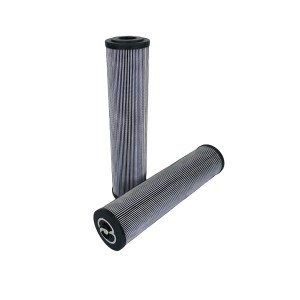
The HC8300FRP16Z is a 5 μm high pressure filter element. It uses glass fiber media, carbon steel hardware with a protective coating, and fluororubber seals.
It is mainly used for fine filtration of turbine oil and control oil. Wind turbine gearboxes, steam turbine lubrication systems and auxiliary oil systems are typical applications. Many engineers describe these steam turbine filters as the last protection before oil reaches the bearings. That description is not exaggerated.
Once wear particles reach the bearing surfaces, damage accelerates. The oil return filter is there to stop those particles before they come back into circulation.
The housing is usually equipped with a bypass valve. If the element is not replaced in time and differential pressure becomes too high, the valve opens automatically.
The machine keeps running. Oil flow is maintained. But the oil is no longer filtered.
When Filter Life Starts Becoming Shorter
Under normal conditions, replacement intervals are fairly stable. Then one day things begin to change. A filter that used to last several months now reaches the pressure limit in only a few weeks. After replacement, the next element blocks quickly as well.
Many people naturally suspect the filter itself. Sometimes they are right. More often, the filter is innocent. The real problem may already be inside the bearings.
Can Filter Blockage Reflect Bearing Health?
More maintenance teams are beginning to look at this question. Traditionally, bearing condition has been judged by vibration, temperature and oil analysis. Filter replacement history received much less attention. That view is changing. As bearing clearance increases and wear becomes more severe, metal particles increase. These particles travel with the oil and eventually reach the oil return filter.
The HC8300FRP16Z captures them. Differential pressure rises faster than usual. Seen by itself, that may not mean much. But if online particle counts are also increasing, the picture becomes clearer. Two separate signals start telling the same story.
Looking at Trends Instead of One Number
A single oil analysis report has limits.
One differential pressure reading has limits too.
The trend often matters more.
Suppose an element normally lasts six months. Suddenly it lasts two months. Then only one month.
At the same time, ISO cleanliness values gradually move upward.
That combination should not be ignored.
It does not automatically prove bearing failure. Still, it suggests that abnormal wear may already be taking place.
Some plants have started using filter blockage rate as an additional signal when planning inspections and overhauls.
The idea is simple. The filter itself becomes part of the condition monitoring system.
This approach may help avoid an unfortunate situation seen in some plants: replacing filters repeatedly while the actual bearing damage continues to develop.
Not Every Fast Blockage Comes From Wear Debris
There is another possibility.
Steam leakage from the shaft seal can create symptoms that look very similar.
In turbine bearing return lines, leaking steam may enter the oil. Condensed water and large amounts of bubbles then mix with the lubricating oil.
Operators often notice heavy foaming inside the oil tank.
The oil level gauge may show milky oil and excessive foam.
Meanwhile, the oil return filter starts blocking much faster than normal.
Sometimes several times faster.
Why Water Is a Problem for Glass Fiber Media
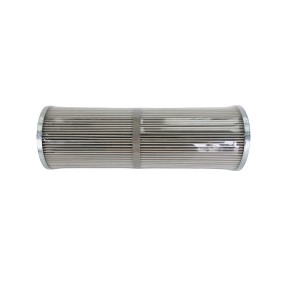
The HC8300FRP16Z uses glass fiber filter media.
Glass fiber performs well in fine filtration. But water contamination creates another issue.
After absorbing moisture, the media can swell. Flow resistance increases and differential pressure rises.
The element may appear to be heavily contaminated even when the actual amount of solid particles is not particularly high.
Replacing the element helps for a short time.
Then the same problem appears again.
This often leads to unnecessary filter consumption and wasted maintenance effort.
The Root Cause May Be Somewhere Else
Imagine a situation where return oil is full of bubbles and filter life suddenly becomes only one-third of normal.
The first reaction is often straightforward.
Replace the filter.
Then replace it again.
And perhaps once more.
Meanwhile the real cause remains untouched.
Steam continues entering the bearing housing. Water content rises. Foam increases.
Nothing really changes.
The filter is simply responding to what the oil is bringing to it.
Using Existing Data to Find the Source
Modern power plants already collect a large amount of operating data.
Online moisture analyzers provide continuous water content values. DCS systems record temperatures around the shaft seals.
These data become useful when filter blockage behavior suddenly changes.
Instead of replacing elements blindly, maintenance personnel can compare several parameters together.
Patterns begin to emerge.
Possible Signs of Shaft Seal Steam Leakage
- Heavy foaming in the return oil.
- Milky appearance in the oil tank.
- Water content increasing continuously.
- Filter life becoming much shorter.
- Differential pressure rising unusually fast.
- Abnormal shaft seal temperature changes recorded by the DCS.
None of these signs alone proves steam leakage.
When several appear together, however, the probability becomes much higher.
The maintenance team can then focus on the shaft seal rather than repeatedly changing the oil return filter.
The Filter Can Provide Useful Clues
Most people think of a filter element as a spare part. That is true, but only partly.
The behavior of the filter can reveal things happening elsewhere in the lubrication system.
A sudden increase in blockage rate rarely happens without a reason.
Something has changed.
The source may be bearing wear. It may be water contamination. Occasionally both problems exist at the same time.
Understanding why the filter plugs often matters more than replacing it.
Supporting Condition-Based Maintenance
Condition-based maintenance depends on information coming from different sources.
Vibration data. Oil analysis. Temperature trends. Particle counts.
Filter blockage history can be added to that list.
The information is already there. In many systems, differential pressure data are continuously available.
Using those records requires little extra investment.
For plant engineers and maintenance managers, this provides another reference when deciding when to inspect or overhaul equipment.
Fixed replacement intervals are useful. Actual operating condition often tells a more complete story.
If replacement steam turbine filters are being selected, filtration accuracy, sealing materials and compatibility with the original housing should all be checked carefully.
Cross-reference information and technical support can also help when evaluating alternative models.
Conclusion
The HC8300FRP16Z oil return filter is designed for fine filtration of turbine oil and control oil. Its 5 μm glass fiber media and fluororubber seals make it suitable for demanding lubrication systems.
Its role goes beyond particle removal.
Changes in filter life, differential pressure and oil condition can provide useful information about what is happening inside the machine.
Fast blockage may point to severe bearing wear. In other cases, it may indicate water contamination caused by shaft seal steam leakage.
Looking at online particle counts, moisture data and DCS temperature trends together helps maintenance personnel identify the real cause.
Sometimes the filter is not the problem at all.
Sometimes it is the first warning sign.
Conclusion
The HC8300FRP16Z high pressure filter is designed for fine filtration of turbine oil and control oil. With 5 μm glass fiber media, carbon steel hardware and fluororubber seals, it is widely used in lubrication systems where clean oil is essential. Its role goes beyond particle removal.
Changes in filter blockage rate, together with online particle count data and moisture measurements, can provide valuable information about bearing wear and water contamination. The filter itself may not diagnose every problem. More importantly, paying attention to how it behaves can provide early warning signals and support a more effective maintenance strategy for turbine bearing protection.
E-mail: sales@yoyik.com
Tel: +86-838-2226655
Whatsapp: +86-13618105229
Yoyik offers various types of power plants spare parts for steam turbines, generators, boilers as below:
oil pan filter P2FX-BH-30*3
hydraulic tank filters ZCL-1-450 Quick Shut-Off Valve Oil Station Filter Element
hydraulic oil filter manufacturers DP602EA01V/-F Main pump working filter (outlet)
cross reference oil filters HX-40*20 Oil purifier filter element
hydraulic oil filter housing FBX-400×10
hydraulic and lube filtration JCAZ043 regeneration device resin filter
luberfiner filters DQ150EW25H0.8S governer cabinet filter
hydraulic filter interchange chart MXP-95-502
hydraulic filter size chart SC1011-24
Hydraulic filter element LX-HXR25X20 pressure oil filter
industrial liquid filtration HC8314F0739H
stainless steel filter HQ25.300.21Z Dry Anion Filter
hydraulic oil filtration machine price HH8314F40 KTXAMI BFP double cartridge filter
hydraulic return line filter LXM-15-5 BFP lube double cartridge filter
industrial oil filtration GZJK-6
hydraulic return line filter element HC9600FKP8Z
oil filter parts DP6SH201EA03V/-W BFPT hydraulic actuator working filter
high quality oil filter element UE310AP20Z
air filter interchange chart E.T.N
Post time: Jun-10-2026
-

Ion exchange resin filter element HQ25.300.21Z ...
-

Oil Transfer Gear Pump 2CY-45/9-1A
-

Rotation Speed Sensor probe CS-3
-

Accumulator air inlet valve QXF-5
-

Hydraulic oil system filter element FAX 250*10
-

LVDT Position Sensor HL-6-250-15
-

Vacuum pump rocker seal P-1764-1
-

Generator stator cooling water filter SGLQ-300A
-

Hydraulic oil filter element LX-HXR25X20
-

Actuator Inlet Working Oil Filter DP301EA10V/-W
-

Generator Hydrogen sealing Sealant D25-75
-

Accumulator Rubber Bladder NXQ-A-25/31.5