

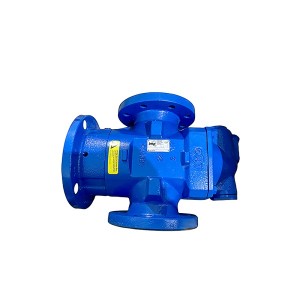
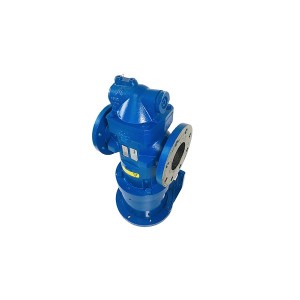
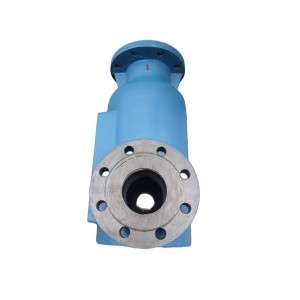
The KF90NY/15F6 is an AC positive displacement pump used in the air-side seal oil circuit of thermal power plant generators. It draws lubricating oil from the seal oil tank or lube oil reservoir and delivers it at pressure to the generator shaft seals, where the oil film prevents hydrogen from escaping along the rotor. For a system this sensitive to oil supply continuity, pump reliability isn’t optional — and one of the most straightforward things that can compromise it is a partially blocked inlet strainer that nobody checked.
Positive displacement pumps handle inlet restriction differently from centrifugal pumps. A centrifugal pump losing suction shows it in the flow and pressure readings. A positive displacement seal oil pump will keep trying to pull oil through a blocked strainer, developing a low-pressure zone at the inlet that eventually causes cavitation. The damage happens inside the pump while everything on the discharge side still looks roughly normal — until it doesn’t.
Why This Pump Is Particularly Sensitive to Inlet Conditions
The KF90NY/15F6 pump draws oil from a reservoir that’s typically at or near atmospheric pressure. The suction lift, combined with the flow resistance of the inlet piping and strainer, determines how low the absolute pressure gets at the pump inlet. For a positive displacement pump, that inlet pressure needs to stay above the oil’s vapor pressure at operating temperature — if it drops below that threshold, vapor bubbles form in the oil as it enters the pump.
Those bubbles collapse violently when they reach the higher-pressure discharge side of the pump. Each collapse event is essentially a micro-implosion against the pump’s internal surfaces — rotor faces, housing bore, gear teeth or vane edges depending on the pump type. Individually the damage is microscopic. Accumulated over hours or days of cavitating operation, it produces pitting and erosion that permanently changes the pump’s internal clearances and volumetric efficiency.
A partially blocked inlet strainer accelerates the pressure drop across the suction side and moves the pump closer to this cavitation threshold. At partial blockage the pump may still deliver adequate flow and pressure. At more severe blockage it won’t — and by then the internal surfaces may already have significant wear.
Inlet Strainer Specifications for Seal Oil Pump Applications
Generator seal oil systems typically use inlet strainers in the 60 to 100 mesh range, corresponding to an opening size of roughly 150 to 250 micrometers. The specific specification depends on the pump manufacturer’s recommendation for the KF90NY/15F6 and the system design, but this range is standard for lubricating oil service where the oil is already filtered by the main lube oil system upstream.
The strainer’s job at the pump inlet isn’t to achieve fine filtration — there are downstream filters in the seal oil circuit for that purpose. Its job is to prevent large particles that could cause immediate mechanical damage from reaching the pump internals: metal chips, rust flakes, seal material fragments, anything that slipped through the upstream system. A 150-micrometer strainer catches these while presenting minimal flow resistance when clean.
The problem is that “when clean” matters. A strainer that’s 50% blocked by accumulated deposits presents significantly more flow resistance than the design assumed, and the pump’s inlet conditions deteriorate accordingly.
Recommended Cleaning and Replacement Intervals
For generator seal oil pump inlet strainers in continuous service, a quarterly cleaning interval is a reasonable baseline for most installations. The right interval for a specific plant depends on the oil system’s contamination level, whether the upstream lube oil system is well-maintained, and the historical rate at which the strainer accumulates deposits.
Some installations with consistently clean oil and well-maintained upstream systems can extend to semi-annual cleaning without issues. Others — particularly plants where the lube oil has seen elevated acid numbers, where there’s been a recent bearing failure or seal replacement that introduced debris, or where the oil temperature has been running high — may need quarterly or even monthly inspection.
Cleaning interval should be set based on what you find at inspection, not just on a calendar. If a quarterly inspection shows the strainer at 20% blocked, you have comfortable margin. If it’s consistently at 60-70% blocked at three months, the interval needs to be shorter. Tracking the condition at each cleaning builds a picture of the actual accumulation rate for that specific pump and system.
Most woven wire mesh strainers in this service can be cleaned multiple times before replacement is needed — typically by backflushing with clean solvent or oil and inspecting for damaged mesh. Replace the strainer element when mesh openings show visible enlargement, wire breakage, or when cleaning no longer restores the open area to near-original condition.
How to Tell When the Inlet Strainer Is Developing a Problem
The generator seal oil pump doesn’t have a strainer differential pressure gauge in every installation. Where differential pressure instrumentation is present, a rising differential across the inlet strainer is the most direct and reliable indicator — watch for a reading that’s climbing toward the alarm setpoint and act before it gets there.
Where direct differential pressure measurement isn’t available, the pump’s behavior gives indirect signals that inlet conditions are deteriorating:
- Noise change — a pump beginning to cavitate produces a distinctive sound, often described as a gravelly or crackling noise distinct from normal pump operating sound. It may be intermittent initially, appearing and disappearing as the cavitation threshold is crossed and uncrossed with minor flow variations.
- Discharge pressure instability — cavitation that’s significant enough to affect volumetric efficiency shows up as discharge pressure fluctuation. The seal oil supply pressure to the generator shaft seals becomes less stable than normal.
- Seal oil differential pressure drift — the pressure margin of seal oil over hydrogen casing pressure is the critical operating parameter in this system. If this differential starts declining without a change in hydrogen pressure or a change in pump speed, the pump is delivering less than it should.
- Elevated pump body temperature — a pump working harder than designed against suction restriction generates additional heat. A pump body that’s running noticeably warmer than its established baseline is worth investigating, particularly when combined with any of the above indicators.
What Prolonged Cavitation Actually Damages
The internal components most at risk from cavitation in a positive displacement seal oil pump depend on the pump’s operating principle. Gear pumps see erosion on the gear tooth faces and the housing bore in the low-pressure inlet zone. Vane pumps develop pitting on vane tips and the cam ring surface. In all types, the damage increases the internal clearances that determine volumetric efficiency — the pump moves less oil per revolution than it was designed to, and achieving the required seal oil differential pressure requires higher pump speed or is simply no longer achievable.
The consequence chain for a generator seal oil pump that loses volumetric efficiency is significant. The oil film at the shaft seals depends on adequate oil supply pressure exceeding hydrogen casing pressure by a defined margin. If the pump can no longer maintain that margin, hydrogen begins to migrate past the seals. Hydrogen purity in the casing drops. Makeup gas consumption increases. In severe cases, hydrogen escaping through degraded seals creates a safety hazard in the generator area.
None of that is an inevitable outcome of a dirty inlet strainer — it’s the outcome of a dirty strainer that goes unaddressed long enough for cavitation damage to accumulate to the point of affecting pump performance. Catching it early, through either direct differential pressure monitoring or attention to the behavioral signals described above, keeps the situation manageable.
Strainer Maintenance Summary
| Aspect | Typical Specification or Practice |
|---|---|
| Strainer mesh size | 60–100 mesh (approx. 150–250 µm opening) |
| Baseline cleaning interval | Quarterly — adjust based on actual accumulation rate |
| Replacement trigger | Damaged mesh, enlarged openings, or cleaning no longer effective |
| Early warning — with DP instrumentation | Rising differential pressure trend toward alarm setpoint |
| Early warning — without DP instrumentation | Pump noise change, discharge pressure instability, elevated pump temperature |
| Critical operating parameter to watch | Seal oil to hydrogen pressure differential margin |
Practical Maintenance Approach
The most reliable approach for the KF90NY/15F6 inlet strainer is to inspect it on a defined schedule and let the actual condition data drive the interval. Pull the strainer, clean it, note the approximate percentage of open area that was blocked, and record it. After a few inspection cycles you’ll have a real accumulation rate for that specific system and can set an interval that catches the strainer before it reaches a level that affects pump performance.
For plants running the KF90NY/15F6 as the primary air-side seal oil pump in continuous service, having a spare strainer element on hand means cleaning and reinserting a fresh element during inspection rather than waiting for the cleaned element to dry. It’s a minor stock item that removes one potential delay from what should be a routine maintenance task.
If you’re sourcing replacement strainer elements for the KF90NY/15F6 or reviewing the seal oil system maintenance program for the next planned outage, confirming the strainer specification against the pump documentation ensures the replacement element matches the original mesh size and material — stainless wire mesh is standard for lube oil service, and substituting a different material or significantly different mesh size can affect both filtration performance and flow resistance.
The Short Version
The KF90NY/15F6 generator seal oil pump depends on a clean inlet to maintain the suction conditions it was designed for. A partially blocked strainer restricts suction, drops inlet pressure, and can push the pump into cavitation that damages internal surfaces before the discharge side shows anything obviously wrong. Quarterly strainer inspection as a baseline, adjusted based on actual accumulation rate, and attention to the pump’s noise and pressure behavior between inspections are what keep this from becoming a more serious problem.
Post time: Jul-27-2026
-

WTYY series Bimetal Thermometer Temperature Gauge
-

Circulating pump return oil filter AD3E301-02D0...
-

Primary fan thin oil station Filter disc SPL-15
-

HTD series LVDT displacement actuator position ...
-

EH Oil Actuator Filter QTL-6021A
-

BFP lube filter QF9732W50HPTC-DQ
-

Vacuum pump reducer gearbox M02225.013MVV1D1.5A
-

EH oil main pump discharge filter DP1A601EA01V/-F
-

YAV-II accumulator Rubber bladder gas charging ...
-

Regeneration oil pump suction filter HQ25.300.12Z
-

Metal gasket HZB253-640-03-24
-

Jacking oil pump discharge filter DQ8302GAFH3.5C