

The high-pressure environment of power generation is unforgiving. Boiler circuits, feed lines—pressures are astronomical. This operational intensity demands absolute isolation. The chosen sentinel: the Z41H-16 gate valve. Flanged, handwheel-operated, OS&Y. A rigid wedge gate valve design. Its job: hold back crushing force. Its challenge: not destroying itself upon opening.
High differential pressure (Δ P) presents a critical mechanical shock hazard. Opening a tightly seated gate valve under this load is not simple. It is a moment of extreme physical stress. The wedge must lift. The seal must break. If this transition is chaotic, if the flow breaches unevenly, the result is vibration. Severe, loud, destructive vibration. Catastrophic potential sits right there.
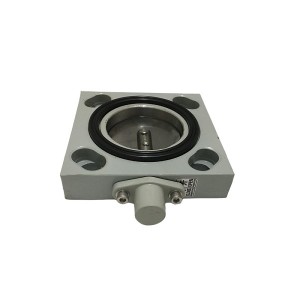
Engineering the Breakaway: Wedge and Seat Dictation
Focus on the interface. The metal-to-metal seating. The gate valve wedge faces meet the body seat rings. Precision grinding matters here. It is everything. These surfaces are typically hard-faced. Stellite deposition is standard. Durability requirement absolute.
The angles are mirrored. Perfectly matched. The slight wedge taper pushes the gate hard into the downstream seat when closed. Pressure reinforces this. The upstream face also contributes, but the downstream seal bears the maximum load. This engineered interference fit is the containment.
When the handwheel turns, the stem rises. Upward force applies. It must overcome static friction. Enormous friction. Then the pressure load. This is the moment of breakaway. The critical fraction of a millimeter. If the separation is asymmetric, problems start. Immediately.
The rigid single-wedge gate valve design is purposeful. No flexibility allowed. Flexible wedges might adapt to minor imperfections. But they can also chatter more easily under dynamic, high-velocity flow. The rigid design mandates absolute control. Guides within the gate valve body hold the wedge laterally. Tight constraint. Essential for stability.
The pressure energy converts to flow. Explosively. If the gap opens unevenly—even 0.001 inch difference side-to-side—the high-velocity fluid vector immediately impacts the newly opened side of the wedge. Unequal forces applied. Rapid, violent oscillation begins. This is the chattering. The deadly vibration. It pounds the seat. It damages the stem threads. Premature failure inevitable.
The Role of Precision in a Gate Valve Interface
Machining tolerances are tight. Extremely fine surface finishes. Not merely for sealing. But for dampening. The full contact width of the seated wedge acts like a brake. It resists lateral movement until the last possible instant. The uniform angular contact ensures the pressure relief occurs simultaneously. Across the entire ring. The seal breaks, not tears.
The designed contact width dictates resistance. More width, more friction, more controlled release. Less sudden shock. The lifting sequence, driven by the handwheel, is inherently slow. Operators feel the load. They inch the gate valve open. Slowing the stem ascent in the initial stages is critical. The mechanical advantage of the handwheel transmission helps. Torque conversion slows linear speed. A necessary check on abrupt movement. This manual control is a fundamental safety mechanism against high Δ P shock.
The seat rings themselves are often replaceable. Field repair possible. But the initial alignment and geometry must be perfect. The gate valve relies on this geometry. Wear changes the angle. Erosion pits the hard-facing. The precise fit is compromised. The dampening effect decreases dramatically. The vibration risk rises proportional to wear. Long-term performance hinges on material integrity. The hard-facing resists wire-drawing and steam erosion. It preserves the vital angle.
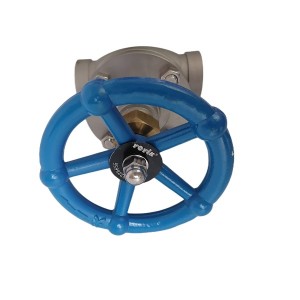
Flow Dynamics and Mechanical Oscillation
When the gate valve lifts, the pressure drop initiates flow. The fluid is turbulent. Highly energized. As the gap increases, the flow stabilizes. But the initial rush through the narrow aperture is the danger point. It acts like a high-velocity jet.
If the wedge breaks clean, all around, the flow fills the gate valve cavity relatively uniformly. The force pushing on the back of the wedge is distributed. Stability maintained. If it breaks one side first, the jet pushes the wedge sideways. It tries to force the still-seated side back down. This cyclical push-pull—stick-slip—is amplified by the fluid energy. The wedge gate valve slams back and forth in its guides. The stem oscillates. Destruction accelerates.
The Z41H-16 gate valve specifically counters this using its rigid construction. The mass of the wedge itself contributes. Inertia resists rapid movement. The tight constraints of the guides and the persistence of the angle contact force linearity. The gate valve must move straight up. No side motion permitted.
Maintenance schedules must prioritize this component. Inspection of the seat ring angle. Verification of wedge face condition. Any sign of galling or pitting on the flanged gate valve interface suggests a loss of precise geometry. The valve is compromised. Its ability to absorb and manage high Δ P loads is diminished. Neglecting this leads to major operational upset. Expensive outage inevitable. Reliability demands vigilance. A properly functioning high-pressure gate valve is quiet during operation. Silence confirms control.
The Rigidity Paradox
It seems counter-intuitive. A rigid part handles dynamic forces better than a flexible one. But here, rigidity is constraint. Constraint is stability. The rigid wedge cannot flex into better alignment. It forces the system to rely on mechanical perfection. The body and seat must be perfect. The wedge must be perfect. This forces the entire assembly to act as a unit. No independent movement allowed. This unified response to the massive differential pressure is the key to preventing the uncontrolled mechanical feedback loop that manifests as vibration. The high-pressure steam gate valve requires this level of unforgiving precision.
The handwheel drive, the specific material selections, the heavy casting of the gate valve body—all components work toward maintaining this single, crucial relationship: the perfect, controlled lift of the wedge from its seat, minimizing shockwave and preventing destructive oscillation.
Your Solution for High-Pressure Gate Valve Reliability
Operational efficiency and system safety depend on zero tolerance for vibration in critical isolation points. Our focus is on supplying and maintaining gate valve components that meet or exceed the demanding specifications for high Δ P environments. We understand the metallurgy, the angular requirements, and the wear factors that compromise long-term stability.
If your plant operations are affected by component vibration, contact us today. We provide full technical support on maintaining the essential geometric integrity of your Z41H-16 flanged gate valve assets.
Do not wait for failure. Secure your plant’s operation with our high-quality Gate Valve solutions. Reach out now for a consultation.
E-mail: sales@yoyik.com
Tel: +86-838-2226655
Whatsapp: +86-13618105229
Yoyik offers various types of power plants spare parts for steam turbines, generators, boilers as below:
Bladder For Accumulator Nxqab-25/10-F-Y
Cylinder,Oil Ubjzs140-173*H
Check Valve H61H-40
Ball Valve Q941F-150Lb
Instrument Valve M221W-100P
Check Valve H40H-64
Electric Stop Valve J961Y-P55.5140V Zg15Cr1Mo1V
Solenoid Valve L4V210-08
Reheater Inlet Plugging Valve Sd61H-P36.562 Sa106-C
Electric Steam Trap J961Wg-P5516V
Straight-Through Lift Check Valve H41H-100 Wcb
Stop Valve J61Y-2500Lb
Hydraulic Motor Unloading Valve Xh24 Wjhx.9330A
Filters Gl61H-160
Stop Valve J61Y-1550(1)Spl
Electric Steam Trap J961Wg-63
High Outlet Water Pressure Test Plug Valve Sd61H-P57.8266V
Three-Way Valve J21H-64
Shut Off Valve Leaking Wj32F1.6P
Instrument Valve J21H-600Lb
Gate Z962Y-200
Buttery Valve Hbd1
Control Valve J961Y-1550(1)Spl
Servo Valve D671-0068-0001
Vacuum Gate Valve Dkz41H-63I
Valve Cvss-Ml6
Electric Gate Valve Dkz941H-16C
Vacuum Stop Valve Dkj41H-40
Post time: Dec-04-2025
-

LVDT displacement Sensor 2000TD
-

AST solenoid valve Z2805013
-

Insulating box filling adhesive J0978
-

Boiler Tube sliding block
-

30-150-207 regeneration device diatomite oil fi...
-

Regeneration device diatomite filter DL003001
-

Double gear Pump GPA2-16-16-E-20-R6.3
-

EH oil regeneration Alumina Filter 30-150-219
-

4.5A25 Hydrogen system brass safety release valve
-

Actuator flushing oil filter DP2B01EA01V/-F
-

Linier Variable Differential Transformer (LVDT ...
-

EH oil circulating pump oil filter element HC89...