

Inside a power plant’s hydraulic setup, the bladder accumulator does a lot of heavy lifting—it keeps the pressure steady and acts as a cushion for those nasty system shocks. But there’s a quiet problem that catches a lot of crews off guard, and that’s Nitrogen Seepage.
In an NXQ-A-16/20-F-Y, the rubber bladder is basically the only wall standing between your high-pressure nitrogen gas and your hydraulic oil. If that seal fails, even just a tiny bit, the nitrogen is going to crawl into the oil. Before you know it, you’ve got foamy, milky oil that makes your pumps struggle and makes your valves feel “mushy” and slow. This specific accumulator builds a real defense against that by using high-density rubber, a self-tightening seal design, and a very strict way of putting it all together.
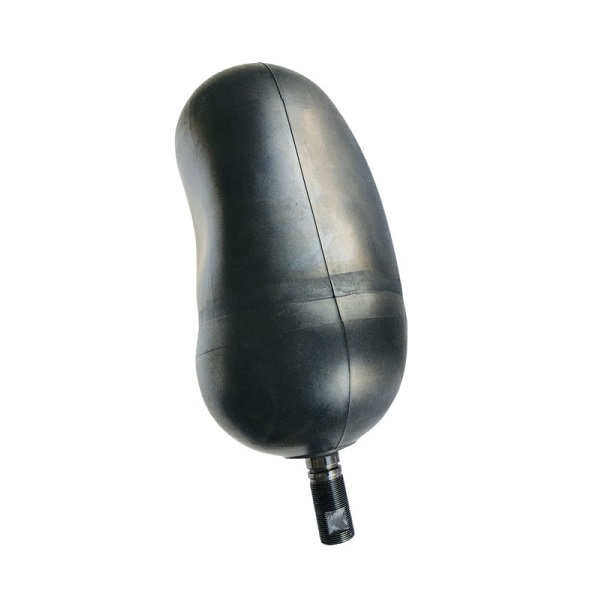
I. The Rubber: Blocking Gas at the Molecular Level
A lot of nitrogen leaks happen because standard rubber has microscopic holes that the gas can eventually push through, especially when things get hot. The NXQ-A-16/20-F-Y uses a high-strength synthetic rubber where the molecules are packed together so tight that the gas just can’t find a way out. We also add a special coating on the surface of the bladder to make it even smoother and denser. It’s built so that even after years of being squeezed and stretched under high pressure, the rubber stays airtight and doesn’t get those “micro-pores” that let the nitrogen escape into your oil lines.
II. The Double-Lock: Two Seals are Safer Than One
You shouldn’t ever rely on just one point of failure, and the NXQ-A-16/20-F-Y design knows that. It uses a dual-layer setup at the flange, which is usually where the leaks start in a high-pressure system.
First, there’s an integrated “sealing lip” built right into the bladder that has a stepped shape. The cool thing here is that as the nitrogen pressure goes up, it actually pushes that lip harder against the metal, so the seal gets tighter all by itself. Then, we put a heavy-duty gasket in there as a second backup. So even if the pump is vibrating the whole rack, the nitrogen stays on the gas side and the oil stays clean and bubble-free on the other.
III. The Assembly: No Room for Sloppy Work
A great design doesn’t mean much if the guy installing it is having a bad day, so we use a very specific “Clean-and-Align” process for every unit. We make sure every part is cleaned until it’s spotless—because a single grain of sand on a sealing surface is enough to let nitrogen out. Then, we use special positioning tools to make sure the bladder is perfectly centered. If it’s even slightly lopsided, one side of the seal won’t have enough pressure. We finish by tightening the bolts in a “star” pattern with a torque wrench to make sure the pressure is 100% even all the way around.
IV. Handling the “Real World” Heat and Shocks
Power plants aren’t exactly clean or climate-controlled, and the equipment takes a beating from temperature swings and pressure spikes. The NXQ-A-16/20-F-Y stays flexible whether the room is freezing or the oil is boiling, so the rubber won’t get brittle or soft and let the gas slip through. Plus, the steel shell is thick enough that it won’t “flex” when the pressure jumps. This keeps the gap where the seal sits perfectly still, so the nitrogen stays locked in no matter how hard you’re running the system.
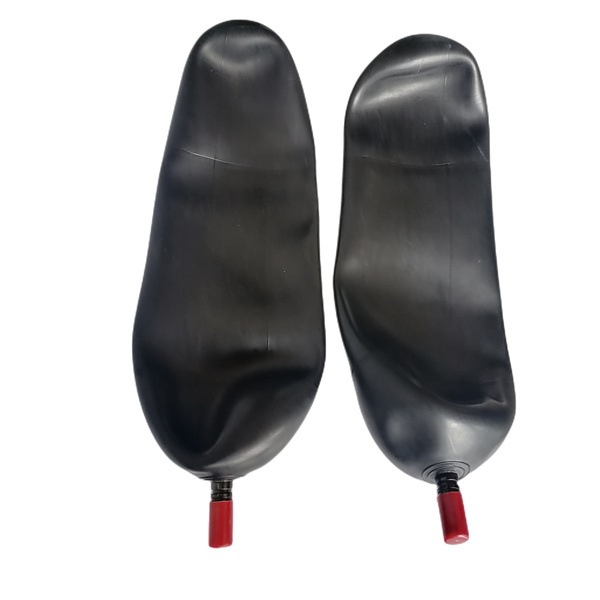
V. Maintenance: A Few Things to Watch Out For
You can usually tell if a seal is starting to go before the whole system crashes. Keep an eye on these:
- The Pressure Drop: Check your nitrogen levels once a week. If you’re constantly topping it off, you don’t have a “gas problem,” you have a seal problem.
- The Milkshake Look: If the oil in your reservoir starts looking cloudy or foamy, that’s nitrogen emulsifying the oil. That means your bladder seal is compromised and you need to swap it out before your pump burns up.
- Stick to the Real Stuff: When it’s time for a repair, don’t use “universal” bladders. If the fit isn’t perfect at the flange, the nitrogen will find a way out.
Summary
At the end of the day, your accumulator has one job: keep the gas and the oil separate. The NXQ-A-16/20-F-Y does that better than most because it uses the right rubber and a seal that actually gets stronger when the pressure is high.
E-mail: sales@yoyik.com
Tel: +86-838-2226655
Whatsapp: +86-13618105229
Yoyik offers various types of power plants spare parts for steam turbines, generators, boilers as below:
Pneumatic Regulating Valve (Pressure Reducing Valve) Y668Y-250V
Solenoid Valve 22Fda-K2T-W110R-20/Lbo
Pump Coupling Damper Hsn280-43Nz
Double Entry Impeller With Impeller Sleeve Hzb200-430-01-03+Hzb200-430-01-04
Three-Way Valve J21Y-320 25
Butterfly Valve D343H-25
Wafer Butterfly Check Valve H77-16C
Stop Valve Wj961Y-250
Denitrification Soot Blowing Steam Check Valve H64H-250
Plug For Moog Valve 49054F014S002S
Ripple Sealed Globe Valve Wj40F1.6P-Ii
Check Valve H61H-25 A105
Main Oil Pump Coupling Cushion Hsnd280-54
Electric Stop Valve J961Y-320 25
Electric Gate Valve Z945X-16C
Check Valve H61Y-600Cl
Globe Valve 3-Wd210-Er103-00003
Sealing Kit Nxq-Ab-180/10-F-Y-9
Electric Gate Valve Z962Y-320 Wcb
Moog Servo Valve G771K201
Stop Valve J61Y-500V
Vacuum Stop Valve Dkj941H-25
Switch Electric Air Control Valve 2Bgx-100Wfb-C2
Gate Z45X-16C
Electric Butterfly Valve D941X-10Q
Valve Dbds20K10/315
Hydraulic Accumulator Bladder & Seal Kit Nxq-Ab-63/31.F
Post time: Jan-06-2026
-

AXIAL DISPLACEMENT MONITOR HZW
-

Oil pump discharge flushing oil filter DP602EA0...
-

High Temperature steam turbine cylinder sealing...
-

Gas turbine actuator filter DP302EA10V/-W
-

Steam Turbine Rotation Speed Monitor HZQS-02H
-

Industrial hydraulic oil filter element HC8314F...
-

A108-45 Mechanical seal of stator cooling water...
-

Duplex Armored Thermocouple WRKK2-221
-

EH oil regeneration Alumina Filter 30-150-219
-

Actuator flushing oil filter DP2B01EA01V/-F
-

Filter element HDX-160×20Q2
-

Stator cooling water pump YCZ65-250B