

Anyone who’s worked around a feed pump turbine knows the lubricating oil system doesn’t get much attention until something goes wrong with it. The HCY8900EOM26H high-pressure filter sits right in that pressure line, quietly doing the work of keeping contamination out of oil that’s circulating under serious pressure, day after day.
This article walks through what the filter is built for, what makes the construction suited to high-pressure lubricating oil and hydraulic applications, and — probably the more useful part for anyone doing the work — how to change the filter element without letting trapped oil or debris end up back in the system.
What the HCY8900EOM26H Filter Is Designed For
This filter element is built specifically for high-pressure lubricating oil and hydraulic systems, most commonly found in the pressure piping of a feed pump turbine’s (often called the “auxiliary unit” or “small turbine”) lube oil circuit. These systems run at meaningful pressure and need a filter that can take repeated pressure swings without breaking down.
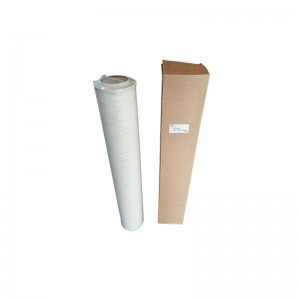
The filter media is stainless steel wire mesh. That’s worth pointing out because mesh media handles high differential pressure and cyclic loading a lot better than some paper or cellulose alternatives, which tend to degrade faster under the same conditions. Stainless steel also holds up against the heat and chemical exposure typical of lubricating oil service.
Filtration efficiency is rated at Beta 2000 — a number that tells you how consistently the filter captures particles at its rated micron size. In practical terms, a Beta 2000 rating means the filter is removing the overwhelming majority of particles at that size range, which keeps oil cleanliness well within the levels these systems need to avoid wear on bearings, journals, and other close-tolerance components.
Pressure Rating and Why It Matters Here
The HCY8900EOM26H is rated to handle a differential pressure of up to 210 bar. That’s a high number, and it reflects the kind of duty this filter actually sees — sudden pressure spikes during pump startup, flow surges, and the general cyclic stress that comes with continuous operation in a feed pump turbine system.
A filter element that can’t handle that kind of pressure cycling will eventually develop fatigue cracks or collapse under a pressure spike, sending unfiltered oil — and whatever it was trying to catch — straight through the system. For a high-pressure filter feeding lubrication to rotating equipment, that’s not a small risk.
The combination of a robust pressure rating with high filtration efficiency is really the core value of this filter element. It’s not unusual for a filter to do one of these well. Doing both, under continuous cyclic operation, is the harder engineering problem.
Contamination Removal During Element Replacement
One advantage of how this filter element is built: when you pull the old element out, the trapped contamination comes out with it. The captured particles, sludge, and debris stay held within the filter media rather than washing loose during removal — assuming the replacement is done correctly.
This matters more than it sounds like it should. Some filter designs let trapped contamination shake loose as the element is pulled, especially if there’s any rough handling or if the housing isn’t drained properly first. With the HCY8900EOM26H, the structure of the mesh media is built to hold onto what it’s caught, reducing the chance that you’re reintroducing the very particles you just filtered out.
Does Trapped Oil and Debris Ever Fall Back Into the System?
This is a fair question, and one that comes up a lot from maintenance teams. Technically, yes — it can happen, but it’s almost always tied to how the replacement is carried out rather than a flaw in the filter itself.
The filter housing holds residual oil and some accumulated sediment at the bottom, below the element. If the housing isn’t drained before the element is removed, or if the element is pulled out too quickly and disturbed, some of that residual material can end up back in the flow path once the system is repressurized.
A few things reduce this risk significantly:
- Draining the housing fully before removing the old filter element
- Pulling the element out slowly and vertically, avoiding tilting that could dislodge trapped debris
- Wiping down the inside of the housing before installing the new element
- Checking the drain plug and bottom of the housing for sediment buildup before closing it back up
None of this is complicated, but it does need to be part of the standard procedure rather than something done casually. Skipping the drain step is probably the single most common reason contamination ends up back in the lubricating oil after a filter change.
Do You Need to Isolate and Depressurize the Line First?
Yes — and this isn’t optional. Before changing the HCY8900EOM26H filter element, the inlet and outlet valves on the filter housing need to be closed, and the section of piping containing the housing needs to be depressurized fully before opening it.
Working on a high-pressure filter housing that’s still under pressure is a serious safety hazard. At 210 bar, even a small residual pressure can cause the housing cover to release with enough force to cause injury. This isn’t a step to shortcut even when the system seems “probably fine.”
The general sequence most plants follow looks something like this:
Standard Isolation and Replacement Sequence
- Confirm the auxiliary unit (feed pump turbine) is not in operation, or that the lube oil system has a standby path available
- Close the inlet valve to the filter housing
- Close the outlet valve to the filter housing
- Open the housing’s vent or bleed valve to release trapped pressure
- Confirm pressure has reached zero using a local gauge, if fitted
- Drain residual oil from the housing through the drain valve
- Open the housing and remove the old filter element carefully
- Inspect and clean the housing interior
- Install the new HCY8900EOM26H element, confirming correct seating and seal condition
- Close the housing, then slowly reopen the inlet and outlet valves to repressurize
That last step — opening the valves slowly — deserves a mention on its own. Repressurizing too fast creates a pressure shock that can stress the new element or disturb seals before they’ve had a chance to settle properly.
Quick Reference: Filter Specifications
| Parameter | Detail |
|---|---|
| Filter media | Stainless steel wire mesh |
| Filtration efficiency | Beta 2000 |
| Maximum differential pressure | 210 bar |
| Typical application | Feed pump turbine (auxiliary unit) lubricating oil pressure line |
| System type | High-pressure lubricating oil / hydraulic systems |
Why Procedure Matters as Much as the Filter Itself
It’s worth saying plainly: a well-built high-pressure filter element can still cause problems if the replacement procedure isn’t followed properly. The HCY8900EOM26H High-Pressure Filter is engineered to handle pressure cycling and capture contamination effectively, but none of that protects the system if the housing is opened under pressure or if residual sediment is allowed to wash back into the oil flow.
Plants that build the isolation and draining steps into a written procedure — rather than relying on whoever’s doing the job that day to remember — tend to have far fewer issues with post-replacement contamination or oil cleanliness complaints. It’s a small documentation effort that pays off during routine maintenance and especially during shift changes when different technicians are involved.
Choosing the Right Filter Element for Your System
For procurement teams sourcing replacement filter elements, matching the exact specification matters more than it might seem. A filter element with the wrong pressure rating, a mismatched micron rating, or incompatible sealing dimensions can create problems that aren’t obvious until the system is back under load.
If your auxiliary unit lube oil system specifies the HCY8900EOM26H, sourcing the correct part with verified Beta 2000 efficiency and the 210 bar pressure rating is worth confirming directly with your supplier before ordering, particularly if you’re working from an older equipment list or cross-referencing part numbers.
Getting in touch with a supplier who can verify compatibility against your specific feed pump turbine model and lube oil system configuration is generally the fastest way to avoid a mismatch — especially for plants managing multiple units with slightly different filter housing configurations.
Post time: Jun-30-2026
-

Hydraulic Pressure Control Valve PCV-03/0560
-

Steam Turbine Magnetic Rotation Speed Sensor SM...
-

Generator stator RTV epoxy adhesive J0708
-

MSV\CV\RCV actuator flushing filter DP3SH302EA0...
-

Generator stator cooling water filter SWFY3 DN100
-

High resistance anti corona paint DFCJ1018
-

BFPM hydraulic coupling oil filter DU631.3080.2...
-

EH Circulating Junction oil filter QTL-250
-

Accumulator air inlet valve QXF-5
-

Generator stator cooling water filter SGLQ-1000A
-

Filter element HDX-160×20Q2
-

Filter element QF1D350CFLHC