Featured Marine Propulsion Components
The Critical Role of Steam Turbine Bearing Materials in Marine Propulsion
In the realm of maritime engineering, the selection of the optimal steam turbine bearing material for marine propulsion stands as a cornerstone of vessel reliability, efficiency, and safety. Marine propulsion systems are subjected to some of the most unforgiving operating conditions on Earth. Unlike land-based power plants that run under stable, predictable conditions, marine steam turbines must endure dynamic forces including hull flexing, pitch and roll, rapid acceleration and deceleration, and the constant threat of corrosive seawater environment.
The bearing material is the primary interface between the rapidly rotating turbine shaft and the static structure of the ship. It must support massive loads, minimize friction, dissipate heat, and prevent catastrophic metal-to-metal contact during startup, shutdown, and transient maneuvering. The choice of bearing material directly impacts the thermal limits, load-carrying capacity, and operational life of the propulsion system.
High fatigue strength to resist cyclic loading, exceptional embeddability to capture foreign particulate matter, superior conformability to accommodate shaft misalignment, and robust corrosion resistance against moisture and oil degradation.
As modern vessels demand higher speeds, greater fuel efficiency, and reduced environmental footprints, the engineering of steam turbine bearings has transitioned into an advanced science. This involves sophisticated metallurgy, precise polymer compounding, and the integration of real-time diagnostic systems to monitor bearing health and prevent premature failure.
Industrial & Commercial Status of Marine Steam Turbine Bearings
The global commercial and naval maritime industries continue to rely heavily on steam turbines for high-power propulsion applications, particularly in LNG carriers, nuclear-powered vessels, large container ships, and military naval fleets. In these sectors, the cost of propulsion failure is measured not just in repair bills, but in astronomical daily charter rates and strategic national security risks.
Currently, the industrial market for marine turbine bearings is characterized by a transition from traditional white metal (Babbitt) alloys to advanced composite and hybrid material systems. While tin-based Babbitt remains the industry benchmark due to its unmatched safety record and self-lubricating properties, manufacturers are under pressure to develop materials that can operate at higher temperatures and under thinner oil films. This pressure is driven by the shipping industry's push toward lower-viscosity lubricants to minimize viscous drag and improve overall mechanical efficiency.
Furthermore, strict environmental regulations governing marine shipping (such as the IMO's EEDI standards and US EPA Vessel General Permit regulations) are forcing a re-evaluation of bearing systems. The industry is seeing a growing interest in environmentally acceptable lubricants (EALs) and water-lubricated bearings. This has prompted extensive R&D into how traditional steam turbine bearing materials interact with these new lubrication regimes.
In-Depth Analysis of Bearing Material Classifications
To understand the application of bearing materials in marine propulsion steam turbines, one must analyze the specific material groups utilized in current engineering practices:
1. Tin-Based Babbitt Alloys (White Metal)
Tin-based Babbitt alloys (typically containing 80-90% Tin, with additions of Antimony and Copper) remain the premier choice for high-speed journal and thrust bearings in marine steam turbines. The microstructural composition of tin-based Babbitt consists of hard antimony-tin cuboids embedded in a soft, ductile tin-rich matrix. This unique structure provides:
- Embeddability: The soft matrix allows abrasive particles carried by the lubricating oil to sink into the bearing surface, preventing them from scoring the turbine shaft.
- Conformability: The material can plastically deform to accommodate minor shaft misalignment caused by hull deflection or thermal expansion.
- Emergency Running Properties: In the event of a lubrication failure, the low melting point of the Babbitt allows the bearing surface to melt slightly ("wipe") without seizing or damaging the expensive turbine rotor.
2. Lead-Based Babbitt Alloys
Although more economical, lead-based Babbitt alloys are less common in modern high-performance marine propulsion turbines. They exhibit lower fatigue strength and poorer corrosion resistance compared to tin-based alternatives, especially at elevated operating temperatures. However, they still find application in auxiliary machinery and lower-load marine equipment.
3. Polymer-Matrix Composites & Advanced Materials
For specific marine applications—particularly where water lubrication is desired or where oil contamination is a high risk—polymers such as PEEK (Polyether ether ketone), PTFE (Polytetrafluoroethylene), and phenolic resins reinforced with synthetic fibers are gaining ground. These materials offer exceptional corrosion resistance, low dry-running friction coefficients, and the ability to operate in boundary lubrication regimes without catastrophic failure.
Tribological Challenges and Operating Conditions at Sea
Marine propulsion steam turbines operate under a hydrodynamic lubrication regime, where a pressurized film of oil completely separates the rotating shaft from the bearing. However, maintaining this fluid film is exceptionally challenging in marine applications due to several key factors:
Dynamic Hull Flexing & Misalignment
Unlike land-based turbines mounted on massive concrete foundations, marine turbines are installed on a flexible steel hull. As the ship navigates rough seas, the hull twists and bends, transmitting these forces to the turbine casing. This causes temporary shaft misalignment. The bearing material must possess sufficient conformability to distribute these localized loads and prevent edge loading, which can lead to localized heating and bearing failure.
Low-Speed Maneuvering & Boundary Lubrication
During docking, maneuvering, or transit through locks, the turbine rotates at low speeds. Under these conditions, the hydrodynamic oil film may not fully form, leading to mixed or boundary lubrication. The bearing material must have low startup friction and high compatibility to prevent micro-welding (scuffing) between the shaft and the bearing shell.
Seawater Contamination & Chemical Attack
The marine environment is inherently humid and saline. Seawater ingress into the lubrication oil system is a persistent threat. If seawater mixes with the oil, it can cause corrosion of the bearing material, accelerate oil oxidation, and reduce the load-carrying capacity of the lubricant. Tin-based Babbitt alloys are preferred here because they are significantly more resistant to corrosion by acidic oil oxidation products and saltwater compared to lead-based alloys.
Future Trends: Smart Bearings and Advanced Coatings
The future of marine steam turbine bearings lies at the intersection of material science and digital technology. As the maritime industry moves toward autonomous shipping and predictive maintenance paradigms, the demand for "Smart Bearings" is accelerating.
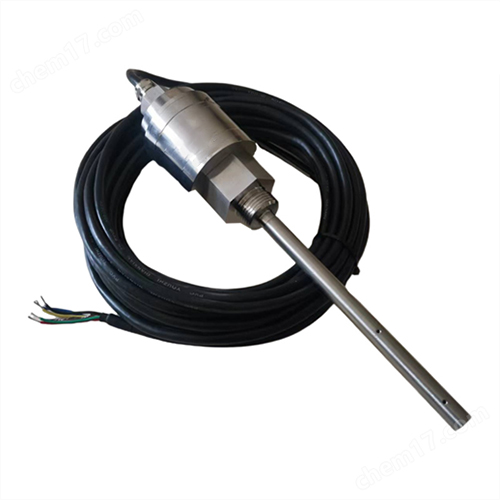
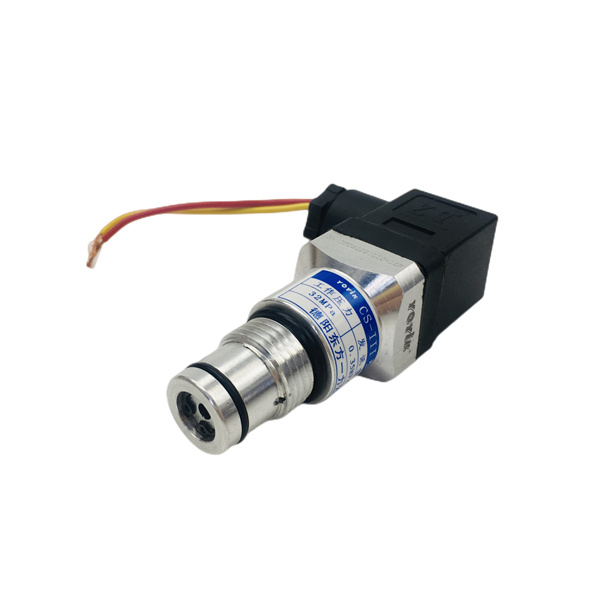
Modern marine turbine bearings are increasingly being integrated with embedded sensors, such as the KR-939SB3 Integrated Three-Parameter Combination Probe, to monitor temperature, oil film thickness, and vibration in real-time. This data is analyzed by machine learning algorithms to predict bearing wear and schedule maintenance before a failure occurs.
On the material side, researchers are exploring nanostructured Babbitt alloys and advanced surface coatings. Technologies such as High-Velocity Oxygen Fuel (HVOF) thermal spraying and laser cladding are being used to deposit ultra-thin, highly wear-resistant coatings onto bearing backings. These coatings offer the load-carrying capacity of hard metals with the low-friction properties of advanced polymers, potentially revolutionizing marine turbine design by allowing smaller, lighter bearings to carry much higher loads.
The Company
Dongfang Yoyik (Deyang) Engineering Co., Ltd. founded in 2004, is located in Deyang, Sichuan, heavy industry base of China. YOYIK is manufacturer and trader of industrial products, integrating design, R & D, production, sales and service. The team has more than 20 professional technicians and experienced sales to provide you with professional, reliable and considerate services.
Our major products and service: steam turbine spare parts, steam turbine generator spare parts, utility boiler spare parts, control system parts, hydraulic components, pneumatic components, filters, filter elements, EH system accessories, bolt heaters, insulating materials, sealant, Babbitt alloy bearing, DC motor / AC motor accessories, motor repair, etc. Our products cover different fields such as thermal power generation, hydropower generation, minerals, chemicals, paper mills, ships, etc., and are sold to more than 30 countries and regions in Europe, Southeast Asia, South America, and Africa.
The rapid development of YOYIK has received strong support from all walks of life. The needs of our users are our reasons for existence. Our philosophy is to always care about user needs and help users solving issues.
Why Choose Us
Factory & Production Environment


Our Professional Services
YOYIK has strong strength in technical force and processing capabilities, fully equipped with CNC lathes, machining centers, vertical lathes, CNC boring machines, gantry planers, gantry milling machines, 80mm plate rolling machines, etc. We have provided high-quality equipment selection, construction design, installation and commissioning, after-sales service for the overhaul and technical transformation of hundreds of thermal power plants, hydropower stations, and metallurgical enterprises, and quickly and accurately provided a large number of steam turbines, generators, boilers and other spare parts.
YOYIK provides a large number of imported NUGENT diatomite filters and other products for many steam turbine generator main engine suppliers and power plants and other industrial users. The company has great advantages in the price and delivery time of many hydraulic products, including pumps, valves, sealing materials, etc. The brands cover EATON, VICKERS, MOOG, STAR, COPALTITE, TEMP-TITE, 707, etc.
With more than 17 years of experience in supplying various area of industrial products, YOYIK provides reliable solutions for the multi-factory, multi-channel and multi-brand product needs of large-scale manufacturing, large-scale trading enterprises. We have a special information management system to achieve efficient cooperation with suppliers and logistics. With many years of experience, channels and resources in export business, aiming at improving efficiency and reducing costs, we provide customers with the best choice for purchasing and reduce your worries in the process.
The History

Supply of steam turbine spare parts to Qianbei Power Plant of Guizhou Xidian Electric power Co. Ltd.
We signed a supply contract of steam turbine spare parts with Nine Dragon Paper Dongguan branch (Hong Kong-owned).
We reached a strategic partnership with 707 Institution.
We started the cooperation with ABB of bearings research and development.
We undertook China CNR Corporation’s project of the generator retaining rings on CRH traction engines.
We cooperated with Beijing Institute of Technology and CSR Zhuzhou Electric Locomotive Co. on researching and testing insulation materials for wind power.
Together with Xi'an Jiaotong University, we completed the research and experiment of the 3rd generation nuclear pump water lubricated bearings, and of the new bearing metal material and technology.
We completed the localization experiment of bearings for high-speed grinder together with Chongqing Hengbo Machinery Manufacturing Co. Ltd.
We studied and developed new insulating materials with Tsinghua University Shenzhen Branch.
Siemens employees from the Germany headquarters visited our company for the cooperation of mill sliding bearings.
We cooperated with Siemens Control System Department on the project of large hydropower station transformers.
We started the cooperation with Fruider India on steam turbine spare parts.
We won the bid of the stator inspection project of 600MW generator units of Guizhou Faer power Plant.
We provided steam turbine spare parts for Vietnam Electricity IDICO power plant.
We became an authorized distributor of Shanghai Xinli Machinery Plant under the Ministry of Space Industry of PRC.
Mr. Ivan from ALSTOM Ltd. visited our company.
We won the bid of the generator collecting rings and manually wrapping insulation project of Guizhou Xishui power Plant.
Complete Product Catalog for Marine Propulsion Systems