Featured High-Temperature Bearing Filtration & Control Components
Turbine Thrust Bearing High Temperature For Marine Propulsion: Industry Analysis & Engineering Insights
Introduction: The Crucial Role of Thrust Bearings in Marine Propulsion
In modern naval architecture and marine engineering, steam and gas turbines serve as the primary prime movers for high-power vessels, including large container ships, LNG carriers, luxury cruise liners, and military warships. These propulsion turbines convert high-pressure, superheated steam or combustion gases into rotational kinetic energy. This energy is transmitted through the shafting system to the propeller, generating massive axial thrust that drives the vessel forward. The critical component tasked with absorbing this immense axial force and safely transferring it to the ship's hull structure is the turbine thrust bearing.
Under operational conditions, the turbine thrust bearing operates in an environment defined by extreme loads, high rotational speeds, and significantly elevated temperatures. Managing the turbine thrust bearing high temperature for marine propulsion systems is a paramount engineering priority. Elevated temperatures in the thrust bearing can lead to thermal degradation of the lubricating oil, breakdown of the hydrodynamic oil film, accelerated wear of the Babbitt metal lining, and in worst-case scenarios, catastrophic bearing failure that disables the vessel's propulsion capability entirely.
The High-Temperature Challenge Explained
Thrust bearings in marine turbines generate heat primarily due to fluid shear within the hydrodynamic lubricating oil film. As the turbine shaft rotates at high speeds, the oil film separating the rotating thrust collar and the stationary thrust pads is subjected to intense shear stress. This process generates thermal energy, raising the temperature of both the oil and the bearing pads. If the temperature exceeds critical limits (typically 110°C to 130°C for traditional Babbitt materials), the load-carrying capacity of the bearing drops exponentially, increasing the risk of metal-to-metal contact.
Industrial & Commercial Status of Marine Propulsion Bearings
The global marine propulsion market is experiencing a significant shift toward high-efficiency, low-emission, and high-power-density systems. To meet strict international regulations, such as the IMO (International Maritime Organization) Tier III NOx emission limits and carbon intensity indicators (CII), modern marine turbines are designed to run at higher thermal efficiencies. This translates directly to higher operational temperatures and pressures within the turbine cycles, subjecting the thrust bearings to unprecedented thermal loads.
Commercially, the cost of a propulsion system failure at sea is astronomical. Beyond the immediate repair costs, vessel downtime, cargo delays, and potential salvage operations can result in millions of dollars in losses. Consequently, shipowners, naval operators, and marine turbine manufacturers demand highly reliable, high-temperature-tolerant thrust bearing assemblies. The market has seen a surge in demand for advanced tilting-pad thrust bearings equipped with integrated temperature monitoring sensors, high-performance synthetic lubricants, and heavy-duty oil filtration systems.
Technological Advancements and Future Trends
To mitigate the risks associated with high temperatures in marine propulsion thrust bearings, the industry is adopting several pioneering technologies:
1. Advanced Material Science
Traditional Babbitt alloys (tin-based or lead-based white metals) have been the industry standard for decades due to their excellent embeddability and conformability. However, their strength decreases rapidly at temperatures above 120°C. Engineers are increasingly turning to alternative lining materials such as PTFE (Polytetrafluoroethylene) and PEEK (Polyetheretherketone). Polymer-lined thrust pads can safely operate at temperatures up to 180°C or higher, offer lower friction coefficients during start-up, and possess superior resistance to boundary lubrication conditions.
2. Directed Lubrication Systems
Traditional flooded lubrication designs often trap hot oil within the bearing housing, leading to higher overall operating temperatures. Modern marine thrust bearings utilize directed lubrication methods, such as "spray-bar" or "leading-edge groove" designs. By introducing cool, fresh oil directly to the leading edge of each thrust pad and immediately discharging the hot oil from the pad trailing edge, directed lubrication can reduce peak pad temperatures by 10°C to 20°C compared to flooded designs.
3. Smart Conditioning Monitoring & IoT Integration
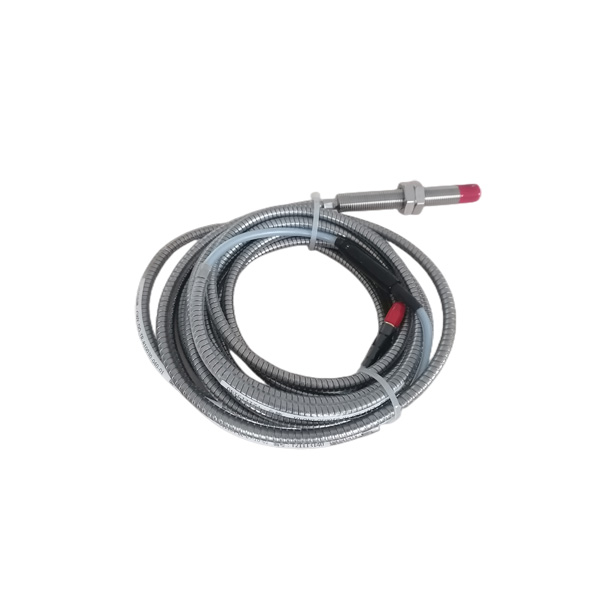
The integration of real-time monitoring systems is now standard practice for high-capacity marine propulsion systems. Using specialized sensors, such as eddy current displacement sensors and embedded RTDs (Resistance Temperature Detectors), operators can continuously track the exact thickness of the lubricating oil film and the temperature profile of individual thrust pads. This data is fed into onboard diagnostic systems, allowing for predictive maintenance and preventing thermal runaway events before they occur.
Deep Application Scenarios in Marine Propulsion
The operational demands on turbine thrust bearings vary significantly across different marine propulsion configurations:
Steam Turbine Propulsion in LNG Carriers
LNG (Liquefied Natural Gas) carriers frequently utilize steam turbine propulsion systems, leveraging boil-off gas (BOG) as fuel. In these applications, the steam turbines operate continuously for long voyages. The thrust bearings must withstand sustained high loads and temperatures over weeks of uninterrupted operation. Any fluctuation in bearing temperature must be immediately corrected by the Electro-Hydraulic (EH) control system, which regulates oil flow rates and cooling water bypass valves.
Gas Turbine Propulsion in Naval Warships
Naval frigates and destroyers often use COGAG (Combined Gas and Gas) or CODAG (Combined Diesel and Gas) propulsion systems. Gas turbines provide rapid acceleration and high-speed transit capabilities. When transitioning from cruising diesel engines to high-power gas turbines, the thrust bearing experiences a rapid ramp-up in both axial load and rotational speed. This transient phase causes a sharp thermal spike in the thrust bearing. The design must incorporate materials and lubrication paths that can absorb and dissipate this transient heat without thermal shock or oil film collapse.
Turbochargers for Two-Stroke Diesel Engines
While the main propulsion might be a low-speed two-stroke diesel engine, the engine relies heavily on high-performance turbochargers powered by exhaust gas turbines. The thrust bearings in these turbochargers operate at rotational speeds exceeding 10,000 RPM in close proximity to exhaust gases exceeding 500°C. Managing heat conduction from the turbine wheel to the thrust bearing requires dedicated heat shields, high-temperature-resistant oil return filters, and specialized synthetic lubricants.
The Company
Dongfang Yoyik (Deyang) Engineering Co., Ltd. founded in 2004, is located in Deyang, Sichuan, heavy industry base of China. YOYIK is manufacturer and trader of industrial products, integrating design, R & D, production, sales and service. The team has more than 20 professional technicians and experienced sales to provide you with professional, reliable and considerate services.
Our major products and service: steam turbine spare parts, steam turbine generator spare parts, utility boiler spare parts, control system parts, hydraulic components, pneumatic components, filters, filter elements, EH system accessories, bolt heaters, insulating materials, sealant, Babbitt alloy bearing, DC motor / AC motor accessories, motor repair, etc. Our products cover different fields such as thermal power generation, hydropower generation, minerals, chemicals, paper mills, ships, etc., and are sold to more than 30 countries and regions in Europe, Southeast Asia, South America, and Africa.
The rapid development of YOYIK has received strong support from all walks of life. The needs of our users are our reasons for existence. Our philosophy is to always care about user needs and help users solving issues.
Why Choose Us
Rich experience: spare parts expert in power industry since 2004.
Powerful enterprise: one-step service for industrial traders and users.
Wide range of products: over 3000 types of spare parts at your choice.
Professional service: experienced and skilled engineers, intellectual property patents.
Advanced equipment: high-tech production equipment and professional testing devices.


Services
YOYIK has strong strength in technical force and processing capabilities, fully equipped with CNC lathes, machining centers, vertical lathes, CNC boring machines, gantry planers, gantry milling machines, 80mm plate rolling machines, etc. We have provided high-quality equipment selection, construction design, installation and commissioning, after-sales service for the overhaul and technical transformation of hundreds of thermal power plants, hydropower stations, and metallurgical enterprises, and quickly and accurately provided a large number of steam turbines, generators, boilers and other spare parts.
YOYIK provides a large number of imported NUGENT diatomite filters and other products for many steam turbine generator main engine suppliers and power plants and other industrial users. The company has great advantages in the price and delivery time of many hydraulic products, including pumps, valves, sealing materials, etc. The brands cover EATON, VICKERS, MOOG, STAR, COPALTITE, TEMP-TITE, 707, etc.
With more than 17 years of experience in supplying various area of industrial products, YOYIK provides reliable solutions for the multi-factory, multi-channel and multi-brand product needs of large-scale manufacturing, large-scale trading enterprises. We have a special information management system to achieve efficient cooperation with suppliers and logistics. With many years of experience, channels and resources in export business, aiming at improving efficiency and reducing costs, we provide customers with the best choice for purchasing and reduce your worries in the process.
The History

Supply of steam turbine spare parts to Qianbei Power Plant of Guizhou Xidian Electric power Co. Ltd.
We signed a supply contract of steam turbine spare parts with Nine Dragon Paper Dongguan branch (Hong Kong-owned).
We reached a strategic partnership with 707 Institution.
We started the cooperation with ABB of bearings research and development.
We undertook China CNR Corporation’s project of the generator retaining rings on CRH traction engines.
We cooperated with Beijing Institute of Technology and CSR Zhuzhou Electric Locomotive Co. on researching and testing insulation materials for wind power.
Together with Xi'an Jiaotong University, we completed the research and experiment of the 3rd generation nuclear pump water lubricated bearings, and of the new bearing metal material and technology.
We completed the localization experiment of bearings for high-speed grinder together with Chongqing Hengbo Machinery Manufacturing Co. Ltd.
We studied and developed new insulating materials with Tsinghua University Shenzhen Branch.
Siemens employees from the Germany headquarters visited our company for the cooperation of mill sliding bearings.
We cooperated with Siemens Control System Department on the project of large hydropower station transformers.
We started the cooperation with Fruider India on steam turbine spare parts.
We won the bid of the stator inspection project of 600MW generator units of Guizhou Faer power Plant.
We provided steam turbine spare parts for Vietnam Electricity IDICO power plant.
We became an authorized distributor of Shanghai Xinli Machinery Plant under the Ministry of Space Industry of PRC.
Mr. Ivan from ALSTOM Ltd. visited our company.
We won the bid of the generator collecting rings and manually wrapping insulation project of Guizhou Xishui power Plant.
Complete Turbine & Bearing Control Product Portfolio